
Classes And Services Keep Going
Coating happens on top of the existing roof, so classrooms, offices, and sanctuaries below stay in use while the work moves section by section.

Thatcher, Arizona
We coat commercial roofs in Thatcher, from campus and church buildings to offices along US-70. Work is planned around the hours people are inside.

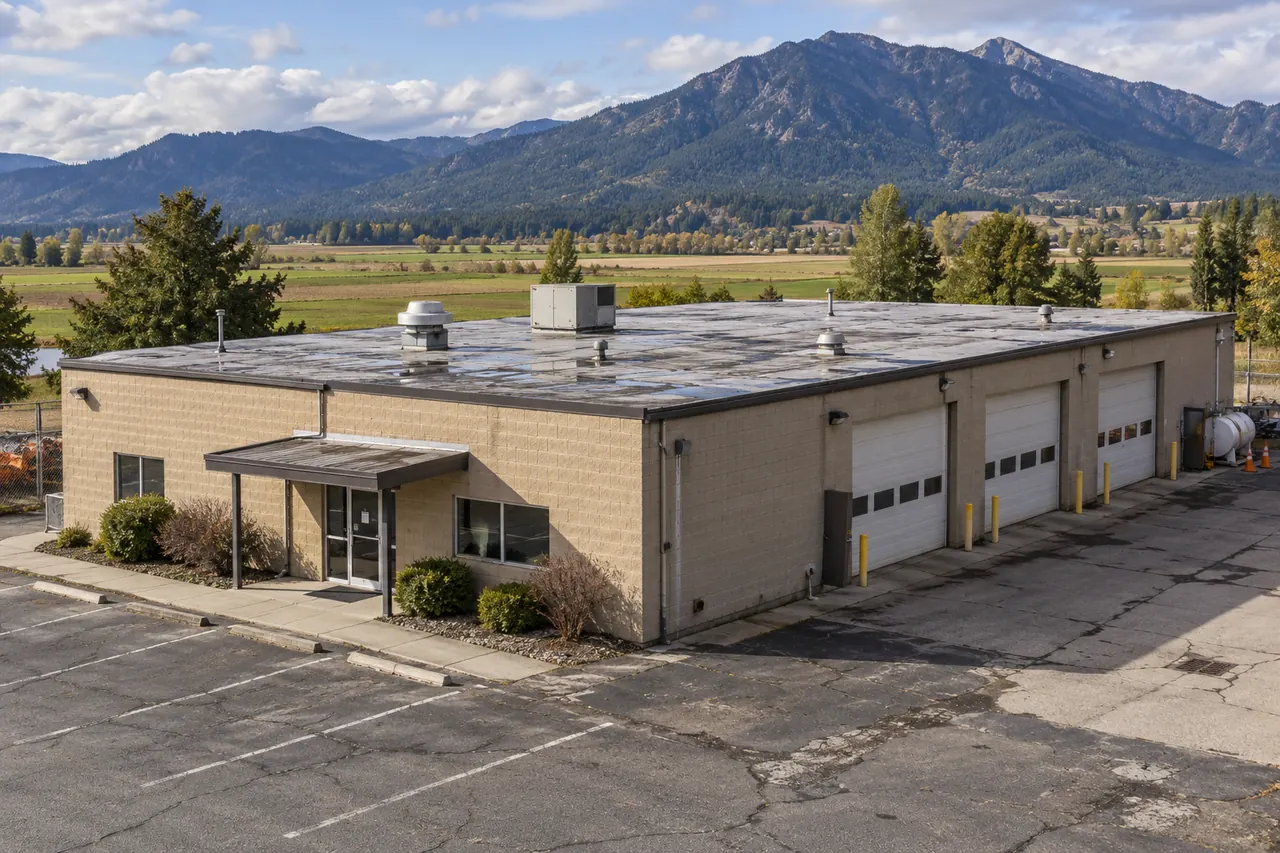
Thatcher is home to Eastern Arizona College, and many roofs in town sit over classrooms, sanctuaries, and offices that fill up on a set schedule. The coating work fits around that schedule.
Washing and spraying happen when the rooms below are empty, roof access stays away from main entrances, and each coat gets its cure time before people return.
Large low-slope roofs over classrooms and halls tend to show the same handful of problems.
Stains over a classroom or hallway often line up with a roof drain or HVAC curb directly above.
Trees around campuses and churches drop leaves into drains and scuppers. They get cleared before coating and on each roof walk.
Upper offices and choir lofts that heat up by afternoon often sit under a dark or chalked roof.
A white coating over a firm membrane reflects more sun than an aged dark or chalky roof surface.
Hallway drips after monsoon rain often trace to a long seam run between two roof sections.
Additions built at different times meet at seams and expansion joints that open as the buildings move. Those get reinforced first.
Rattling units can mean loose curbs, and loose curbs crack the flashing around them.
Curb corners get fabric and coating carried up the flashing, with walkway pads so service visits stay off the field.
Buildings that changed hands or managers often lack records of what coating is already on the roof.
An adhesion test and a small sample show whether the old layer is acrylic or silicone, which decides what goes on next.
For buildings that are full on a schedule, coating renews the roof without shutting rooms down.
Coating happens on top of the existing roof, so classrooms, offices, and sanctuaries below stay in use while the work moves section by section.
Dry membrane stays in place, so the money goes to repairs and coating rather than removal and new insulation.
Little old roofing comes off, which means fewer dumpsters and truck trips near walkways and parking.
A coated roof can be cleaned and recoated later, which suits owners who plan maintenance years ahead.
Three systems cover most campus, church, and office roofs in town.
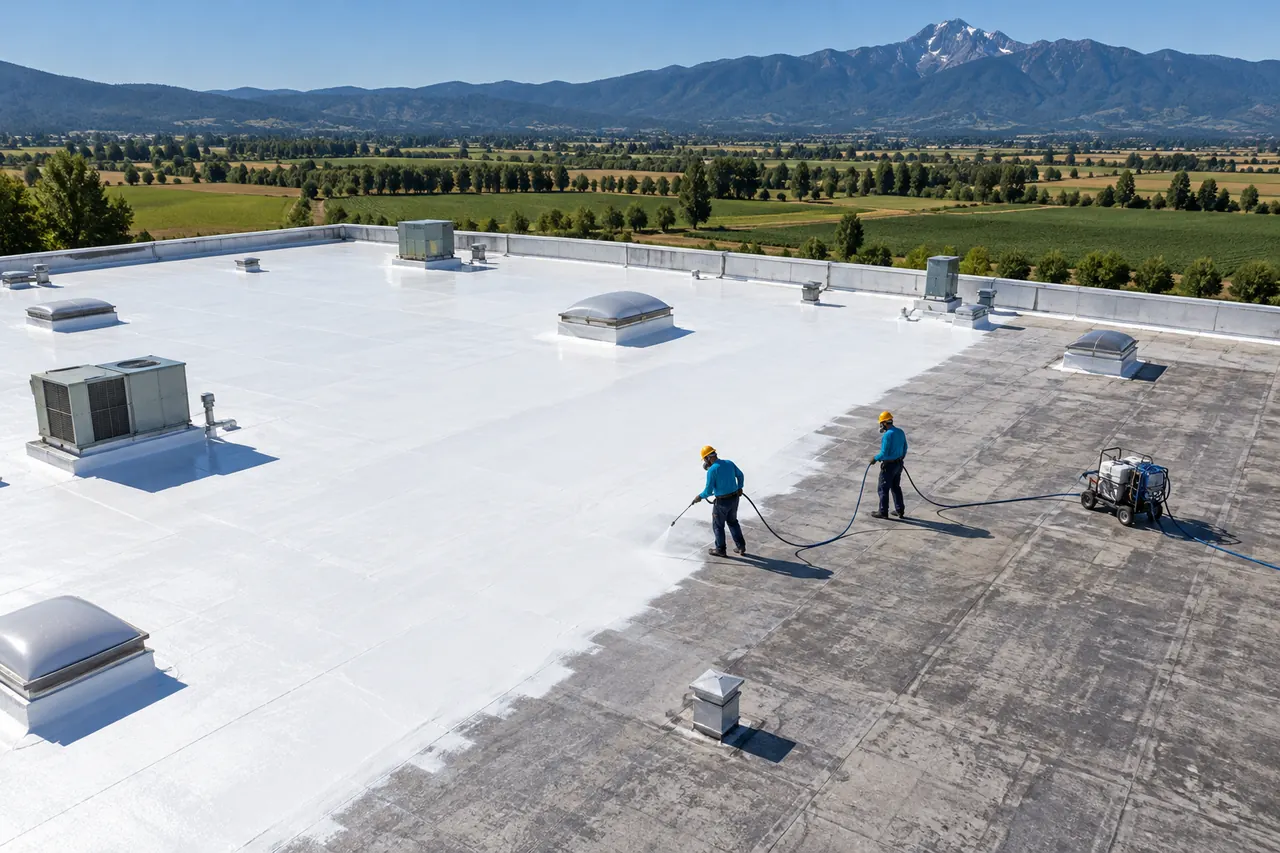
Flat roofs over classrooms and halls that hold water near drains get silicone over repaired seams.
Silicone Roof Coating Details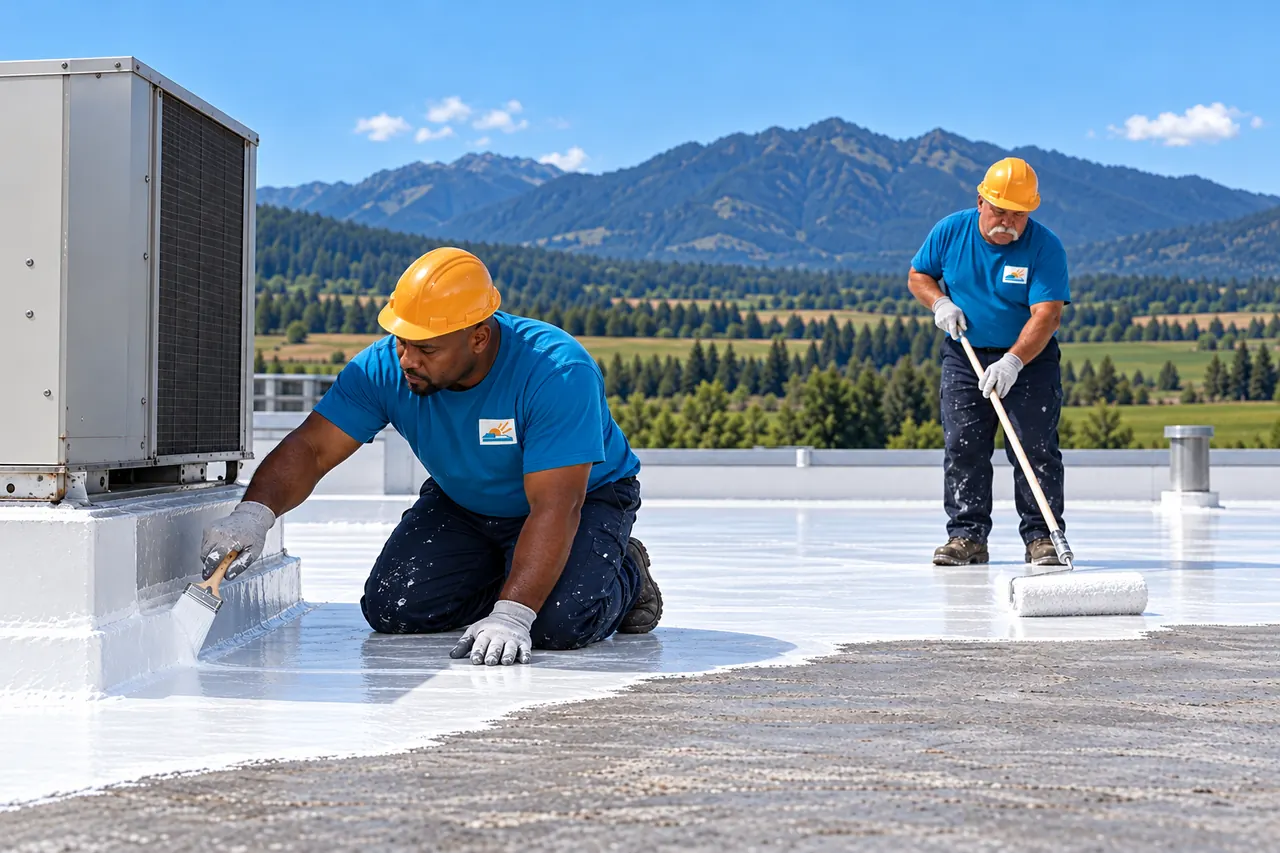
Sloped metal on gyms, shops, and outbuildings takes acrylic, which keeps a bright surface in dusty air.
Acrylic Roof Coating Details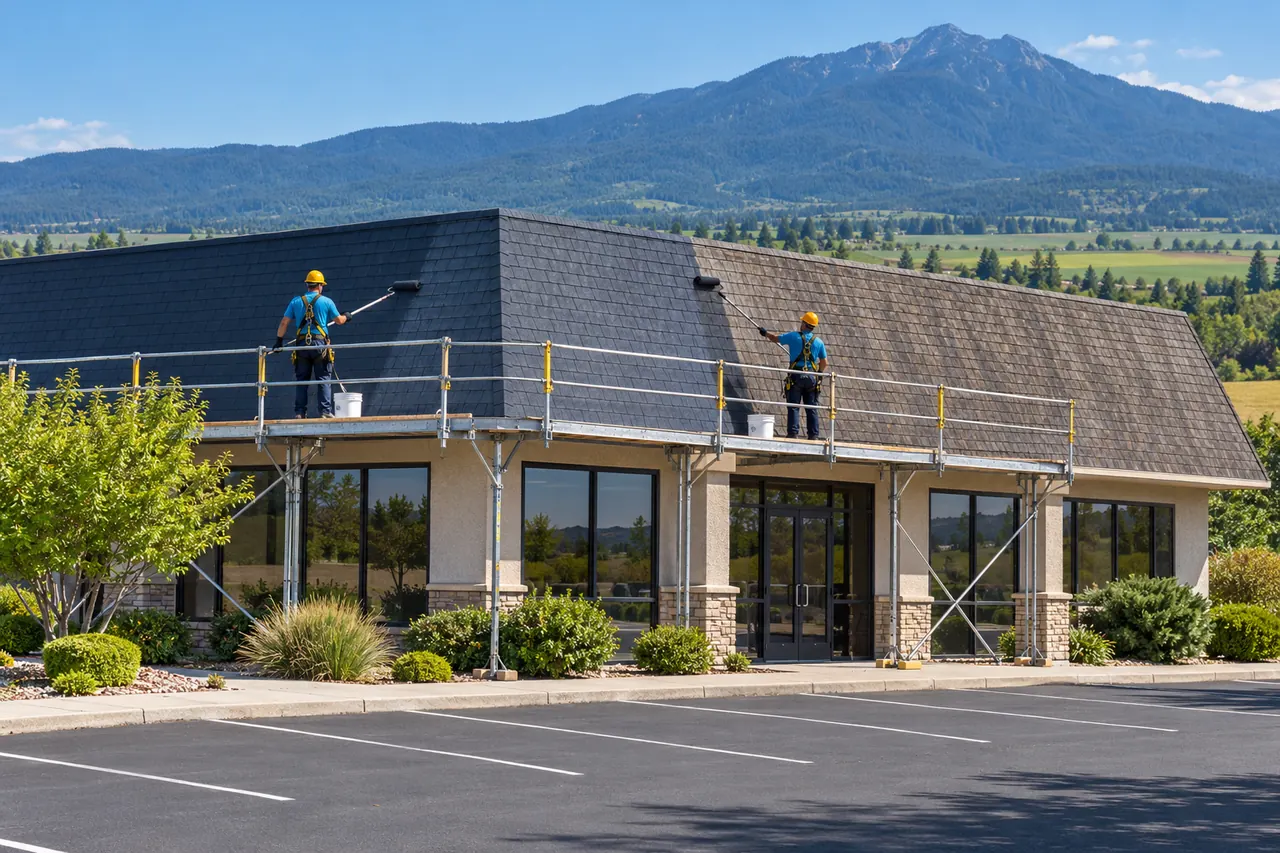
Church and office shingle roofs that still lie flat can be coated after a granule and deck check.
Shingle Roof Coating DetailsA bright white roof reads differently from the street. Call before ordering material, and plan for what the town wants to see.
The steps stay the same, and the timing follows the building's schedule.
 Step 1
 Step 4
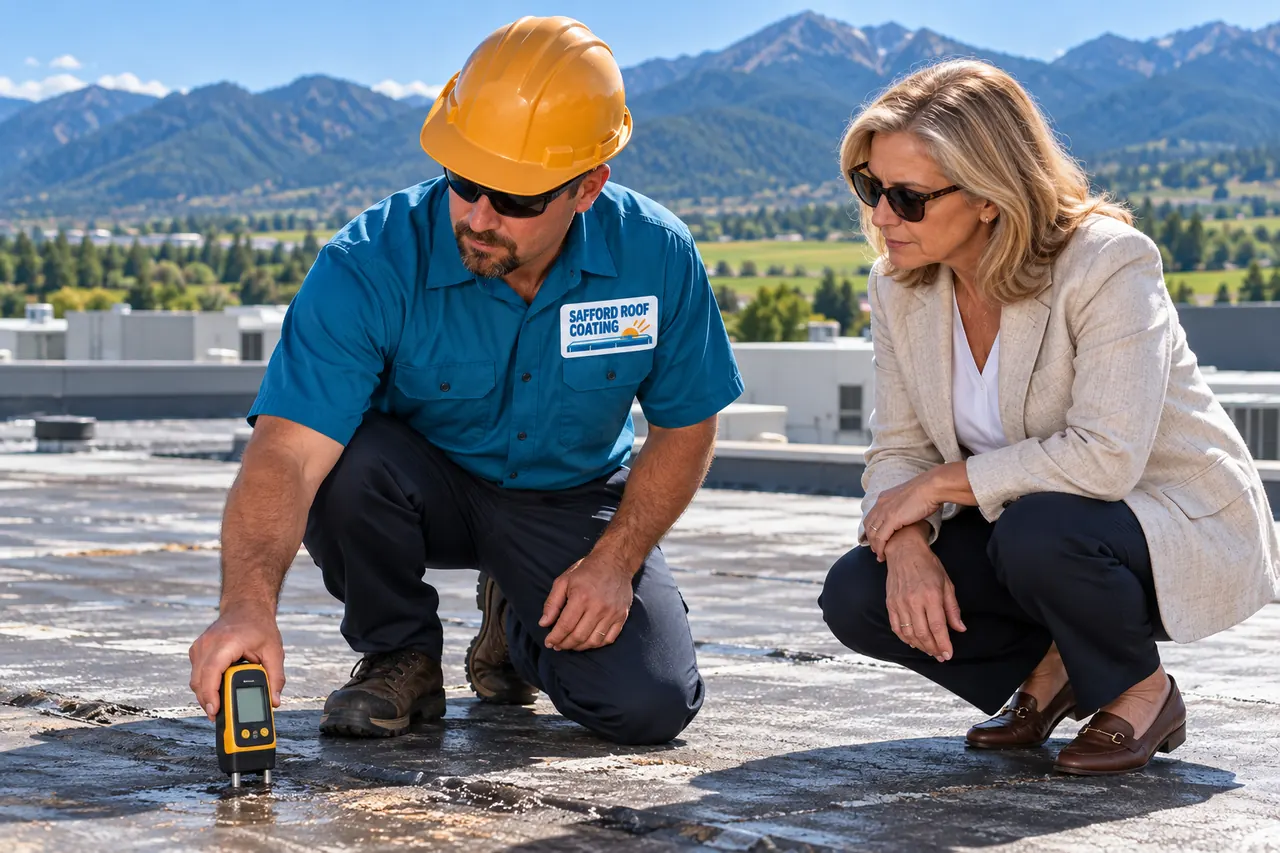
We walk the roof with whoever manages the building, noting drains, curbs, seams between additions, and which rooms sit under each section.
Roof washing and spraying get scheduled for hours when the rooms below are empty, such as breaks, evenings, or days without services.
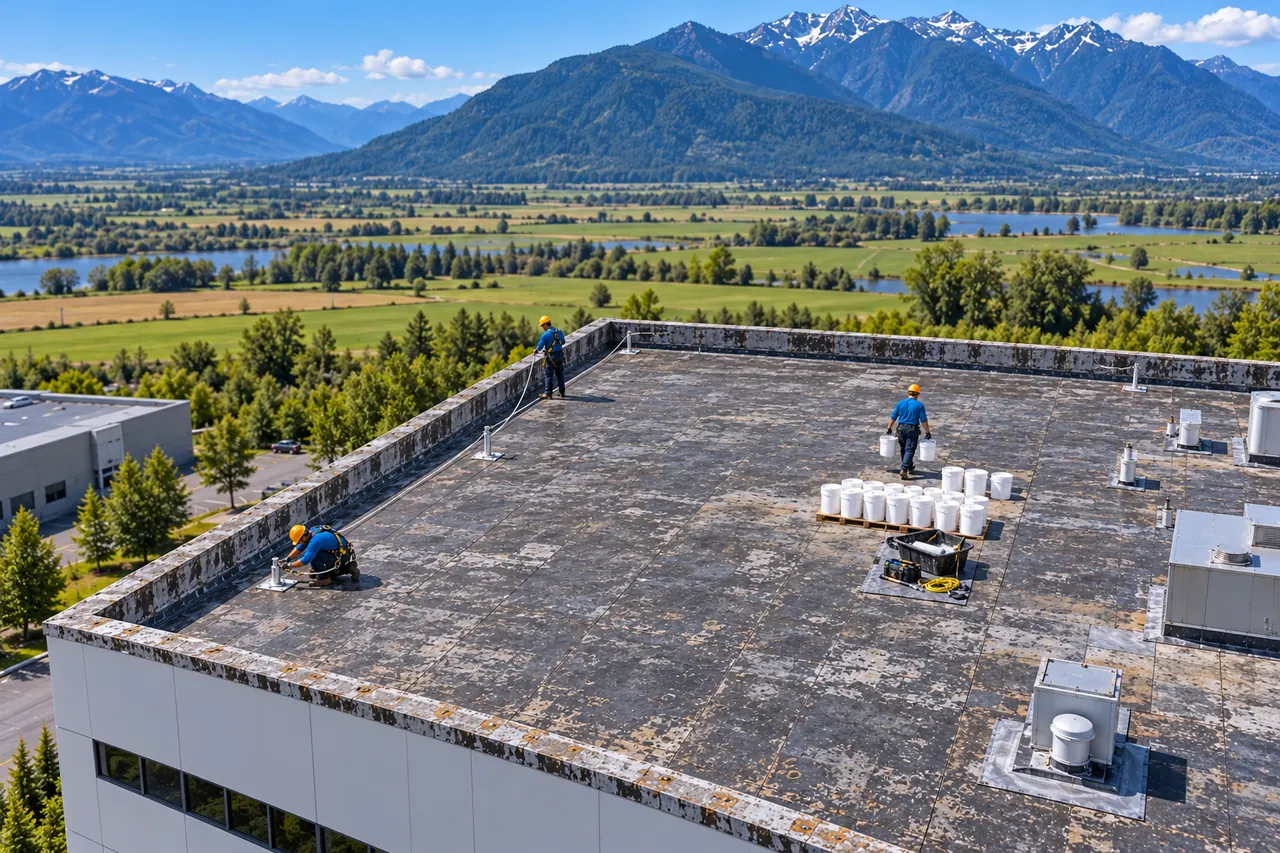
Seams, curb flashing, and drains get repaired and reinforced with fabric while the building stays open below.
Each roof section is coated and allowed to cure before the next, so only one area is closed off at a time.
A final roof walk checks thickness readings and drains, and the owner gets dated photos for the maintenance file.
Thatcher sits just west of Safford on US-70, and these towns share the same service area.
Questions from owners and managers of Thatcher buildings.
Asked Most Often
In some cases, yes. The Town of Thatcher's Planning and Zoning Division runs design review and the cultural resources preservation ordinance, and a switch from bare metal or dark shingles to bright white changes how a prominent building reads from the street.
Check with the town before ordering material, and bring photos of the roof edge, parapet, and any slopes visible from the road.
The Town of Thatcher, through its own Planning and Zoning office, separate from the City of Safford next door. A recoat and a reroof that adds insulation are handled differently, so a call before work starts settles it.
Yes. Most of the work happens on the roof surface, and the loud steps, washing and spraying, get set for breaks, evenings, or weekends when rooms below are empty.
Air intakes near the work area get covered, units are turned off with the building's approval, and water-based acrylic is chosen where odor matters most.
Often. The flat section gets silicone or acrylic, and the shingle slopes get a shingle-rated coating if they pass the granule and deck check.
Work stops before storm clouds arrive, and only cured sections stay exposed. Fresh coating is never left open to a forecast storm.
Sometimes, to look at stains and confirm which room sits under which roof section. Roof access itself is by ladder or hatch, set up away from main doors.
Get a ballpark range for your building, or call to plan work around your schedule.
Want A Call About Your Roof?
Leave a name and number, or call (623) 310-0164 now.