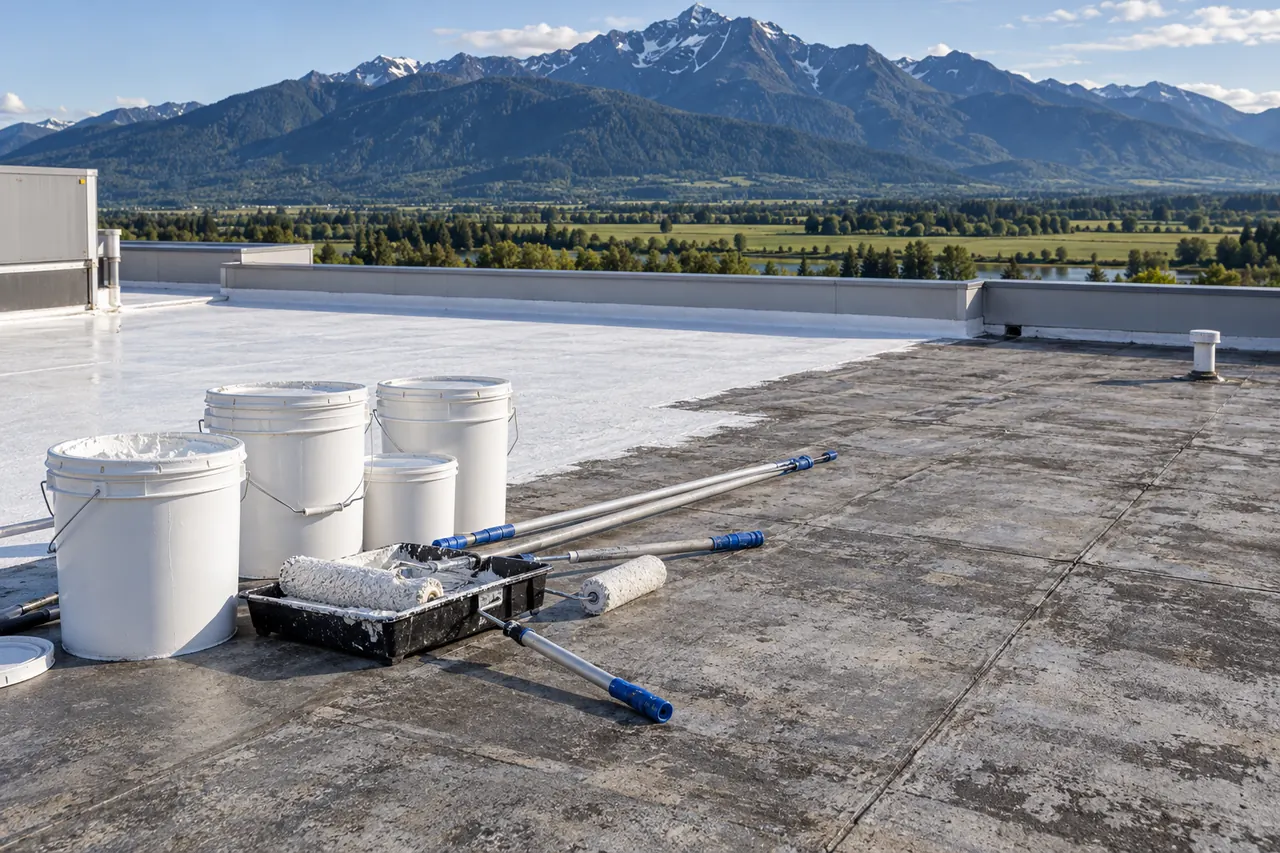
A Surface Built For Leftover Water
Even with clear drains, some water lingers on a flat roof. A silicone layer keeps its hold under that water, so the low spots stop being where leaks start.

Solomon, Arizona
We coat flat storage and warehouse roofs in Solomon, east of Safford. Scuppers and drains get cleared and ponding gets mapped before coating starts.
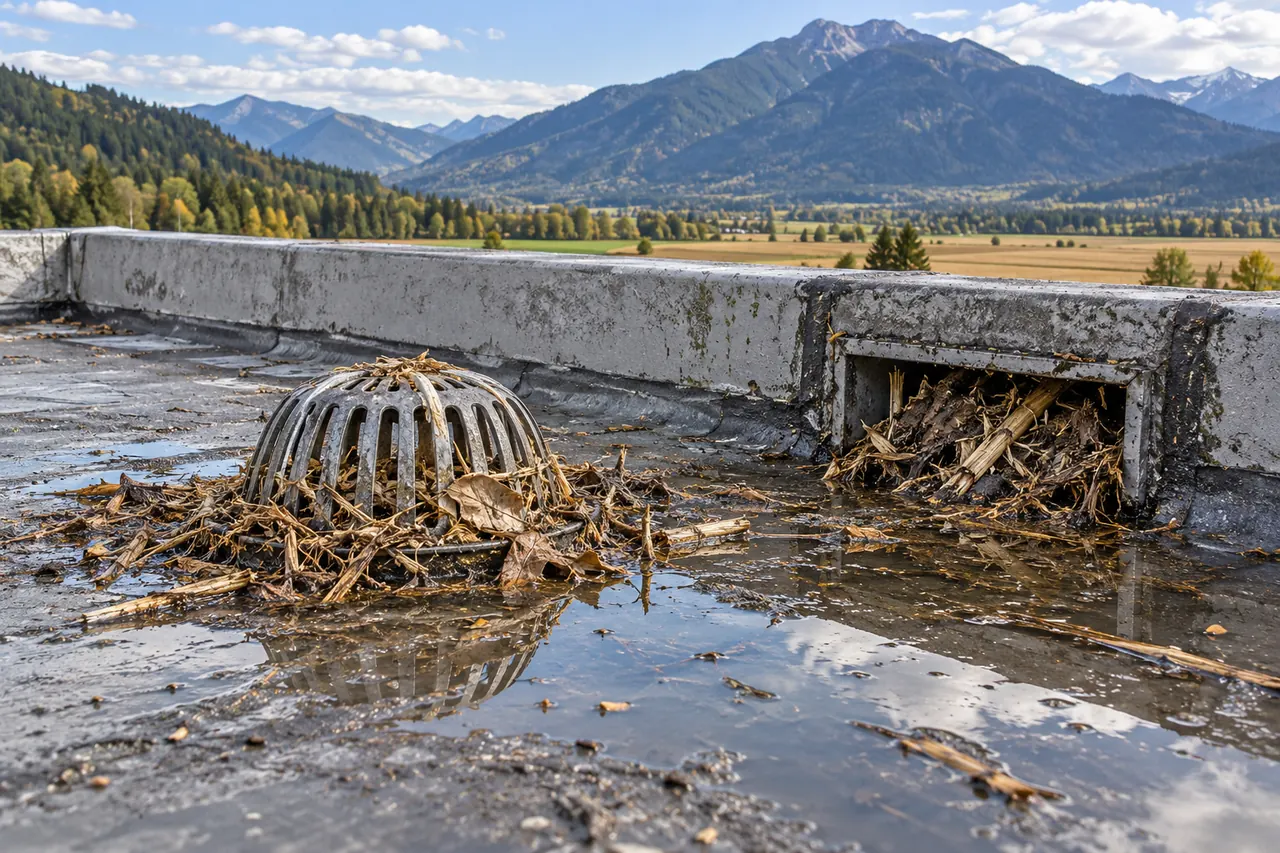
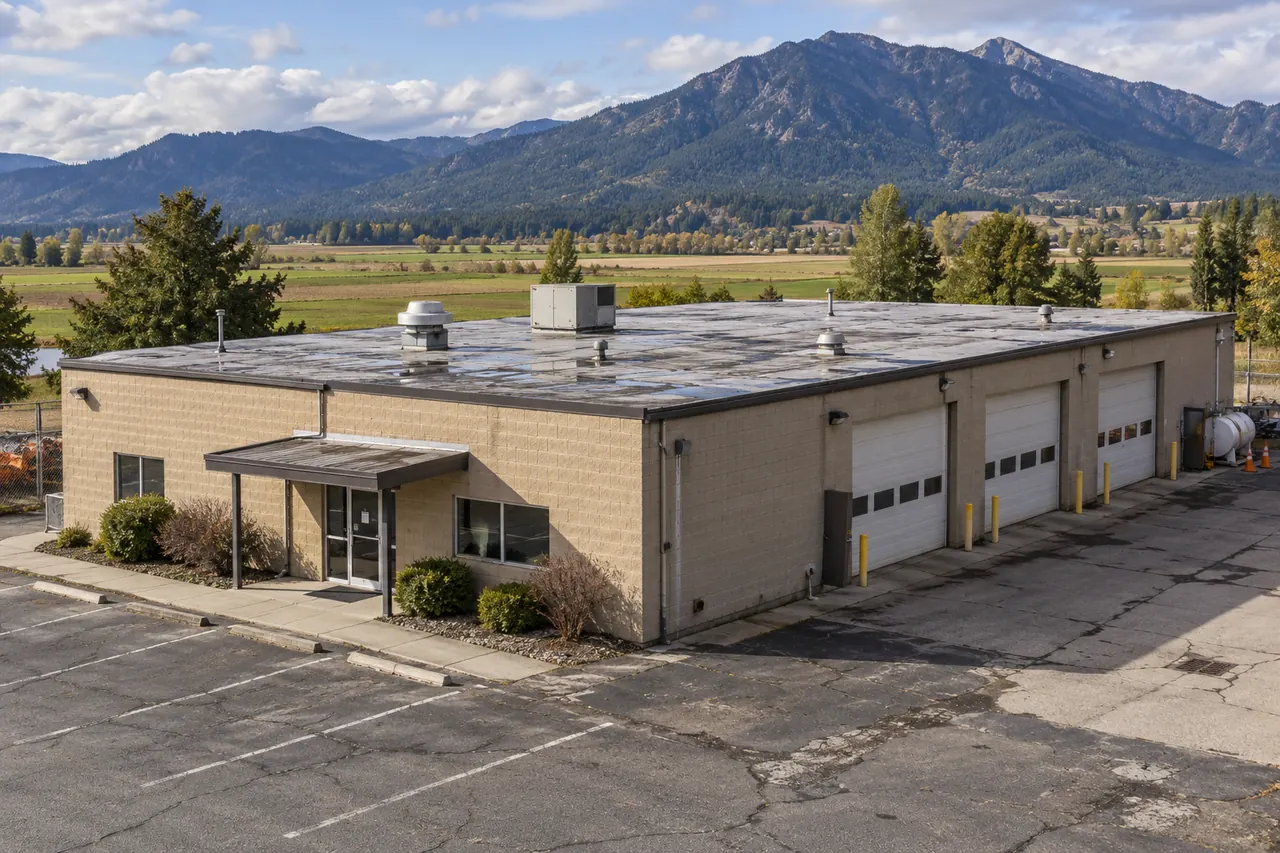
Flat storage roofs east of Safford drain through scuppers and roof drains that fill with dust, leaves, and nesting debris. When they clog, water backs up against parapets and sits in the field for days.
Coating over that water traps the problem. Scuppers and drains get cleared, tested, and reinforced first, and the ponding that remains decides which coating fits.
Most leaks on these roofs trace back to water that has nowhere to go.
Wall stains under a scupper mean water is backing up behind the parapet and getting under the membrane edge.
Debris packed in a scupper holds water against the parapet. Clearing it and sealing the box edges comes first.
Water that appears only in big monsoon storms points to drains that can't keep up when partly blocked.
Leaves and silt build up in drain bowls. Clearing them and checking the clamping ring restores flow before coating.
Drips that start after the sky clears come from ponds slowly finding a seam.
Water left two days or more marks the low spots. Silicone handles it, or foam adds slope where the pond is deep.
Cartons going soft near a wall often sit below the roof edge where water overflows the gutter or scupper.
Cap joints open as the metal moves, letting water run into the wall. They get sealed and coated with the roof.
Ceiling boards that sag in one area can sit under a patch of wet insulation.
A moisture survey finds wet pockets, which get cut out and replaced before coating.
Once the drains work again, coating protects a flat storage roof without emptying the building.
Even with clear drains, some water lingers on a flat roof. A silicone layer keeps its hold under that water, so the low spots stop being where leaks start.
Stock and equipment stay in place below while the roof is cleared, repaired, and coated above.
A dry roof stays in place, so the budget covers drain work, repairs, and coating rather than tear-off.
The silicone surface gets washed and recoated later over the same base.
Three systems fit the storage and warehouse roofs on the east end of the valley.
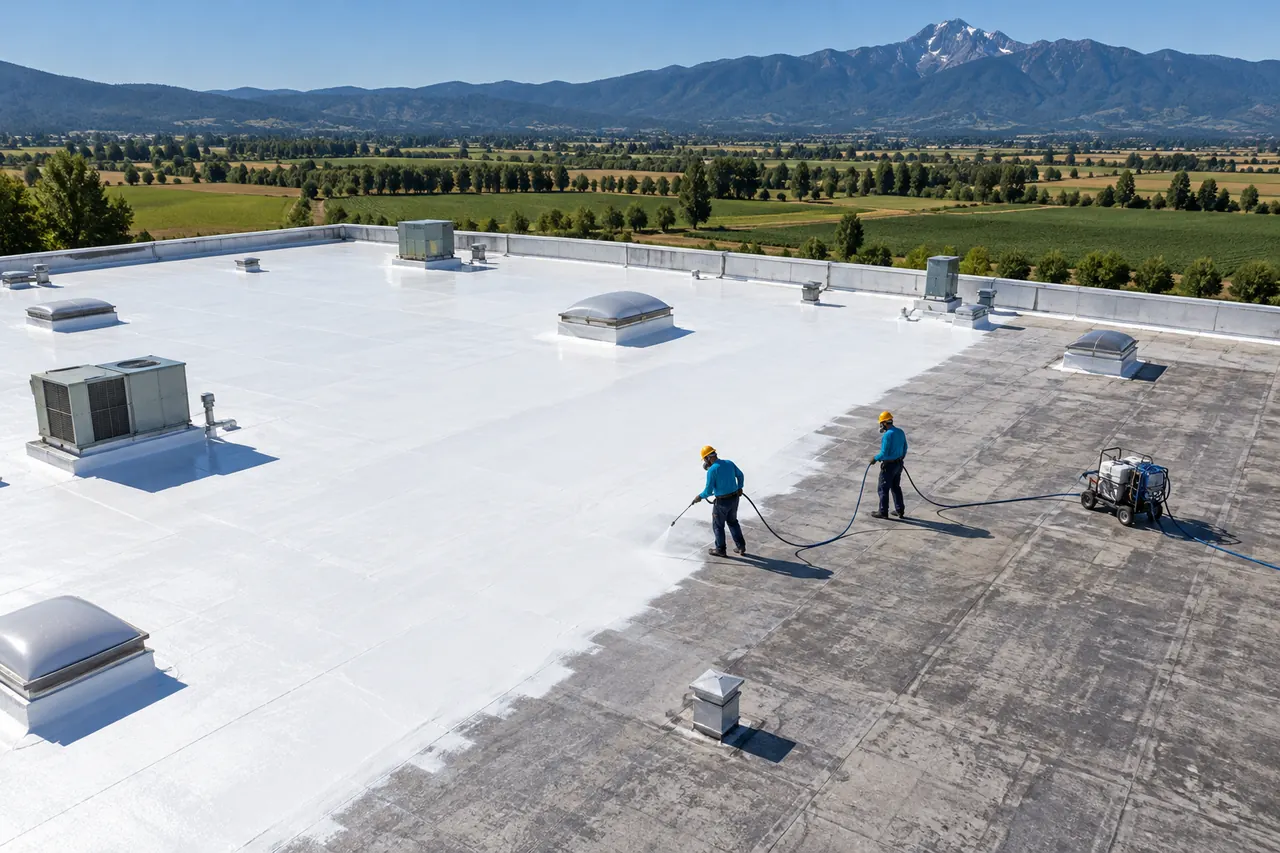
Flat storage roofs that still pond after the drains are cleared get silicone, which stays put under standing water.
Silicone Roof Coating Details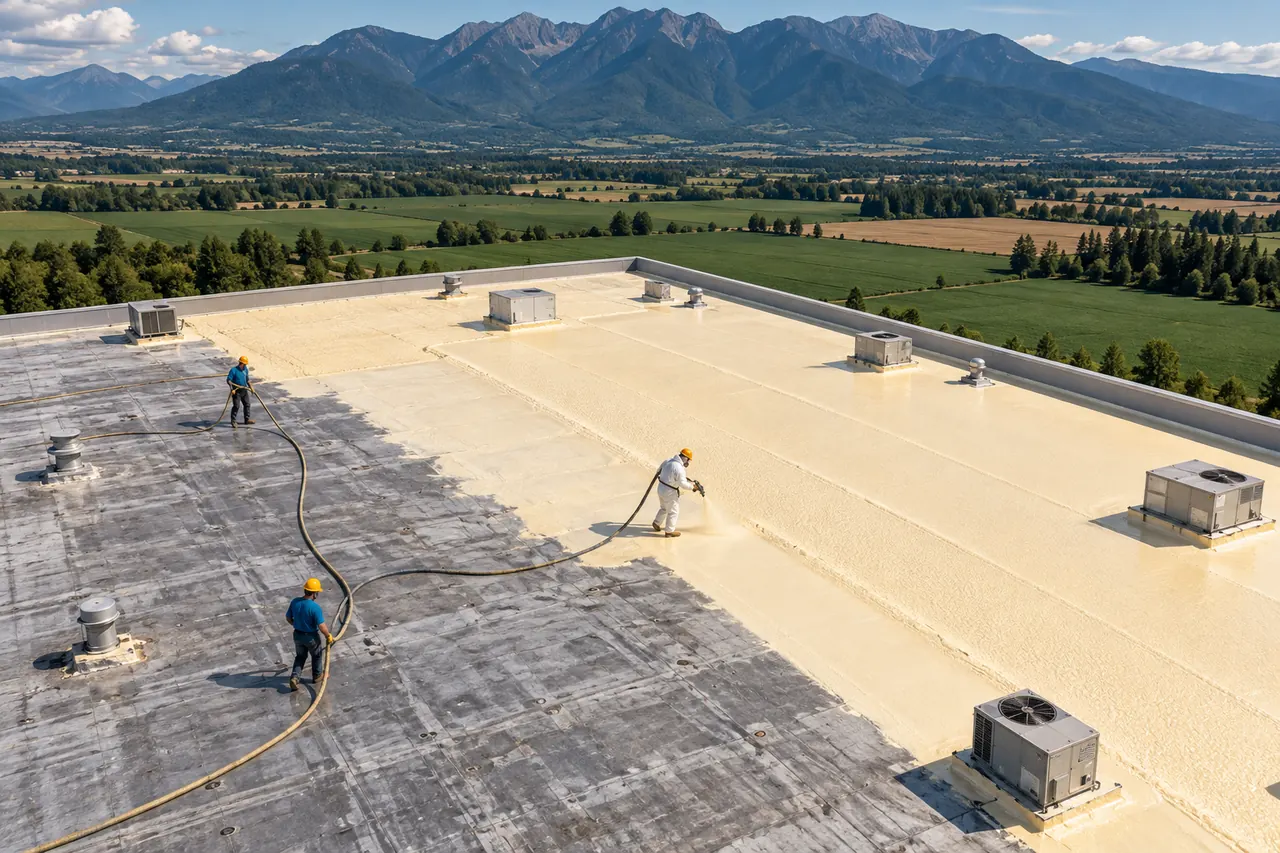
Deep low spots can be built up with spray foam so water reaches the drains, then topcoated.
Spray Foam Roofing Details
Sloped storage sheds and metal additions that drain fast take acrylic instead.
Acrylic Roof Coating DetailsCall and describe where the water runs. A clogged scupper is often the first repair on these roofs, before any coating.
Drainage comes first, then repairs, then the coating.
 Step 1
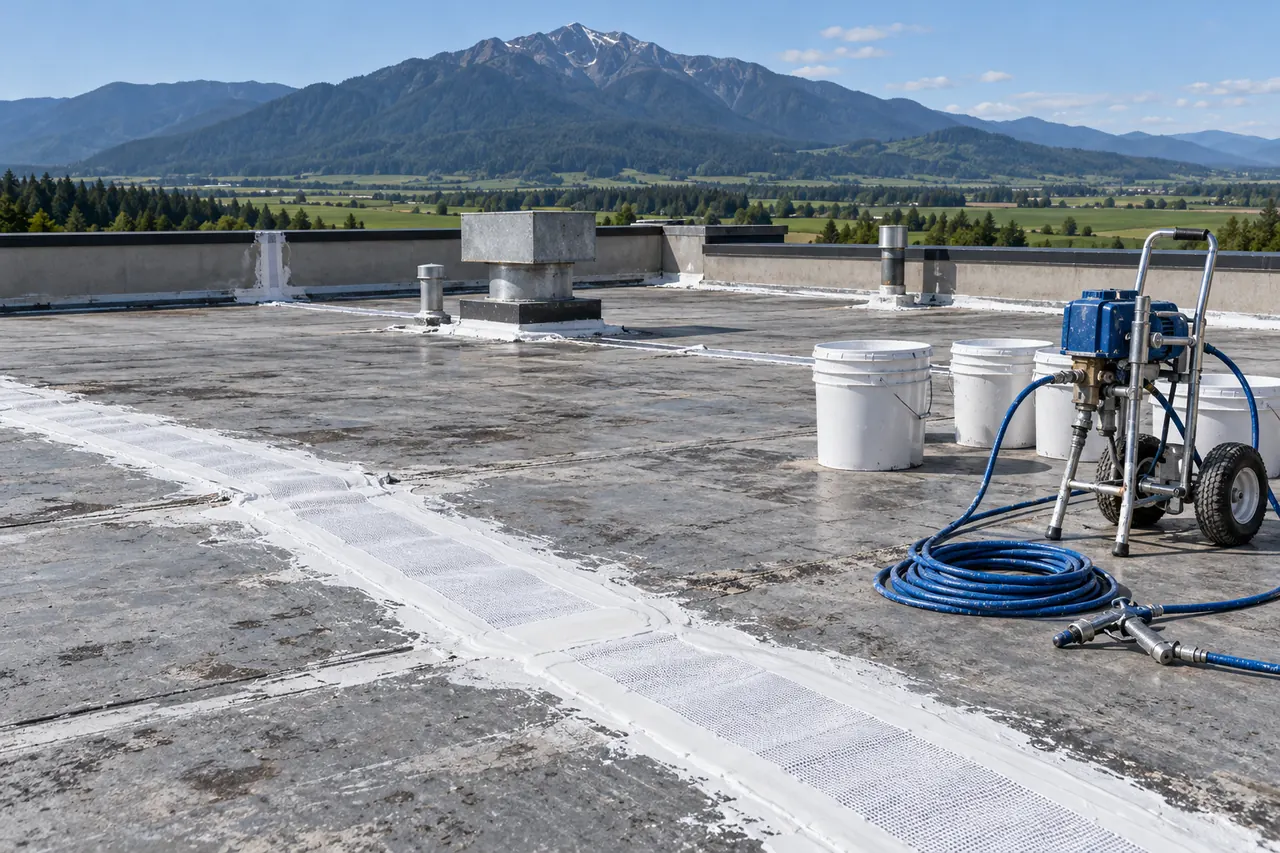 Step 4
We trace water from each scupper and drain, map the ponds, and take moisture readings across the field.
Scuppers and drain bowls get cleared of debris, their edges resealed, and flow tested with a hose.
Wet insulation found on the survey is cut out and replaced, and blisters and split seams are repaired.
Fabric goes into the base coat at drains, scuppers, parapet caps, and curbs.
Silicone goes on in passes to the specified thickness, with extra build around drains and low spots.
Solomon sits east of Safford, and the rest of the service area runs west and south from there.
Questions from owners of flat storage and warehouse roofs.
Asked Most Often
That turns on how much moisture sits inside the roof. A moisture survey, using a nondestructive meter or infrared backed by a few core cuts, maps wet insulation before anything gets coated.
Dry insulation with minor seam splits means repair the seams, then coat. Small wet areas get cut out and replaced, then coated. Wet insulation across large sections means a new roof, since coating over it traps the water.
Solomon is unincorporated, so Graham County Planning and Zoning handles permits. The county takes building permits through its online portal and asks for building plans and a plot plan sketch with the application.
It protects the roof under the water, and it does not move the water. Clearing drains and scuppers, and adding slope with foam where ponds are deep, deals with the water itself.
At least before monsoon season and again after fall leaf drop, plus after big wind or dust events. A clogged scupper can back water up within one storm.
The loose gravel comes off first, and the built-up surface underneath gets cleaned, repaired, and primed before coating.
Each patch gets checked for adhesion. Firm patches stay and get coated, and loose ones get cut out and redone.
Yes. Ladders and staging go on the side away from the loading area, and work above the dock is set for slower hours.
Get a ballpark range for the storage roof, or call to talk through the drains.
Want A Call About Your Roof?
Leave a name and number, or call (623) 310-0164 now.