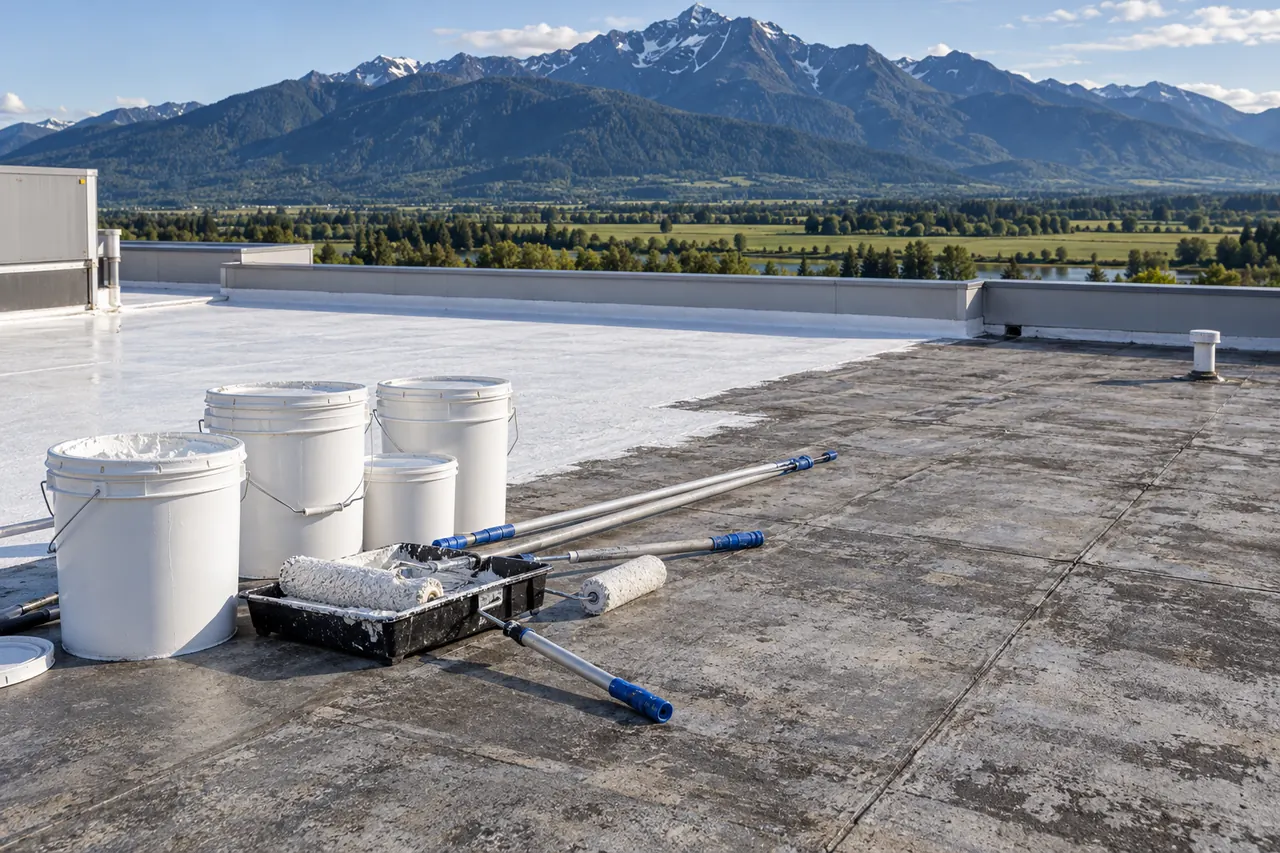
A White Roof That Stays Brighter
Acrylic holds less dirt than silicone, so its white surface stays reflective longer in a dusty valley, and less afternoon heat reaches the panels and the space under them.

Fast-Draining Roofs
We apply acrylic roof coating in Safford on commercial roofs that shed water quickly. Each white coat goes on in warm, dry hours so it cures before storms or frost.
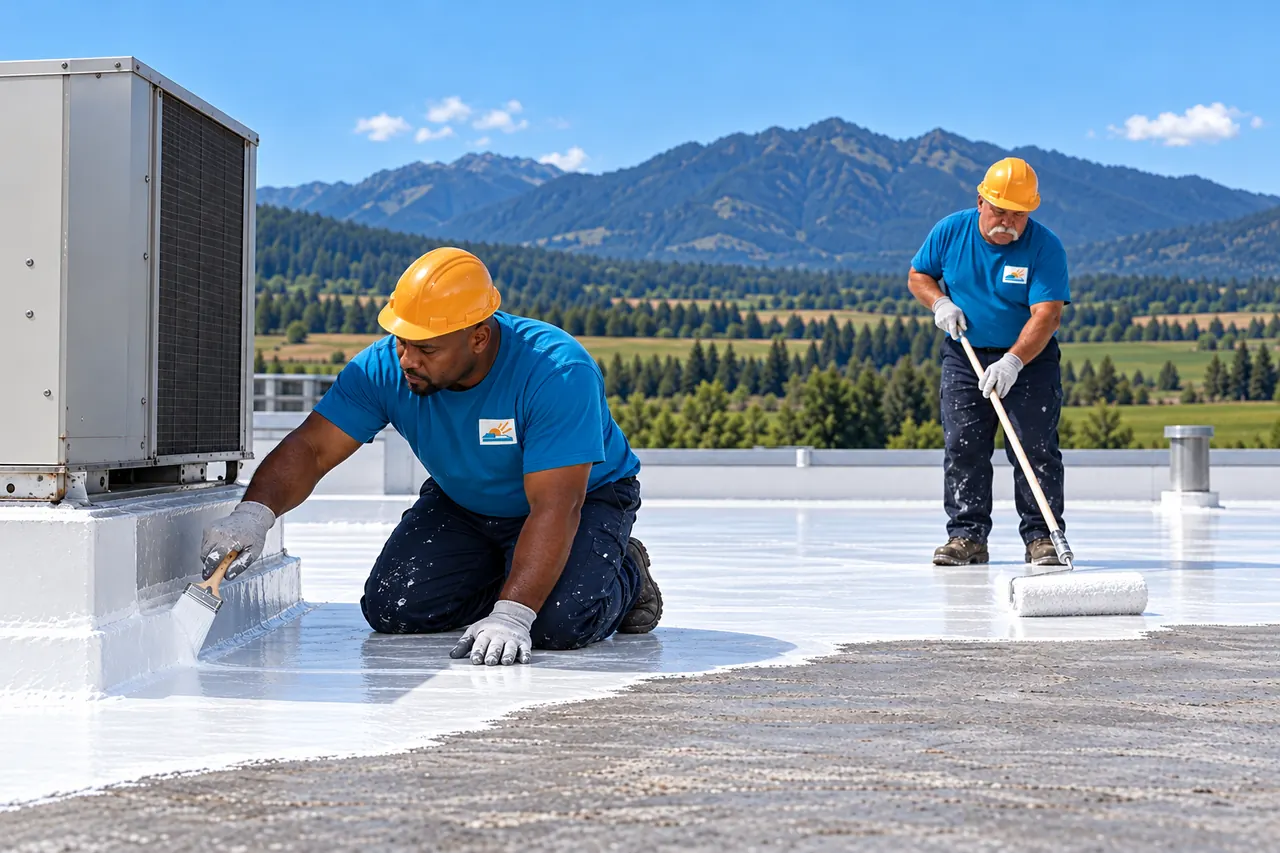
Acrylic does best where water leaves the roof within hours of a storm.
Acrylic wears in predictable places, mostly where water lingers or the sun hits hardest.
A stain in one corner of a room often sits under the lowest point of the roof, where water collects before it drains.
Standing water at a scupper or low corner softens acrylic over time. Those spots get extra fabric, or a silicone patch, before the new coat.
Owners who remember a bright roof notice it turning gray and dull from the parking lot.
UV breaks down the top of an acrylic layer into chalk, fastest on south-facing slopes. A wipe test shows how much is left.
Rust showing through a coated metal roof means the coating wore thin over screw heads or laps.
Coating runs off raised screw heads and lap edges, leaving them thinner. Those rows get a brushed stripe coat before the field.
Leaks that show up with the first monsoon downpour usually come from cracks that opened around curbs during the hot, dry months.
Acrylic cracks at curb corners and skylight edges as the roof moves. Polyester fabric embedded in the base coat reinforces each one.
Peeling that starts in winter often traces to a coat that went on late in the day and met frost before it cured.
Loose acrylic gets scraped back to a firm edge and primed, and the new coat feathers over it.
Acrylic systems differ by what they go over and how much reinforcement the details need.
| Option | What Goes On | Best Match | Watch For |
|---|---|---|---|
| Acrylic Over Metal | Wash, rust primer, seam tape at laps, base coat and white topcoat | Sloped shop and warehouse panels | Thin spots over screw heads |
| Acrylic Over Foam | Foam repairs, then base coat and topcoat to the foam maker's mil count | Pitched foam roofs that drain well | Low spots that hold water need slope first |
| Fabric-Reinforced Acrylic | Polyester fabric embedded at seams, curbs, and drains, then full coats | Roofs with many penetrations and seams | Fabric edges fully wetted out |
| Acrylic Recoat | Wash, chalk removal, patching, one or two new coats | Acrylic roofs with a chalky top over a firm base | Peeling areas scraped back first |
Acrylic is the lighter, easier-to-maintain choice for roofs that drain well.
Acrylic holds less dirt than silicone, so its white surface stays reflective longer in a dusty valley, and less afternoon heat reaches the panels and the space under them.
The roof stays in place, and the budget goes to washing, repairs, and coating rather than tear-off and replacement.
Panels and foam stay on the building, so almost nothing leaves the property as roofing waste.
Fresh acrylic bonds to clean, firm old acrylic, so future recoats need a wash and new coats instead of stripping.
Book the roof walk in spring. Acrylic needs warm, dry hours to cure, and those get scarce once the afternoon storms start in mid-June.
Most of the work happens before the topcoat, and the weather decides when each coat goes on.
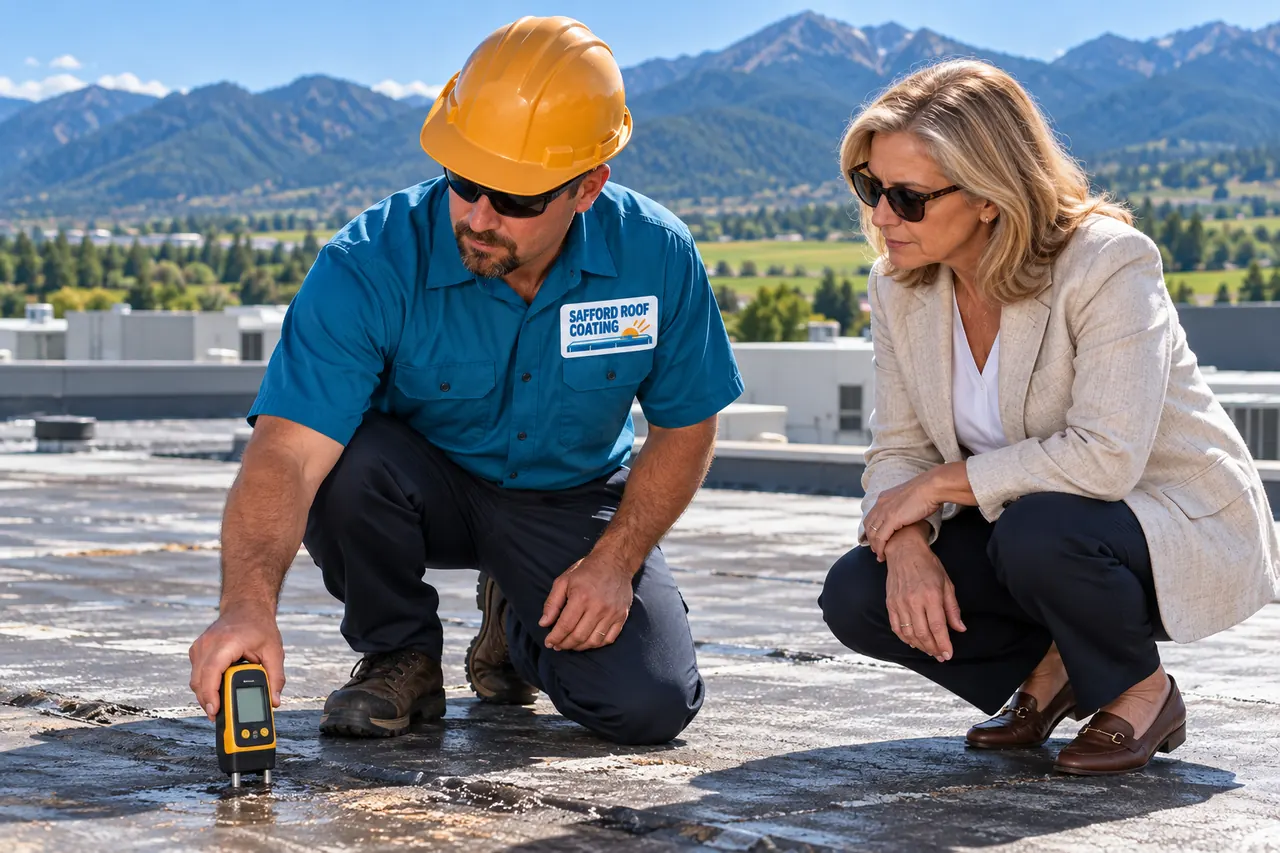 Step 1
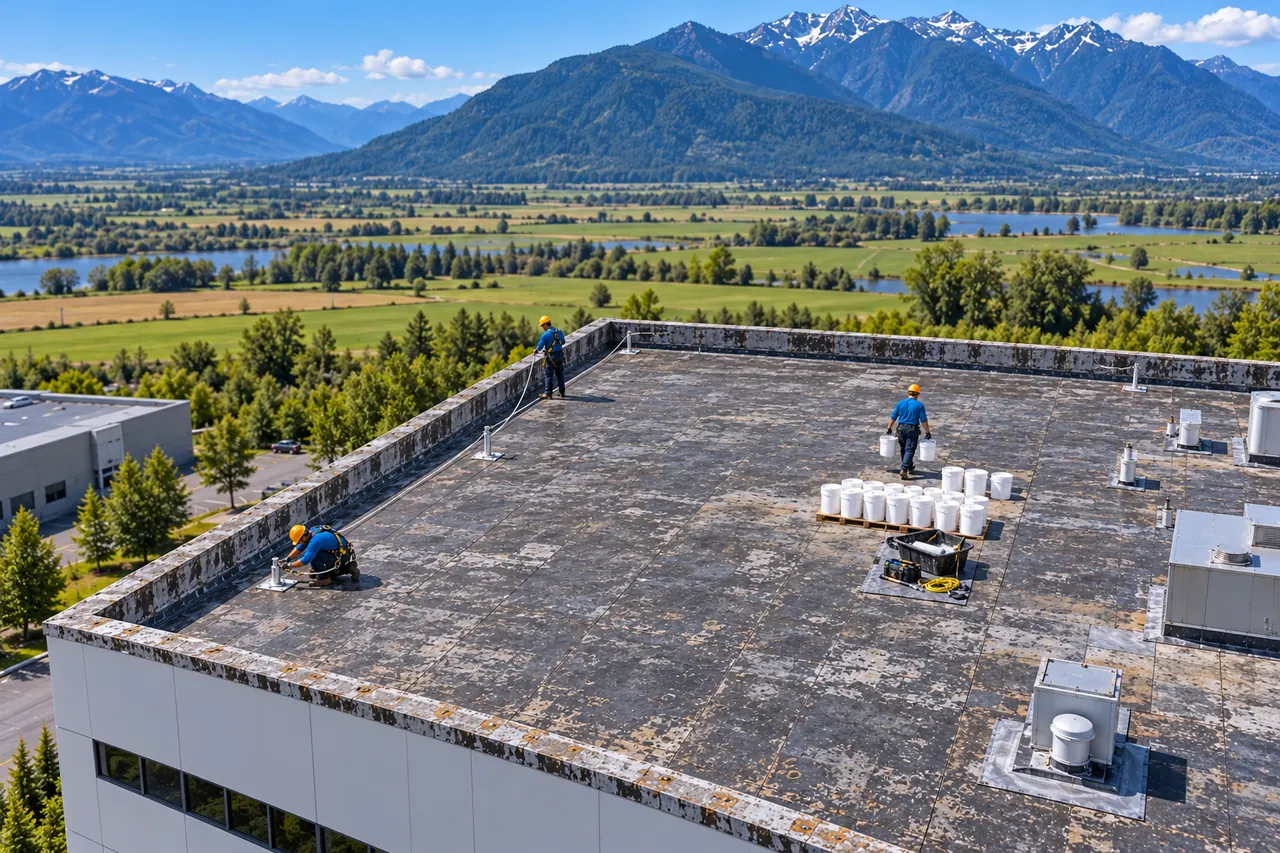 Step 2
We look for chalking, peeling, thin coating over screw rows, and any spot where water sits after a storm.
Chalk, dust, and loose coating come off with a pressure wash. The surface dries fully before anything else goes on.
Polyester fabric gets embedded at seams, curbs, skylights, and drains, and screw rows on metal get a brushed stripe coat.
The base coat goes on early in the day so it cures well before late-afternoon storm clouds or evening dew.
Crews roll or spray the topcoat across the direction of the base coat for even coverage, then wet-film readings confirm the thickness.
Acrylic is the topcoat on two other systems we install.
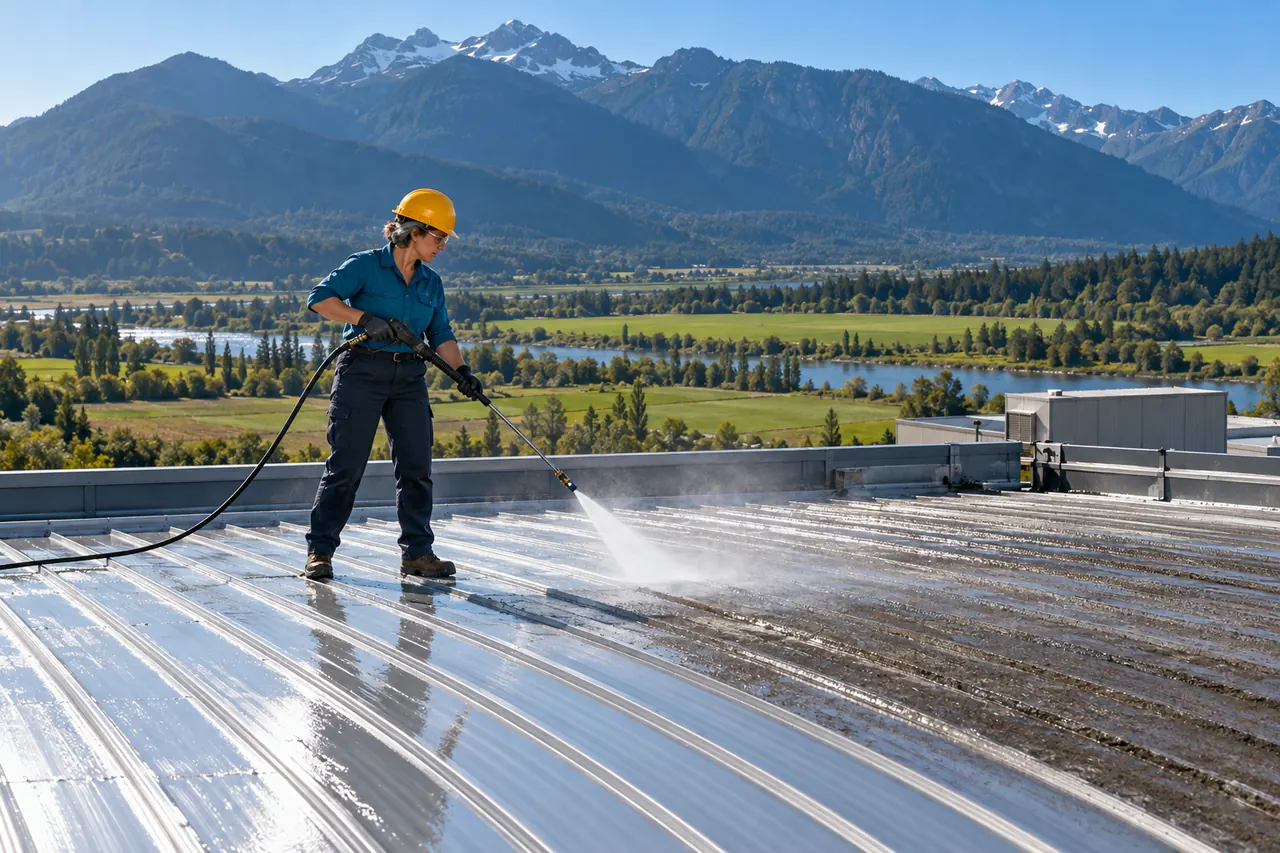
Metal shop roofs usually get acrylic as the topcoat, after rust primer and new screws and washers go on.
Metal Roof Coating Details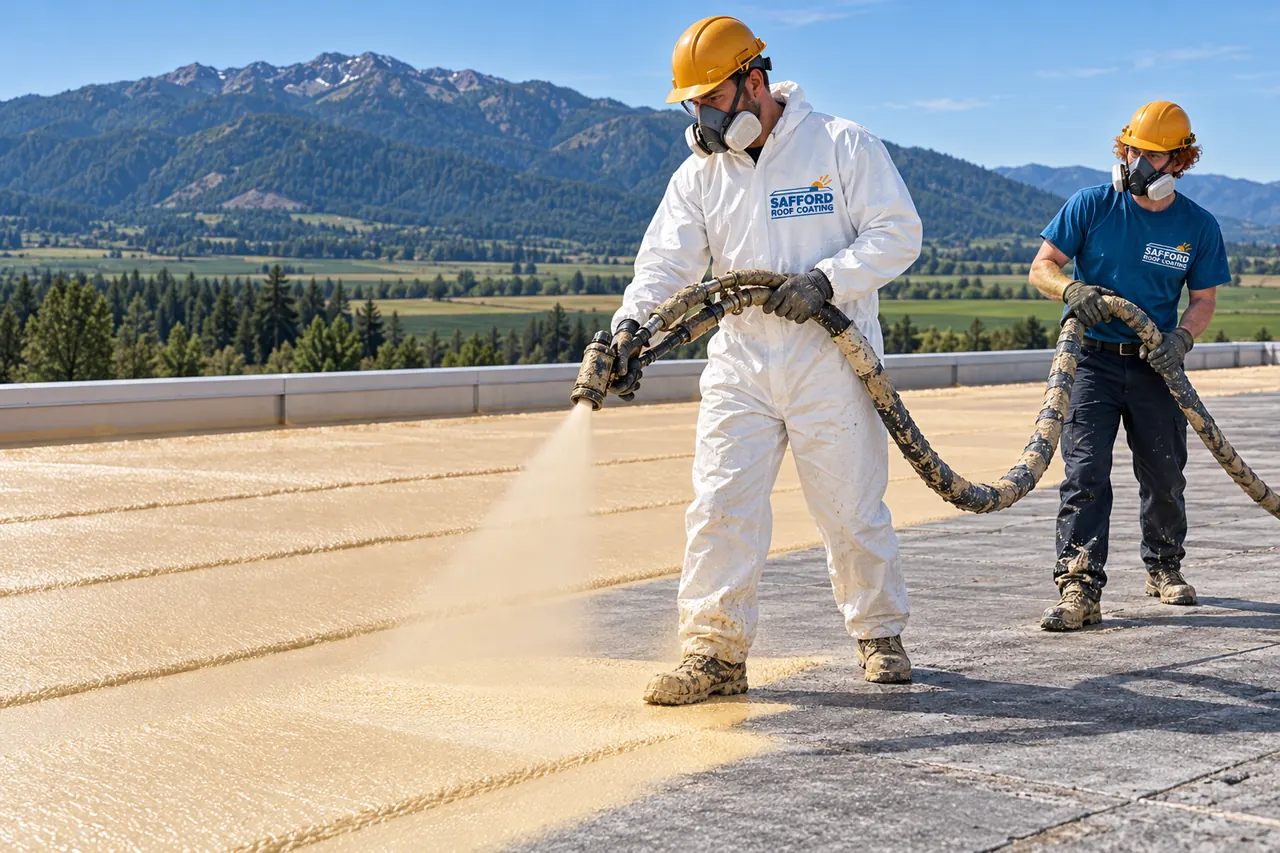
Pitched foam roofs drain well enough for an acrylic topcoat, which keeps the sun off the foam.
Spray Foam Roofing DetailsAnswers about cure times, weather, and recoats.
Asked Most Often
Yes, on roofs that drain fast, such as sloped metal panels and well-pitched foam. Acrylic picks up less dirt than silicone, so a white acrylic roof stays reflective longer here.
It is water-based and needs warm, dry hours to cure. A surprise evening storm can wash fresh coating off, and water that stands at a scupper softens it over time.
Yes, with careful scheduling. The National Weather Service treats June 15 through September 30 as Arizona's monsoon season, so summer coats start at dawn and stop when clouds build. Winter nights at Safford's elevation drop below freezing, so acrylic goes on during mild days with time to cure before dark.
Temperature, humidity, and coat thickness set it, and the coating maker lists the time on the product sheet. Each coat is planned so it gets those hours before any forecast storm.
Sun breaks down the top of the coating into a fine powder. Some chalk is normal wear, and heavy chalk means the layer is thinning and due for a wash and recoat.
No. Acrylic does not stick to silicone. A silicone roof gets recoated with silicone, which is one reason the first coating choice matters.
Fabric goes where the roof moves or water gathers: seams, curbs, skylights, drains, and panel laps. The open field gets full coats without fabric.
That follows the thickness applied and how hard the sun hits the slope. Yearly roof walks track chalking and thin spots, and the recoat is planned while the base layer is still firm.
Get a ballpark range now, or call to talk through timing around the monsoon.
Want A Call About Your Roof?
Leave a name and number, or call (623) 310-0164 now.