Built For Standing Water
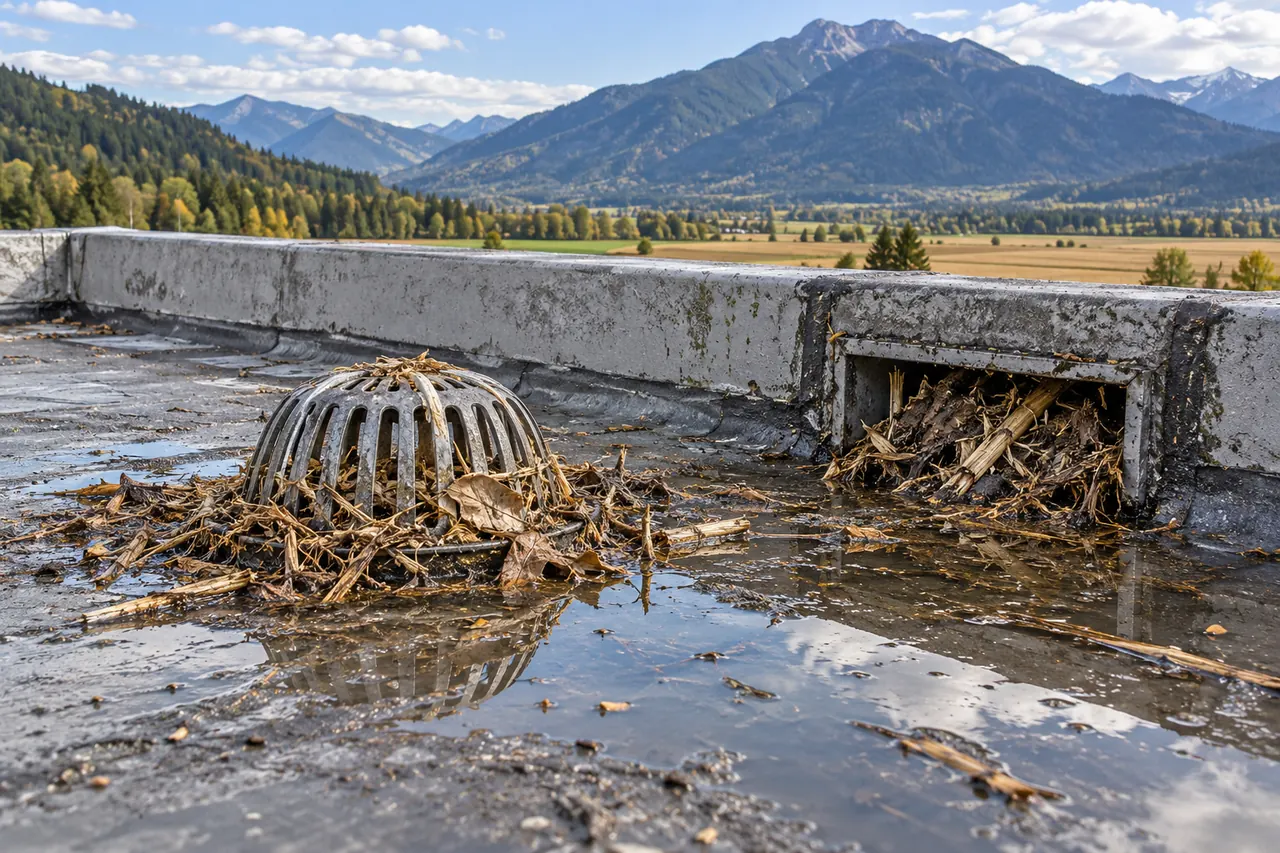
Silicone keeps its hold under water that sits for days after a monsoon storm, where water-based coatings soften. Drains still get cleared, and the low spots between them stop being weak points.

Low-Slope Roofs
We apply silicone roof coating in Safford on flat and low-slope commercial roofs. It is the coating we reach for when water sits around drains after a storm.
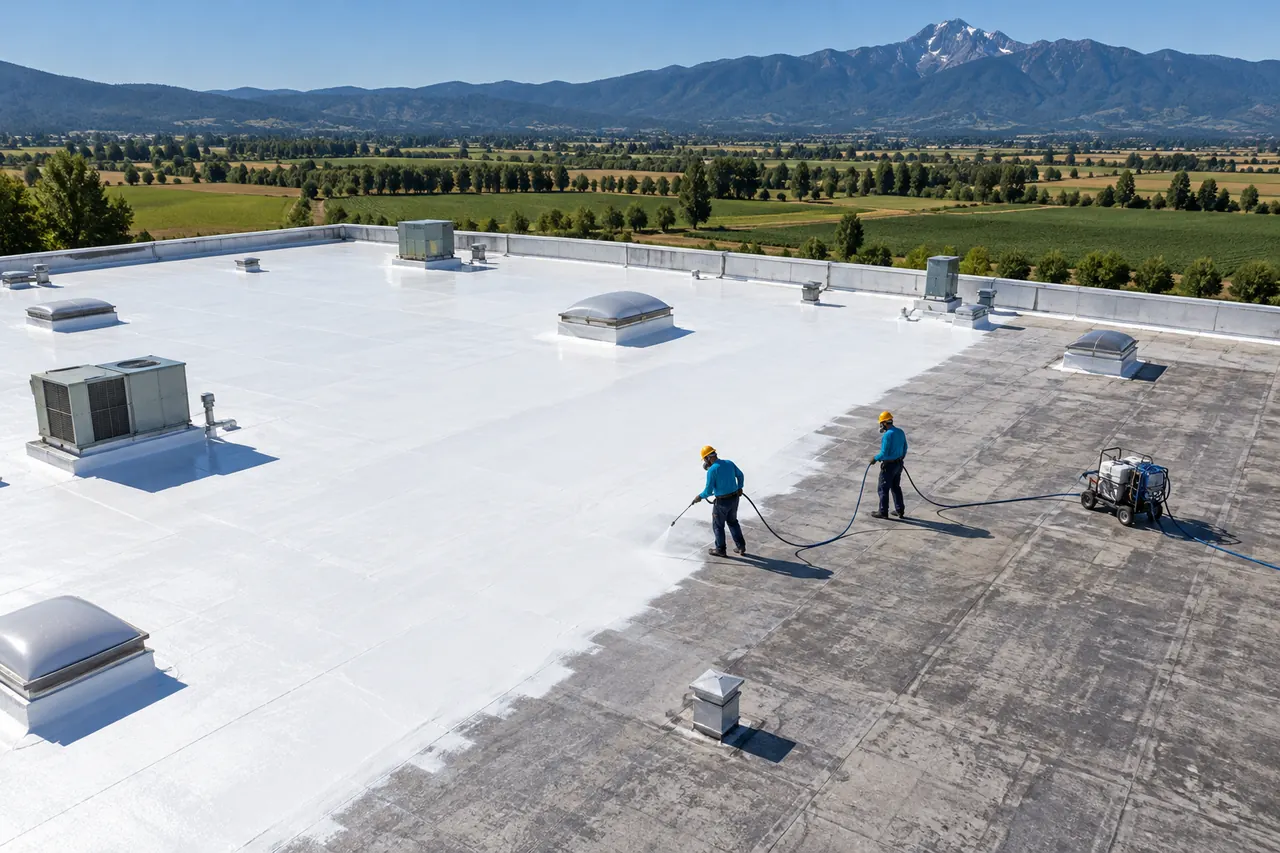
Silicone fits low-slope roofs that are mostly dry inside. The moisture survey settles the question.
Water that stays on a low-slope roof shows up inside first, then as rings and stains on the surface.
A ceiling stain right under a roof drain usually means water is getting past the clamping ring or the membrane around it.
Dirt rings mark where water sat after the last storm. Silicone tolerates that water, and the drain itself still gets cleared and resealed.
Drips that start a day or two after a storm come from water sitting in low spots and slowly working through seams.
Deck sag and crushed insulation leave birdbaths in the field. They get mapped and, where wet, cut out before spraying.
A damp, musty smell in an office or storeroom can come from insulation soaking up water above the ceiling.
Blisters lift where moisture is trapped, and seams split at laps. Both get cut out and repaired before silicone goes on.
Dark built-up and modified bitumen roofs absorb the afternoon sun, and the rooms right under them show it.
Silicone collects dust, so a white silicone roof in this valley dulls faster than acrylic. A rinse brings back the surface.
Water near a rooftop unit indoors often traces to the curb flashing around it.
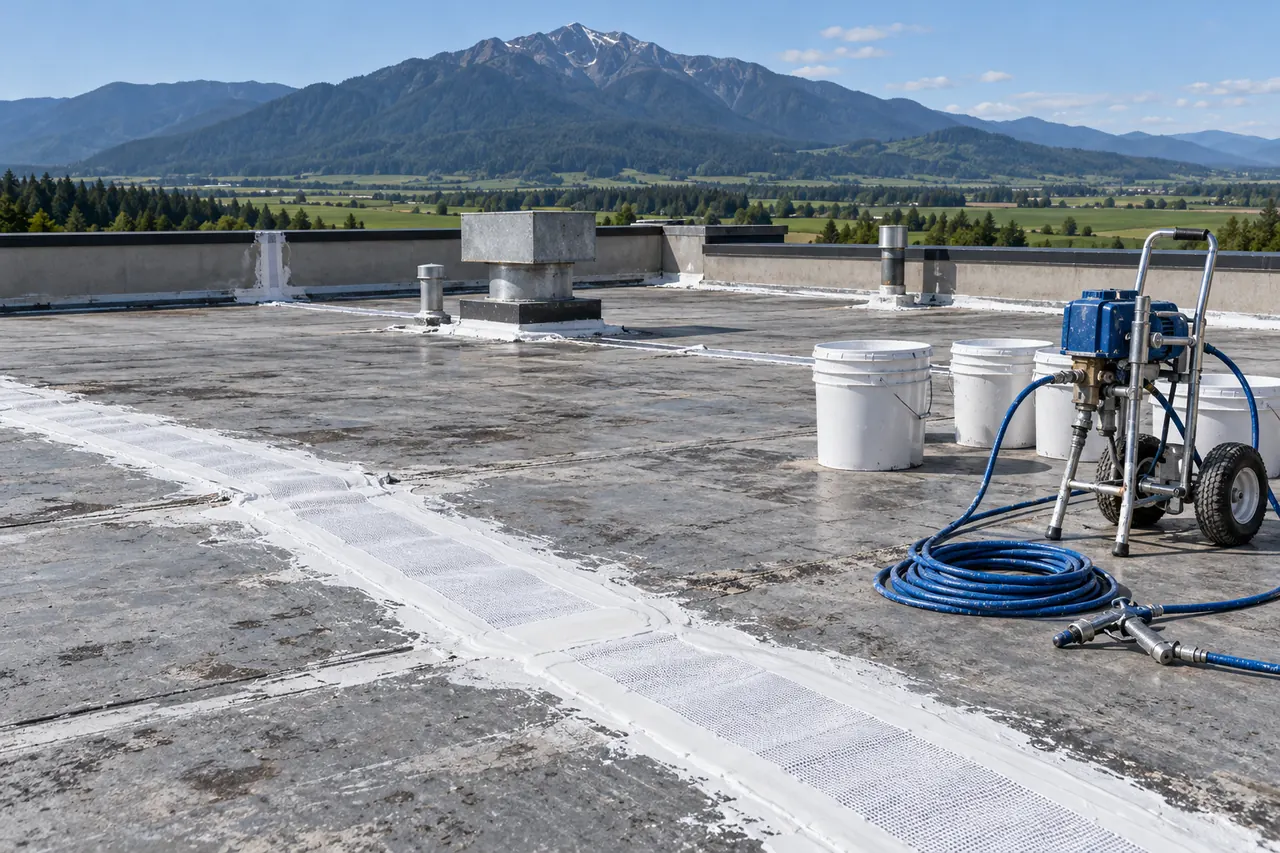
Curb corners crack as the unit vibrates and the deck moves. Fabric and silicone carried up the curb close those corners.
Silicone goes over several roof types, and each one starts with different prep.
| Option | What Goes On | Best Match | Watch For |
|---|---|---|---|
| Single-Ply Restoration | Clean, seam repair, primer on aged TPO or PVC, silicone in one or two passes | Warehouse and retail roofs with TPO or PVC in fair shape | Adhesion test on the old membrane |
| Built-Up Or Mod-Bit Restoration | Clean, blister repair, bleed-blocking primer, silicone | Older flat roofs with smooth cap sheets or gravel removed | Asphalt bleed-through stains white silicone without primer |
| Silicone Over Foam | Foam repair at thin spots, silicone topcoat to the maker's mil count | Foam roofs with low spots that hold water | Bird pecks and hail dents patched first |
| Silicone Recoat | Wash, patch, new silicone over the old silicone layer | Silicone roofs with the top layer wearing thin | Only silicone sticks to silicone |
For a flat roof that holds water, silicone adds a layer that stays put through standing water and summer heat.
Silicone keeps its hold under water that sits for days after a monsoon storm, where water-based coatings soften. Drains still get cleared, and the low spots between them stop being weak points.
A dry membrane stays in place under the silicone, so the cost centers on repairs and coating rather than removal and new insulation.
Spraying and rolling happen on the roof while offices, stores, and warehouses below stay in use.
When the silicone wears thin, the roof gets washed and recoated with silicone over the same base.
Call and describe where it sits. Ponding that lingers near drains is where silicone does its best work, once the drains are cleared.
Silicone needs a clean, dry, repaired surface and the right primer for the membrane underneath.
 Step 1
 Step 3
We map ponding, probe seams, and run a moisture survey with a meter backed by a few core cuts to find wet insulation.
A pressure wash and cleaner strip dust, chalk, and bird debris so the silicone grips the membrane instead of the dirt on it.
Wet sections are cut out and replaced, blisters are opened and patched, and split seams get reinforced with fabric.
Aged single-ply and asphalt roofs get primer, tested with adhesion pulls on small patches first.
Silicone goes on in one or two passes, and wet-film readings confirm the mil count across the field and around drains.
Two systems pair with silicone or replace it on certain flat roofs.
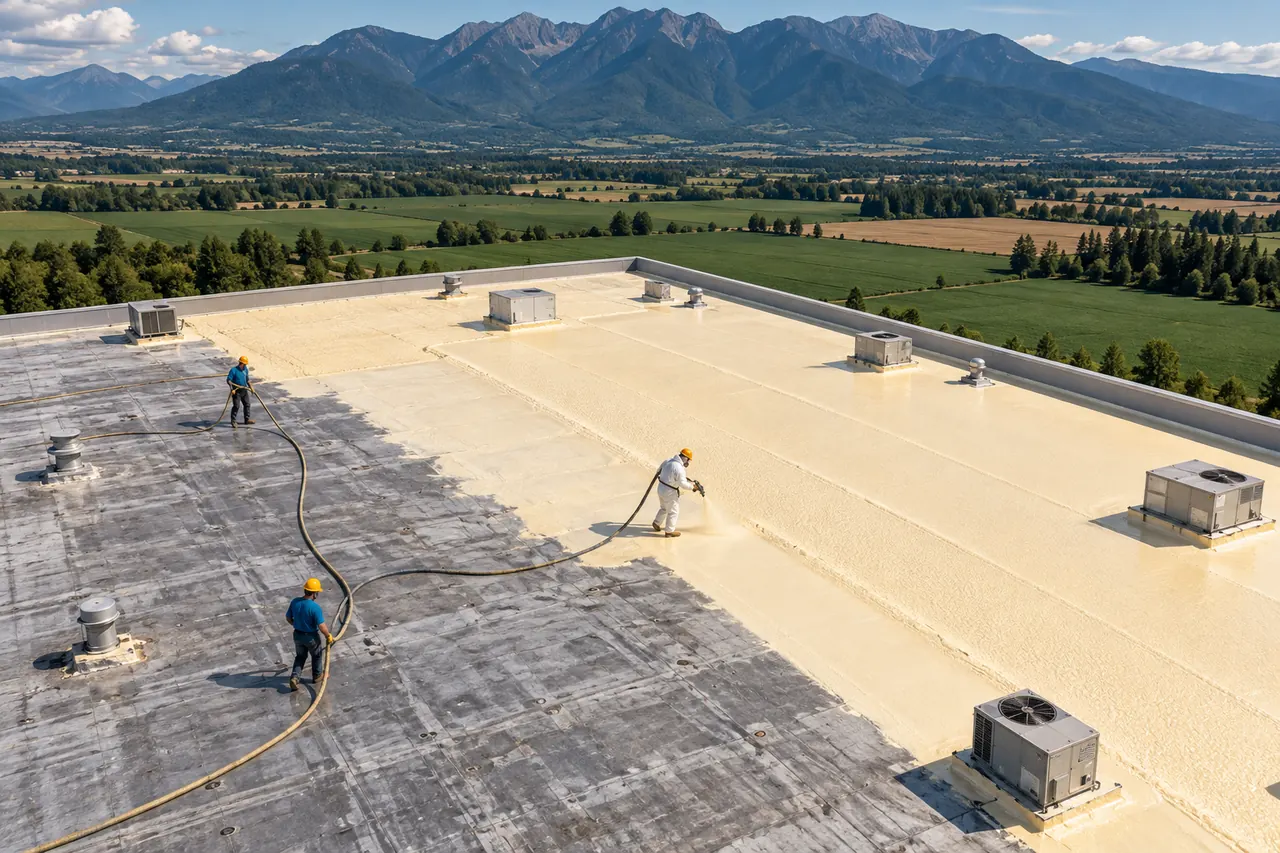
Spray foam builds slope into a flat deck before a silicone topcoat, which helps when low spots are too deep to leave as they are.
Spray Foam Roofing Details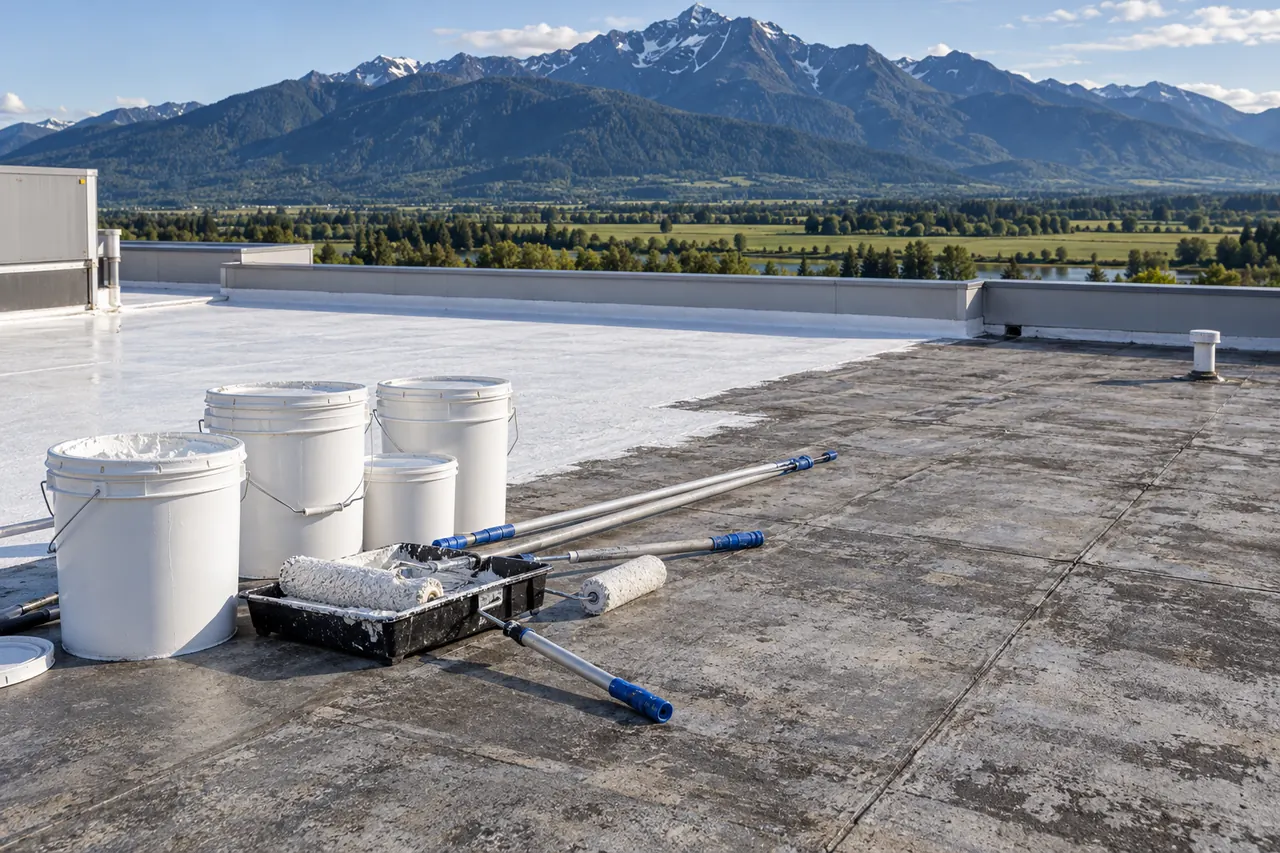
Roofs that drain within hours of a storm can take acrylic instead, which stays whiter in dusty air and recoats easily.
Acrylic Roof Coating DetailsWhat owners ask about ponding, dust, and future recoats.
Asked Most Often
When the roof is low-slope and holds water after storms. Silicone handles ponding far better than acrylic, so a roof with ponding rings around its drains after a monsoon downpour is a common candidate.
Plan for two tradeoffs: silicone collects dust and dulls sooner in this valley, and future recoats have to be silicone.
A mil is one thousandth of an inch, and the dry film thickness largely sets how long the silicone lasts. Wet-film gauges check it during spraying, and small cut samples confirm it afterward, especially at drains and edges where thin spots wear first.
Yes, with the right primer or tie coat between them. The old acrylic has to be firmly attached, which a few adhesion test patches confirm before the full job.
Dust sticks to silicone more than to acrylic, and blowing dust is common here. A rinse with water and a soft brush brings back the white surface between recoats.
Yes. Silicone tolerates water sitting on it, but clogged drains still back water up to parapets and scuppers. Drains get cleared, their clamping rings checked, and the membrane around them reinforced.
Yes, though it gets slick when wet or dusty. Walkway pads to HVAC units keep service traffic on a set path and off the coated field.
Cured silicone handles cold well. The concern is application: it needs a dry surface, so frost or dew on the roof delays the start on winter mornings.
Get a ballpark range for coating versus replacement, or call about the ponding you see.
Want A Call About Your Roof?
Leave a name and number, or call (623) 310-0164 now.