More Years From Flat-Lying Shingles
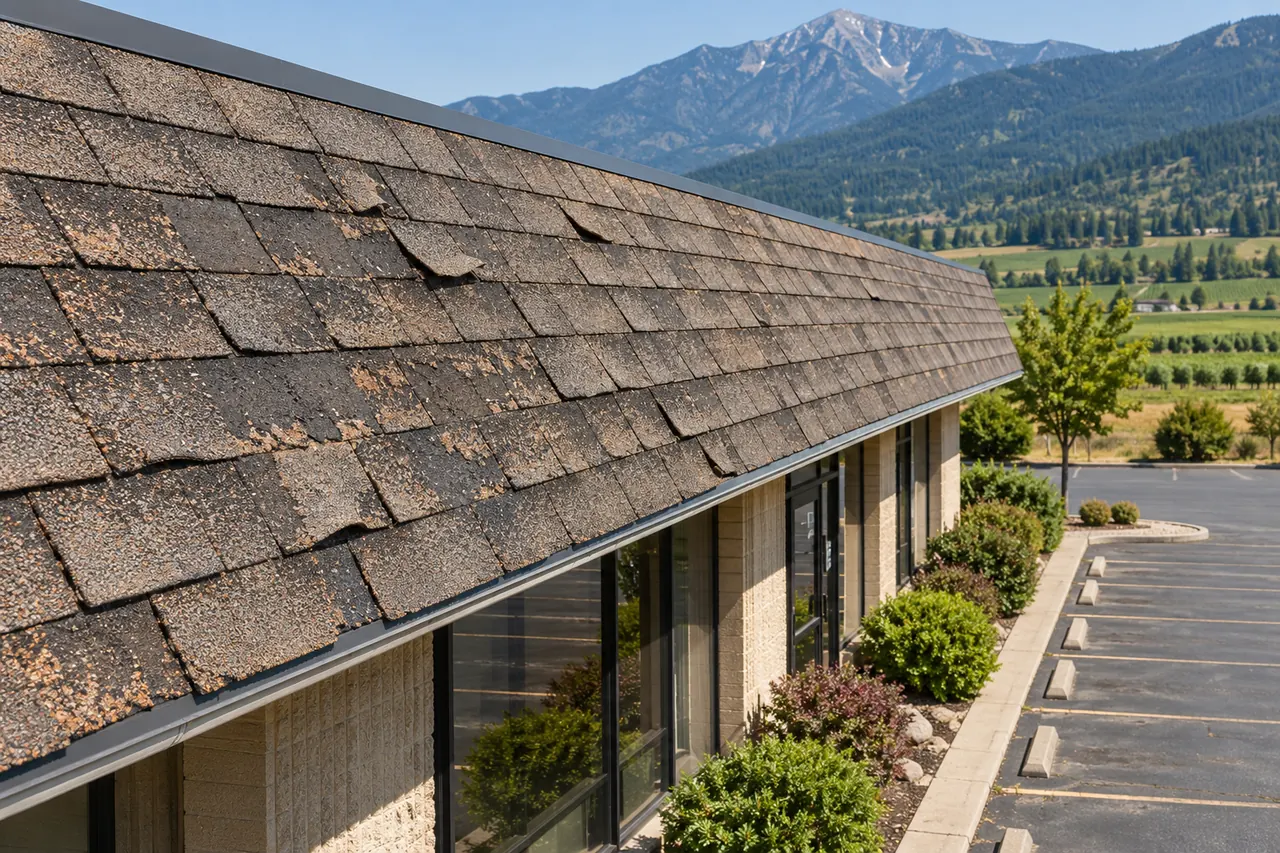
A coating rated for asphalt shingles seals the surface and slows granule loss on a roof that is aged but still flat, which pushes the reroof further out.

Steep-Slope Commercial Roofs
We coat aged asphalt shingle roofs on Safford offices, clinics, and churches when the shingles still lie flat. When they are past that point, we recommend replacement.
Shingle coating has a narrow gate, and most of the decision happens on the roof walk.
Shingle trouble shows up as granules in gutters and stains along the eaves.
Stains high on an inside wall usually sit under the eave, where debris or worn shingles let water back up.
Bare spots at the eaves and in valleys show where shingles have worn the most. Heavy loss there points to replacement.
Sand-like granules collecting at downspout outlets mean the shingles are shedding their top layer.
A few granules in the gutter is normal wear. A field with most granules gone has little left for a coating to protect.
Drips during monsoon storms with strong wind often come from lifted tabs or open flashing at walls.
Tabs that curl or lift won't lie flat under a coating. A few get resealed, and widespread curling means replacement.
Daylight or dark stains on the roof deck seen from the attic show where water has worked into the wood.
Spongy spots underfoot mean wet or rotted decking. Those sections are repaired before any coating, or the roof is replaced.
Past repair bills that keep listing the same valley or wall line show where the shingle roof is weakest.
Step and wall flashing gets resealed or replaced before coating, since coating alone won't close a gap there.
Options range from a full shingle coating to a reroof when the shingles are past it.
| Option | What Goes On | Best Match | Watch For |
|---|---|---|---|
| Approved Shingle Coating | Cleaning, spot repairs, primer if the maker calls for it, coating rated for asphalt shingles | Flat-lying shingles with most granules | Maker approval and existing coverage |
| Spot Repair Then Coat | Resealed tabs, replaced shingles, new flashing, then coating | A good field with a few problem areas | Matching replacement shingles |
| Section Replacement Then Coat | Worn eave or valley sections replaced, then the whole roof coated | Wear limited to one area of the roof | Blending old and new sections |
| Reroof Instead | Tear-off and new shingles or another roof system | Curled tabs, soft deck, or heavy granule loss | Permit from the local office |
When the shingles qualify, coating extends the roof without a tear-off.
A coating rated for asphalt shingles seals the surface and slows granule loss on a roof that is aged but still flat, which pushes the reroof further out.
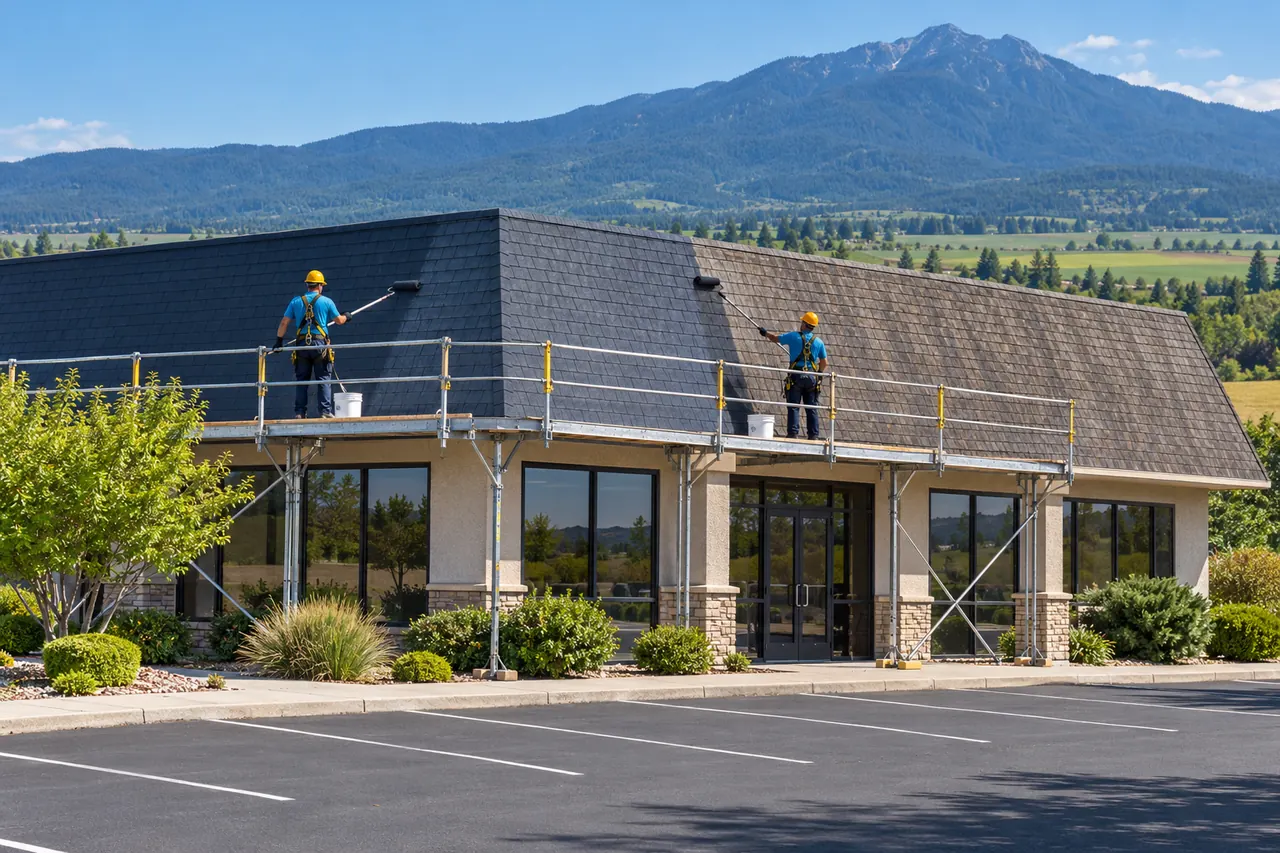
Work happens from the roof and scaffolding, and entrances stay clear for staff and visitors.
Coating keeps the existing shingles in place instead of sending a full tear-off to the dump.
A coated shingle roof can be cleaned and recoated later while the deck stays dry.
Call and describe what you see. Granule loss is the first thing checked when deciding between a shingle coating and a reroof.
The first two steps decide whether coating happens at all.
 Step 1
 Step 4
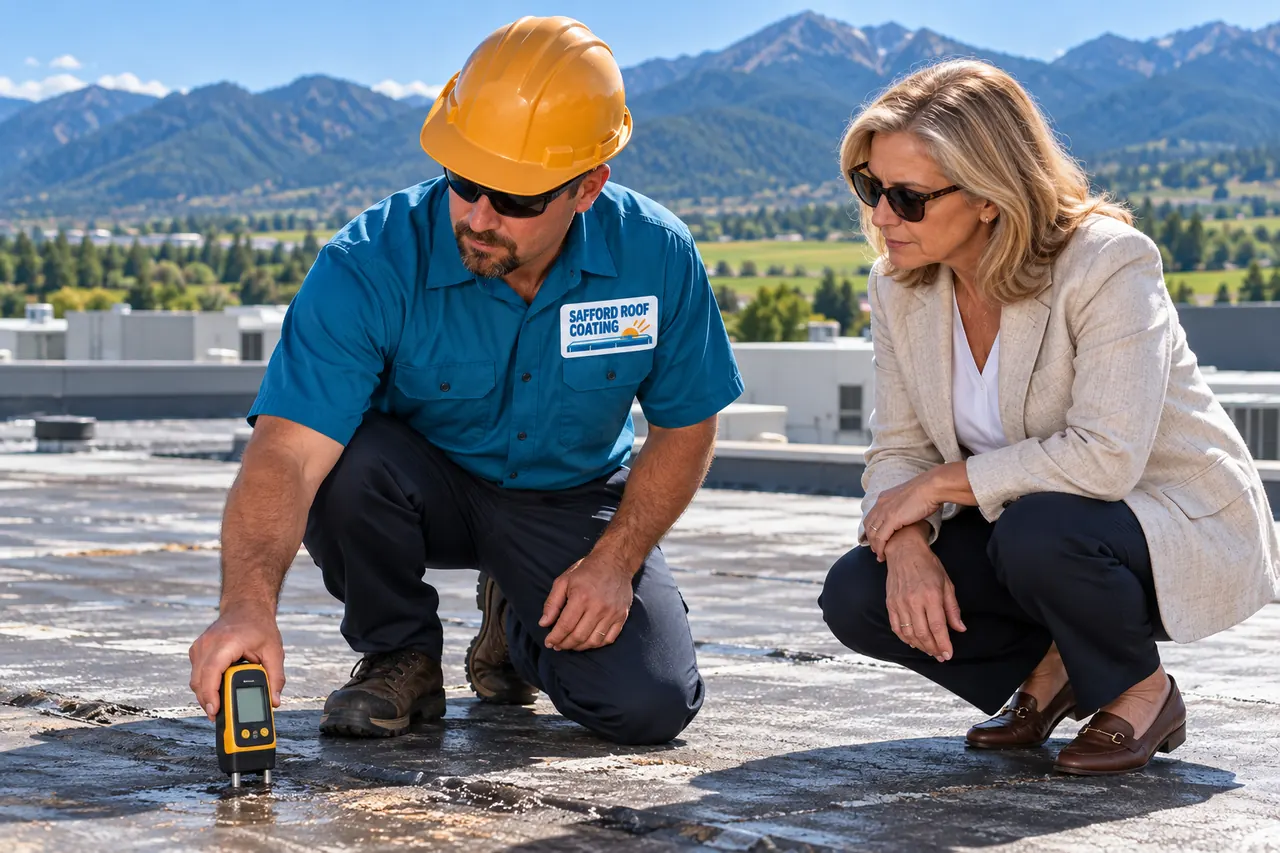
We check how flat the shingles lie, how many granules remain, and whether the deck feels firm across every slope.
Before any work, the coating maker's approval for asphalt shingles and the effect on existing shingle coverage get checked.
Lifted tabs get resealed, damaged shingles replaced, and wall and valley flashing repaired.
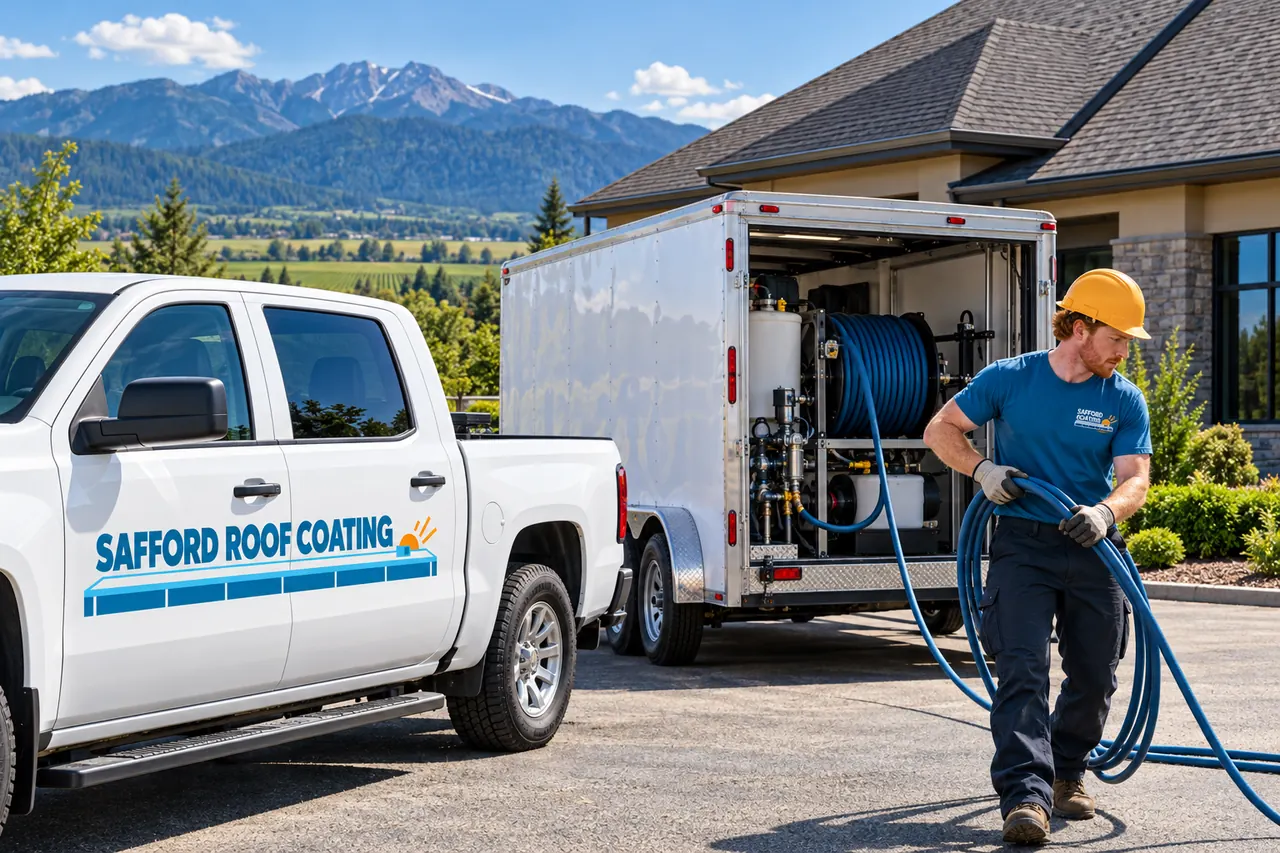
The roof is washed gently to keep granules in place, then primed if the coating maker calls for it.
Coating goes on slope by slope from the ridge down, so runoff never crosses wet coating.
Shingle buildings often have other roof sections on the same property.
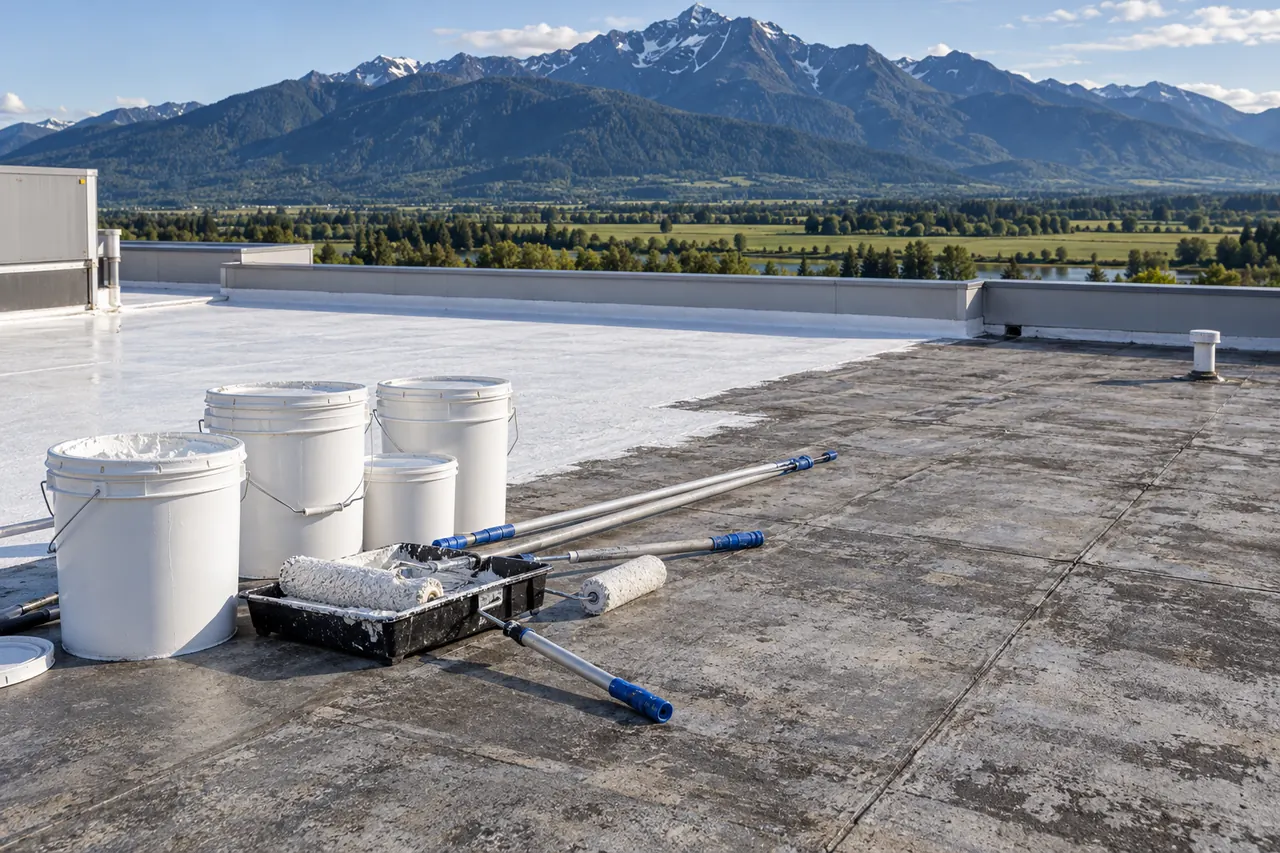
Buildings that pair a shingle front with a low-slope rear wing often coat that rear section with acrylic where it drains well.
Acrylic Roof Coating Details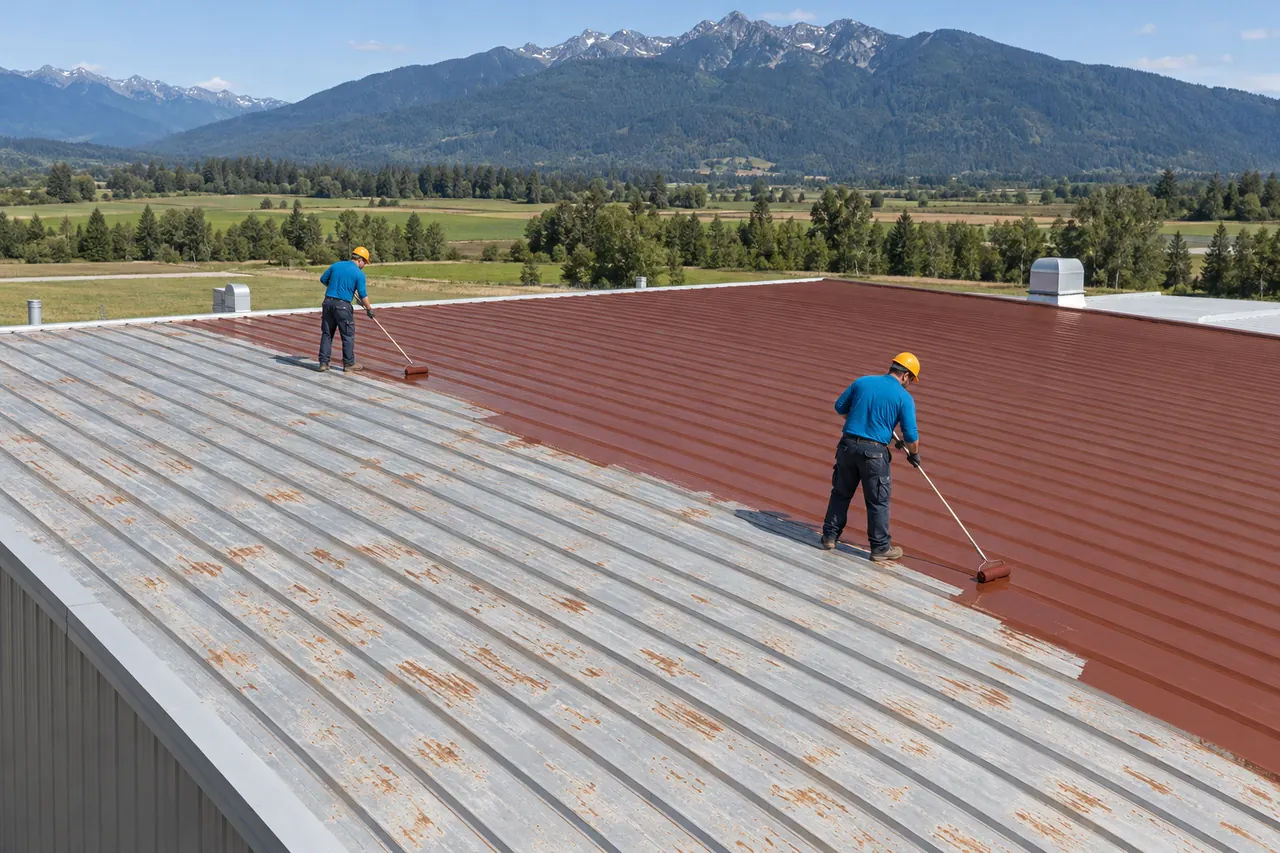
Metal canopies and rear shop buildings on the same lot can be coated in the same visit, after rust and screws are handled.
Metal Roof Coating DetailsAnswers for owners of steep-slope commercial buildings.
Asked Most Often
Sometimes. It works on steep-slope buildings such as churches, offices, and clinics where the shingles are aged but still lie flat, most granules remain, and the coating maker approves its product for asphalt shingles.
Curled tabs, a soft deck, or heavy granule loss at the eaves point to replacement instead. Existing shingle maker coverage gets checked before any coating starts.
Granules shield the asphalt from the sun. Where most are gone, the shingle is already breaking down, and a coating has little firm surface to grip.
Yes. The roof takes on the color of the coating, often white or light gray. Thatcher reviews some visible color changes, so owners there check with the town first.
That turns on the scope and the office with jurisdiction. A recoat and a reroof that replaces decking are treated differently, so a call to the city, town, or county office comes before work starts.
Rarely. Multiple layers add weight and hide deck problems, and coating makers set their own limits on what their shingle products go over.
Low pressure and a soft wash. High-pressure washing strips granules, so the cleaning is gentle and focused on dirt and debris.
Worn sections can be replaced with matching shingles, and then the whole roof is coated so it wears evenly.
Ask for a ballpark range, or call to talk through granules, tabs, and the deck.
Want A Call About Your Roof?
Leave a name and number, or call (623) 310-0164 now.