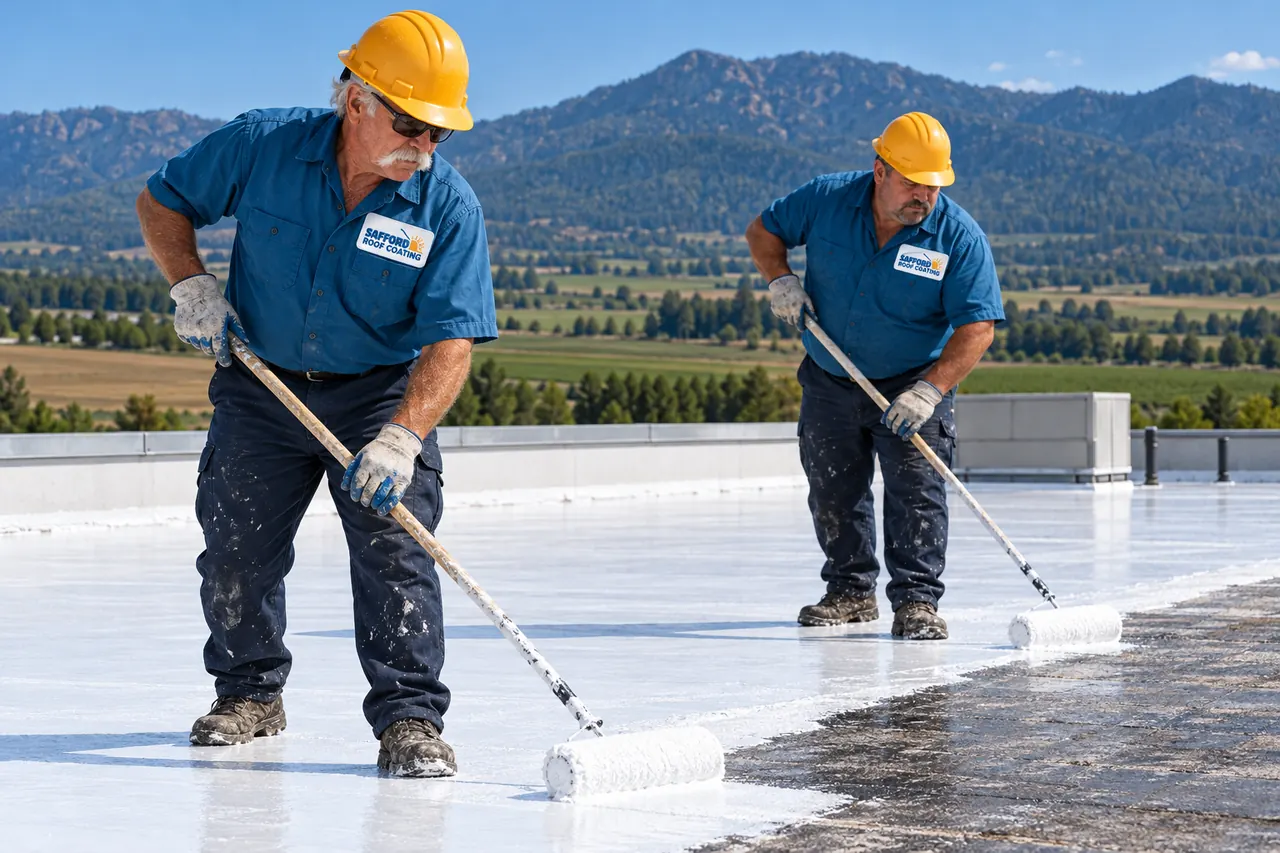
Customers Keep Reaching The Door
Coating happens on the roof, with the lift and materials staged away from entrances, so the building stays open to customers coming off US-191.

Swift Trail Junction, Arizona
We handle roof coating on commercial buildings around Swift Trail Junction, south of Safford on US-191. Lift and material staging get planned first on these spread-out lots.
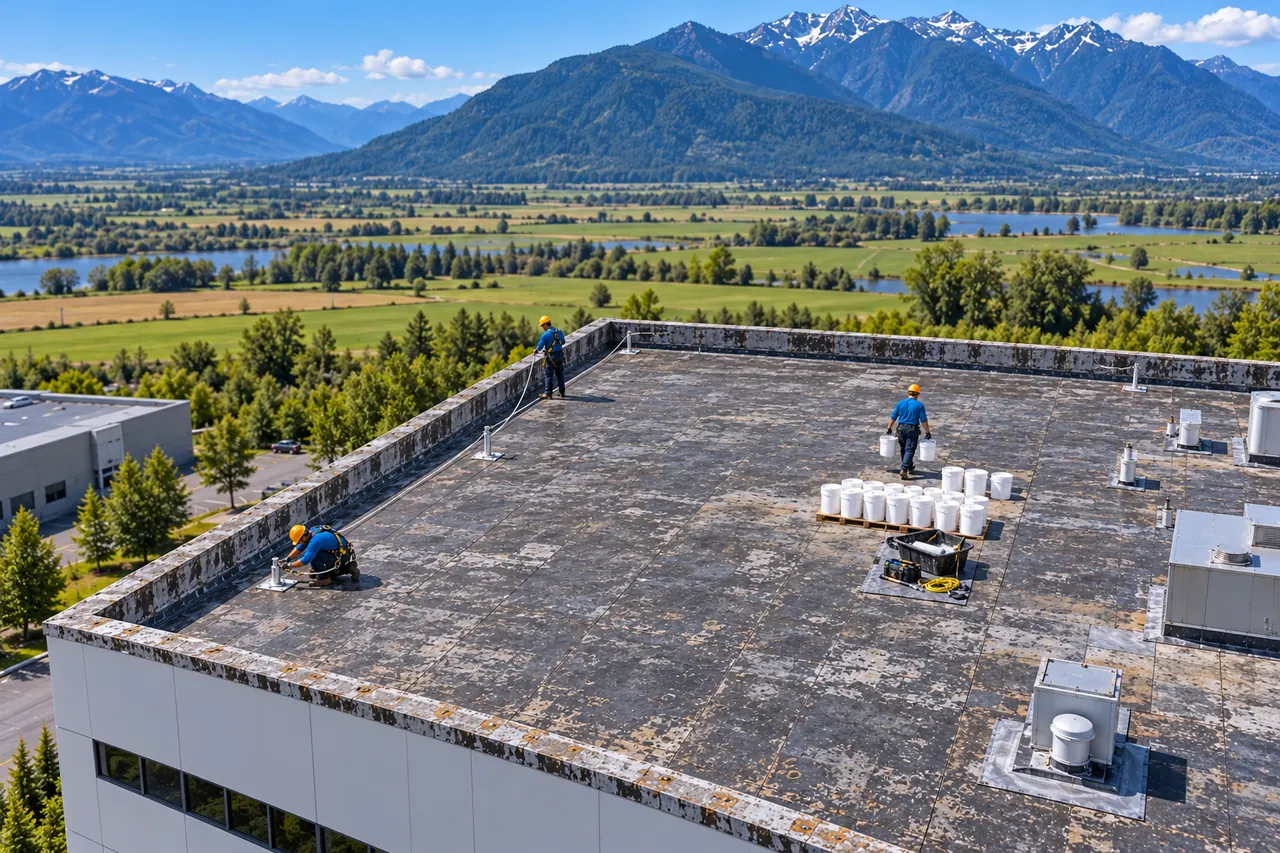
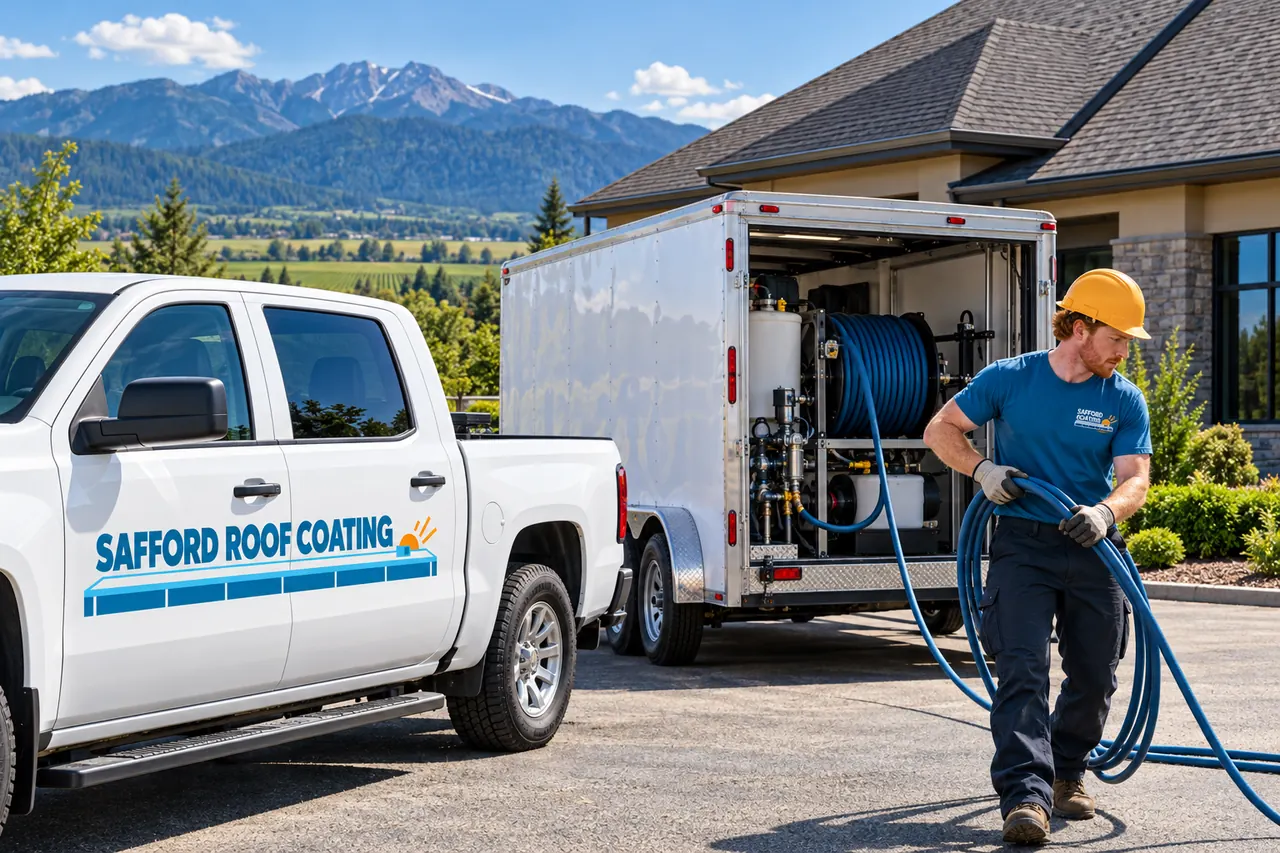
Commercial lots around Swift Trail Junction spread out along US-191, where SR 366 heads toward the Pinaleño Mountains. Buildings sit back from the road with parking, yards, and frontage between them and the highway.
Getting coating, primer, and equipment onto those roofs takes planning: where the lift sets up, how hoses run, and how customers keep reaching the doors.
Buildings on open lots take full sun and wind from every side.
Stains along the storefront side often trace to the parapet cap or the roof edge facing the highway.
Edges and parapet caps on open lots take wind and grit. They get resealed and coated with fabric at the joints.
South-facing rooms that heat up fast sit under the roof sections taking the most direct sun.
Coating wears fastest on south-facing slopes. Mil readings show which sections need the heaviest new coat.
Drips after a dust storm followed by rain point to grit-scoured coating or debris in the drains.
Blowing grit scours the surface and packs into drains. A wash and drain clearing come before any repairs.
Metal shops on these lots show rust drips at the laps and screw rows above work bays.
Screws loosen as panels move in the heat. New fasteners and sealed laps come before the topcoat.
Water inside near a unit usually comes from cracked curb flashing above it.
Curb corners get fabric and coating, and a walkway pad keeps service visits off the field.
On a highway lot, coating keeps the business open and the frontage clear.
Coating happens on the roof, with the lift and materials staged away from entrances, so the building stays open to customers coming off US-191.
A dry roof stays in place, and the budget goes to edges, drains, and coating rather than removal.
Little old roofing leaves the property, so fewer debris trucks cross the parking area.
When the coating wears from sun and grit, the roof gets washed and recoated over the same base.
Metal shops and flat-roofed businesses make up most of the roofs on these lots.
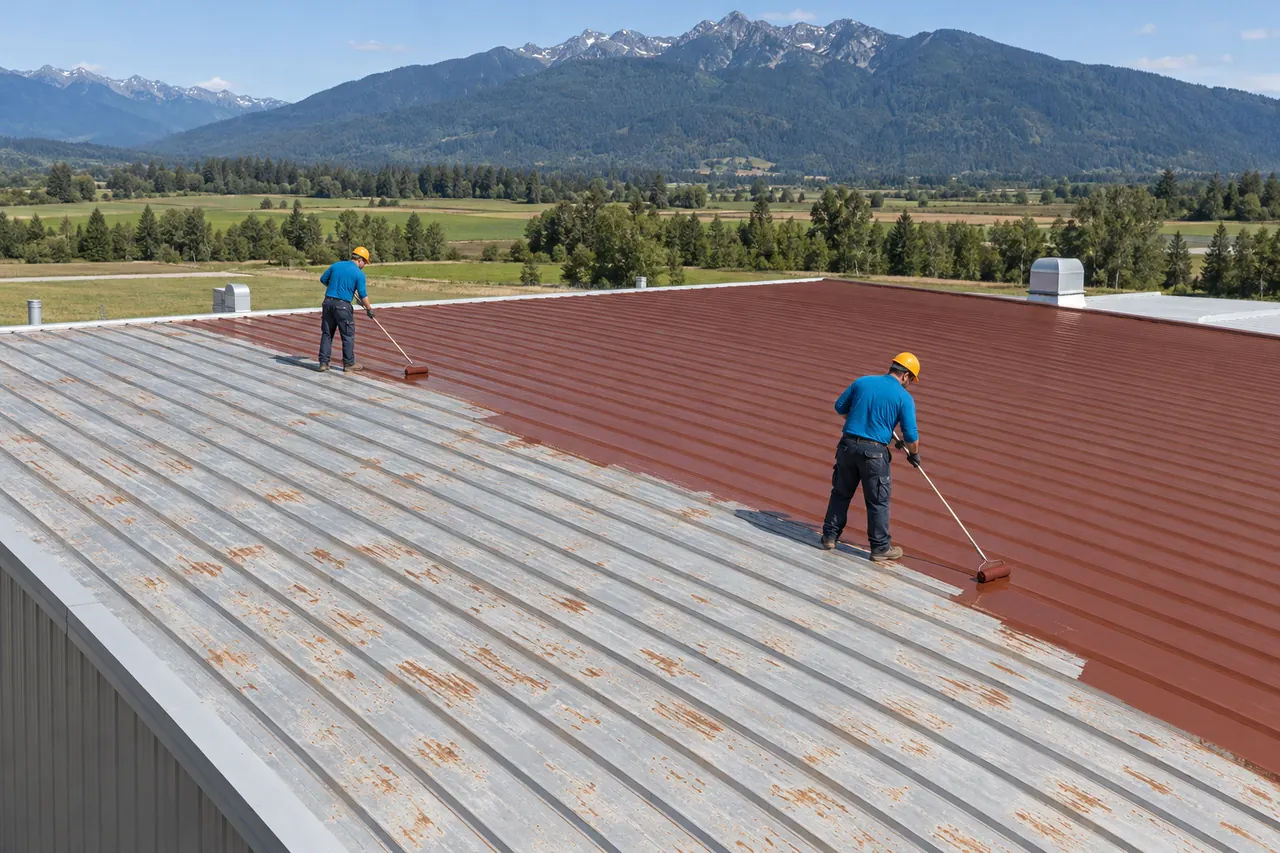
Metal shops and storage buildings on these lots get screws, laps, and rust handled before an acrylic or silicone topcoat.
Metal Roof Coating Details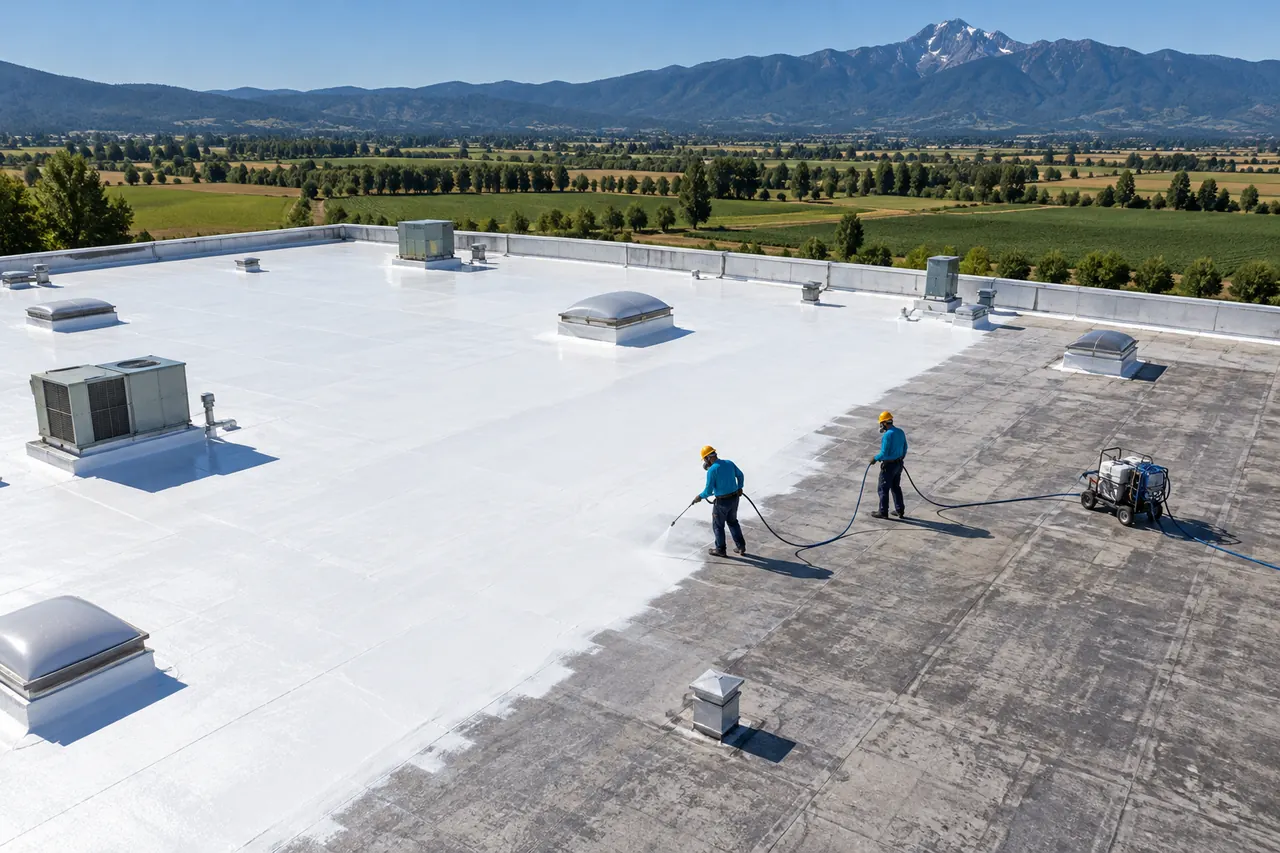
Flat-roofed businesses with water sitting near drains get silicone over repaired seams and edges.
Silicone Roof Coating Details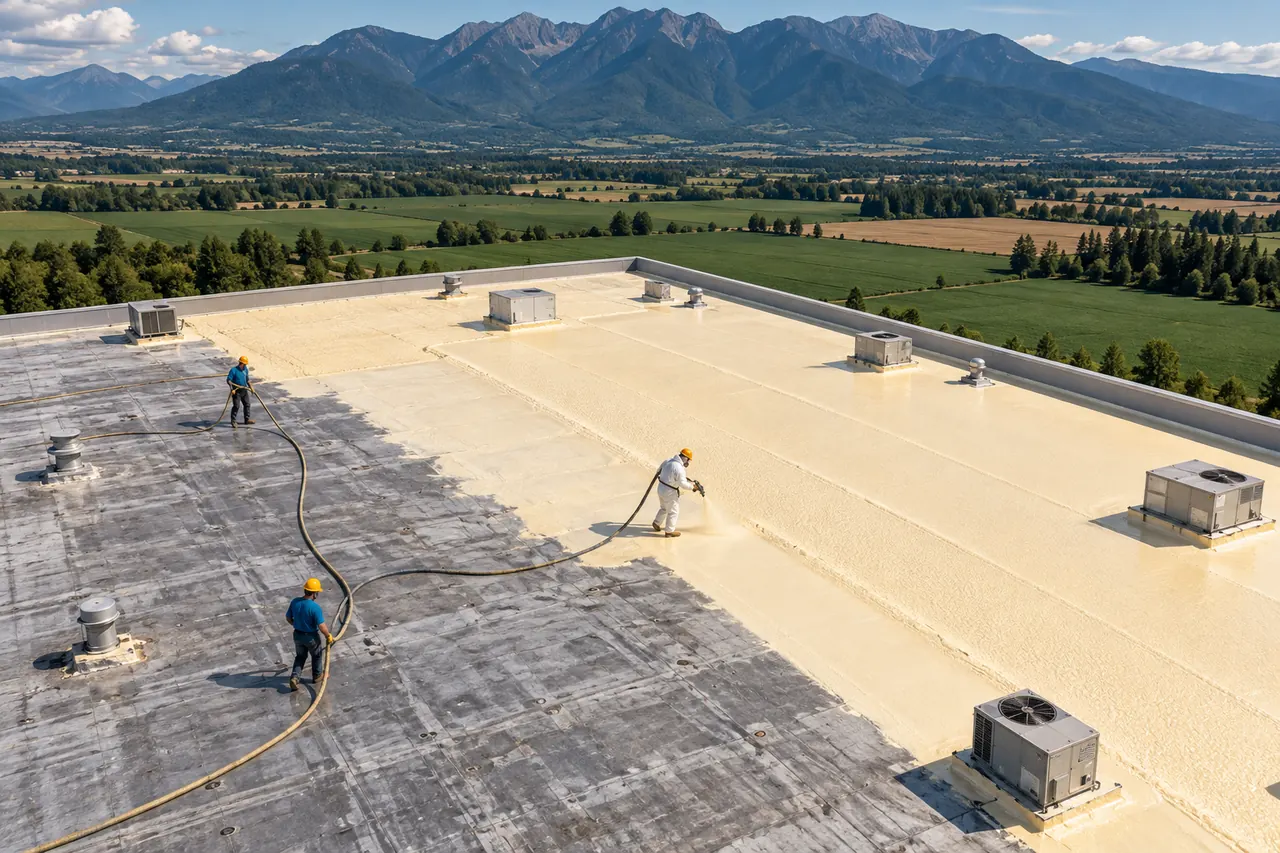
Older flat roofs that need added insulation and slope can take spray foam, with overspray kept clear of vehicles on the lot.
Spray Foam Roofing DetailsCall to talk through lift placement and where materials can sit. Staging decisions come before the start date.
Staging gets as much planning as the roof work itself.
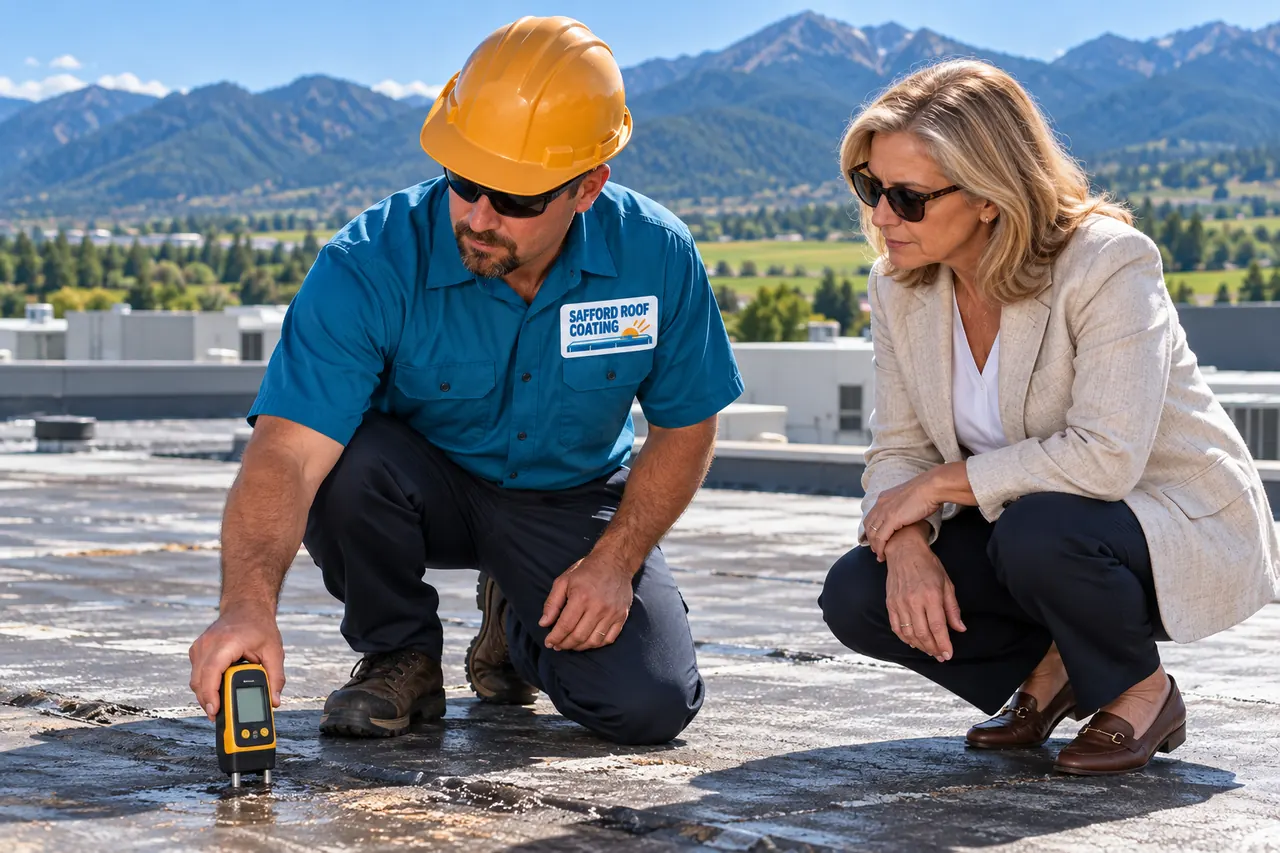 Step 1
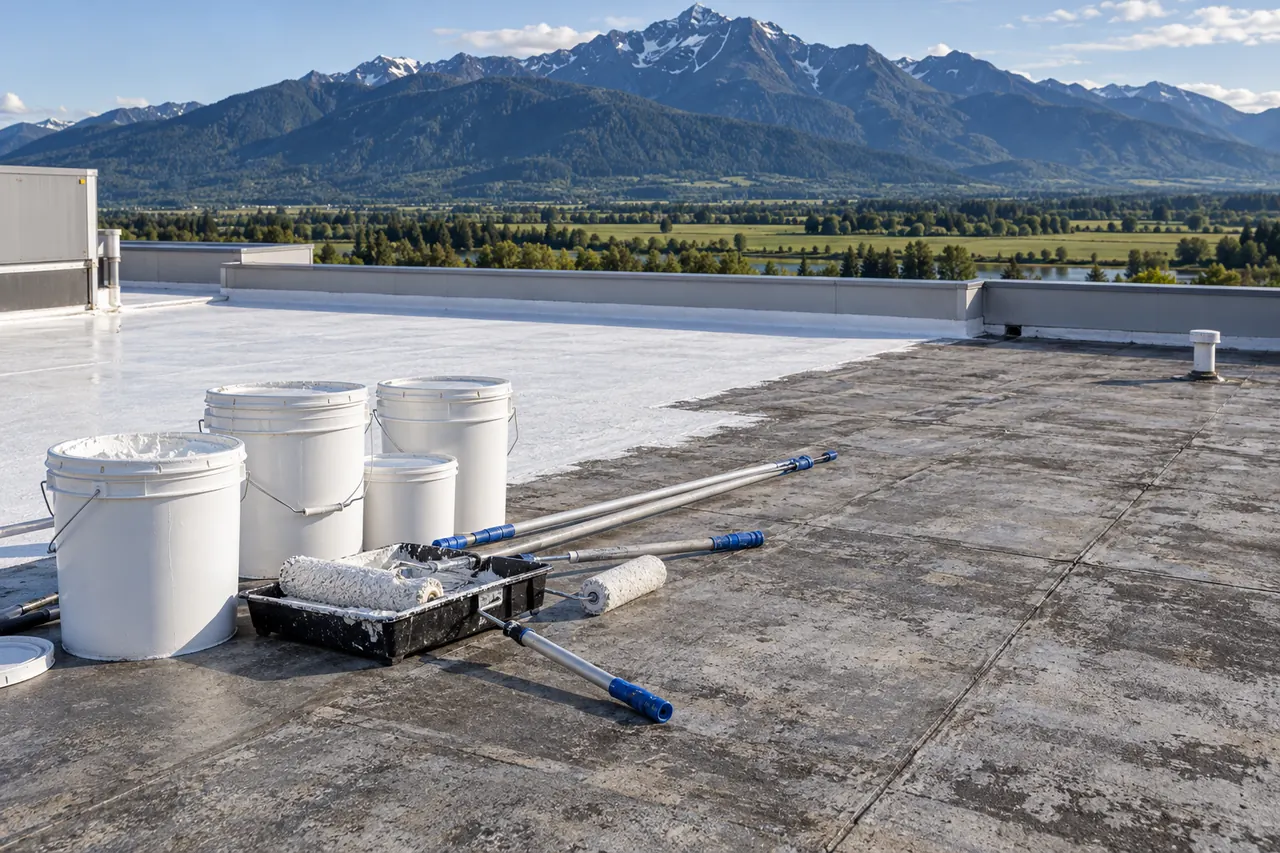 Step 3
We walk the roof and the lot together, noting edges, drains, and curbs above, and firm ground for a lift below.
The lift to the roof, the coating pails, and the rigs go where trucks and customers can still pass, with cones marking the work zone.
Grit and dust come off with a pressure wash, and drains and gutters get cleared before repairs.
Parapet caps, edge metal, curb corners, and seams get sealed and reinforced with fabric.
Coating goes on in passes to the specified thickness, and equipment leaves the lot as each section finishes.
Swift Trail Junction is the southern edge of the service area, with the other towns north along US-191 and US-70.
Questions from owners of businesses on open lots south of Safford.
Asked Most Often
Roof condition drives cost more than square footage alone. The main factors are the moisture survey and how much wet insulation comes out, the roof surface, repairs to seams, fasteners, and flashing, the coating chemistry and mil thickness, and the count of skylights, curbs, vents, and pipes.
Access matters here too: roof height, parapets, and where a lift can safely set up on the lot.
The area is unincorporated, so Graham County Planning and Zoning handles permits through its online portal. Scope matters, since a recoat and a reroof that adds insulation are treated differently.
On firm, level ground close to the roof section being worked, away from highway frontage and customer parking. Soft shoulders and septic areas are avoided.
Yes. Staging is set so customers can park and reach the door, and work over entrances is timed for slower hours.
Dust settles fast on a washed roof, so coating starts as soon as the surface dries. Work pauses on high-wind days that would blow grit into wet coating.
Often. Each roof gets its own system, such as acrylic on the metal shop and silicone on the flat office, and one setup serves both.
Before monsoon season, after the cold months, and after any big dust or hail storm, since open lots take wind from every side.
Get a ballpark range, or call to talk through the roof and the lot.
Want A Call About Your Roof?
Leave a name and number, or call (623) 310-0164 now.