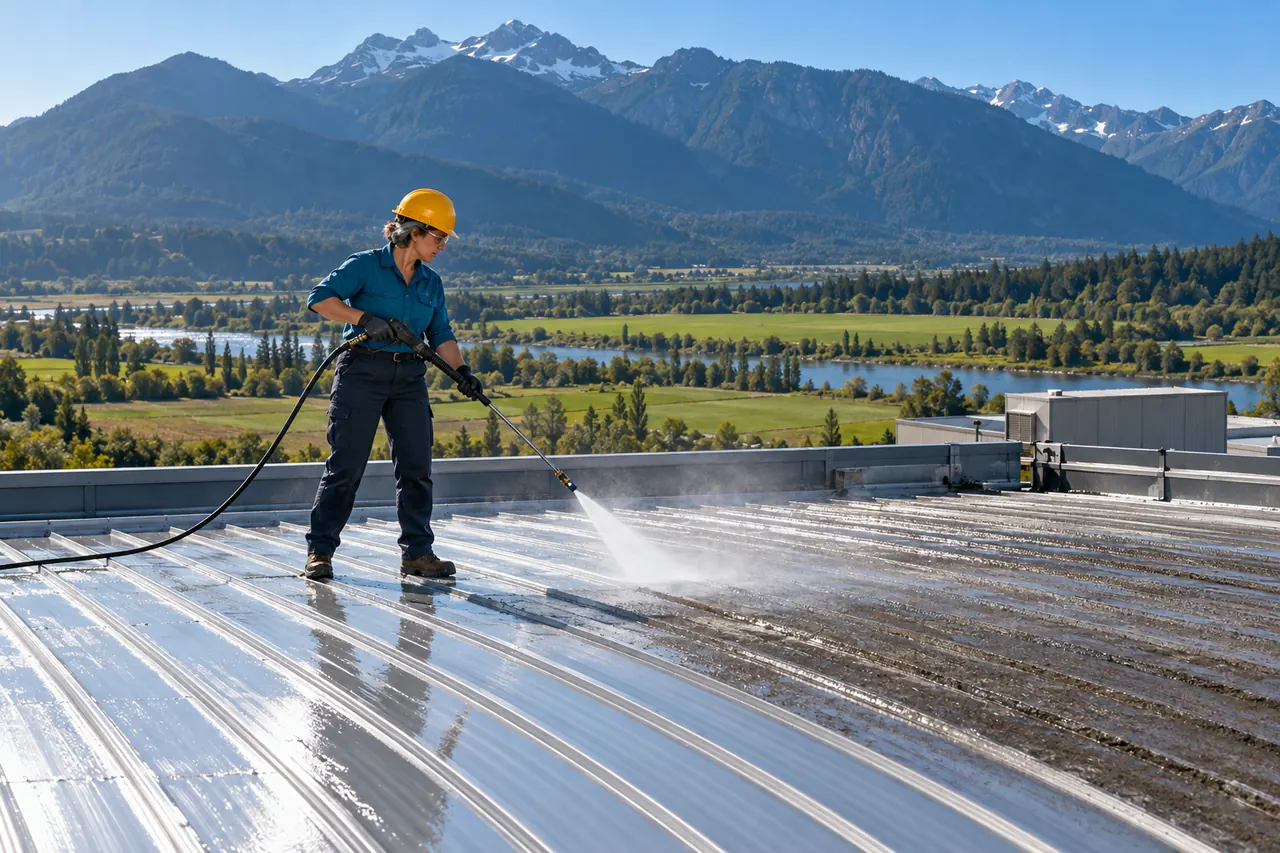
Metal Roof Coating
Fits shops, barns, and warehouses with exposed-fastener or standing-seam panels that still hold a screw, where rust sits on the surface and laps can be sealed.
Order of work
- 1Wash
- 2Prime Rust
- 3Seal Laps
- 4Topcoat

Gila Valley Commercial Roofs
We coat metal, flat, foam, and shingle commercial roofs in Safford, Arizona. The work starts with a roof walk, then repairs, then the coating system that fits the surface.
Most Safford commercial roof coating jobs start with something seen indoors or from a ladder. Each pair links what shows up inside with the roof detail behind it.
Stains that grow after each storm point to water traveling under the roof surface, often from a seam or curb several feet away.
Seams on single-ply and built-up roofs pull apart as the deck heats and cools every day. They get repaired and reinforced before coating goes on.
Water running down a warehouse or shop wall usually traces to a clogged scupper or a parapet cap with open joints.
Dust, leaves, and nesting debris pile up at drains here. Standing water around them softens acrylic, so drains get cleared and checked first.
Orange flakes landing on equipment below a metal roof mean the panel underside or the fastener rows are corroding.
Surface rust gets ground or wire-brushed and primed. Backed-out screws and worn washers are replaced so the coating covers a tight surface.
Upstairs offices and storerooms that heat up fast in June often sit under a dark or chalked roof surface.
Old acrylic turns powdery on south-facing slopes. A chalk test and a wash show how much of the old layer can stay under the new coat.
A musty smell with no visible drip can mean wet insulation sitting above the ceiling grid.
Soft spots underfoot usually mean wet insulation. Those areas get mapped with a moisture meter and cut out first, because coating would trap the water.
Each system goes on in its own order. The rail on every card shows what happens to the roof before the topcoat.
Fits shops, barns, and warehouses with exposed-fastener or standing-seam panels that still hold a screw, where rust sits on the surface and laps can be sealed.
Order of work
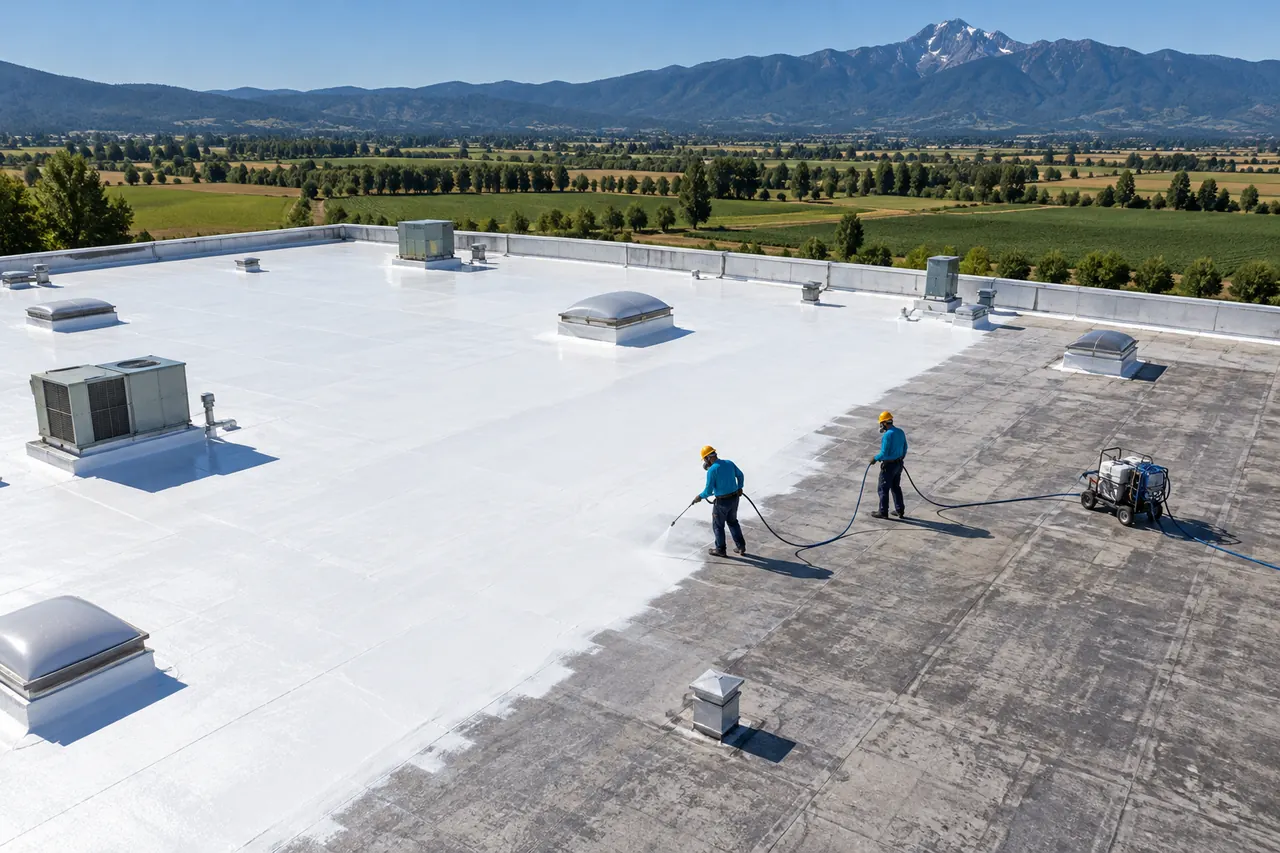
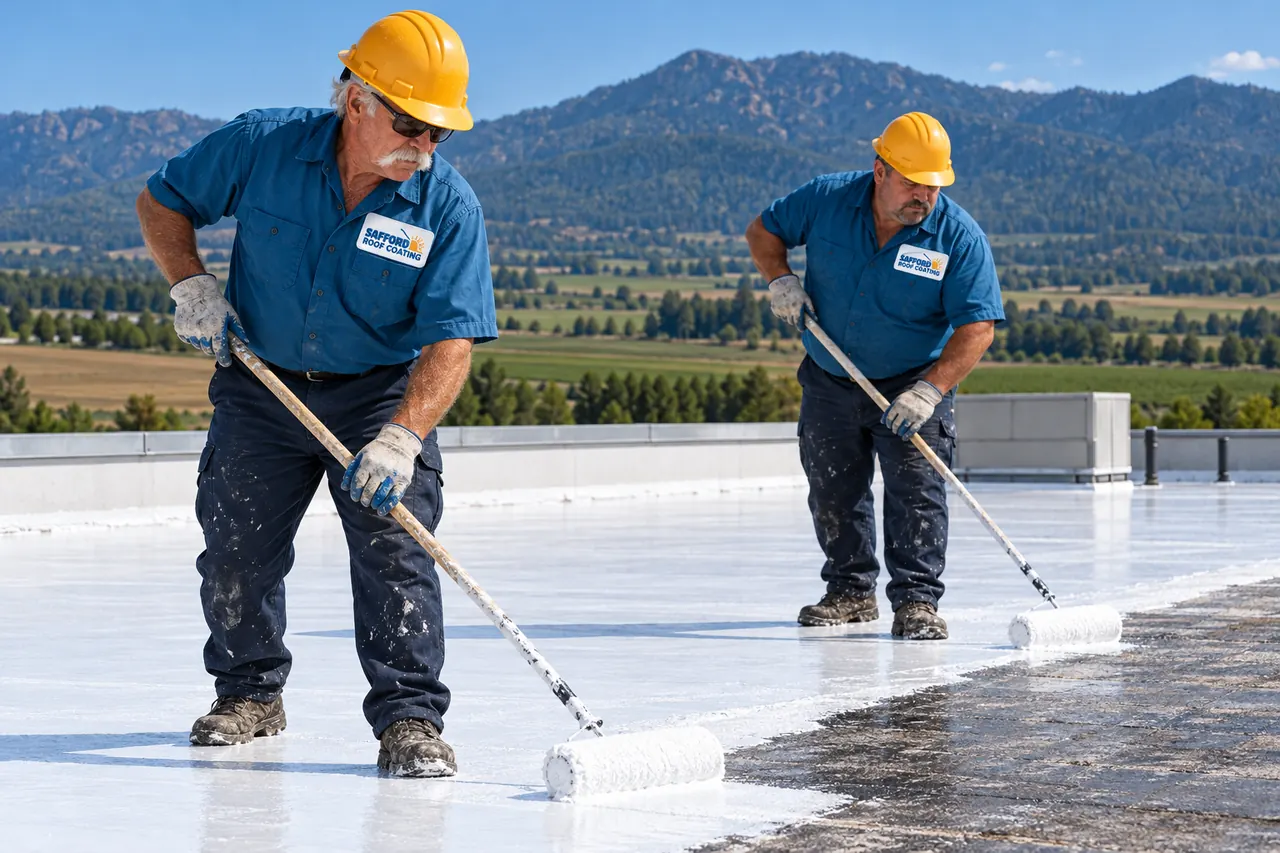
Built for low-slope roofs that hold water after a storm. It handles ponding around drains and goes over single-ply, built-up, modified bitumen, and foam.
Order of work
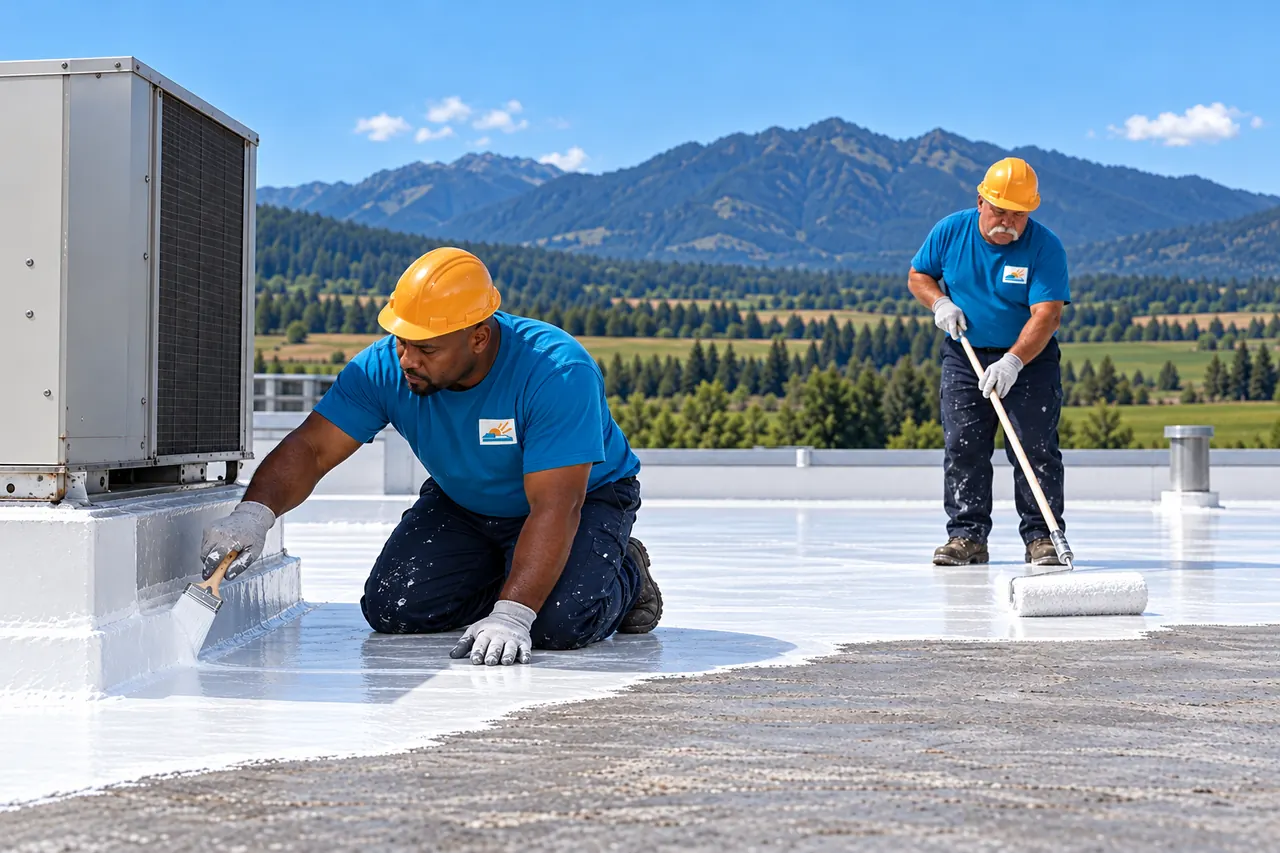
A water-based coating for roofs that drain fast, such as sloped metal and well-pitched foam. White acrylic stays bright longer than silicone in dusty air.
Order of work
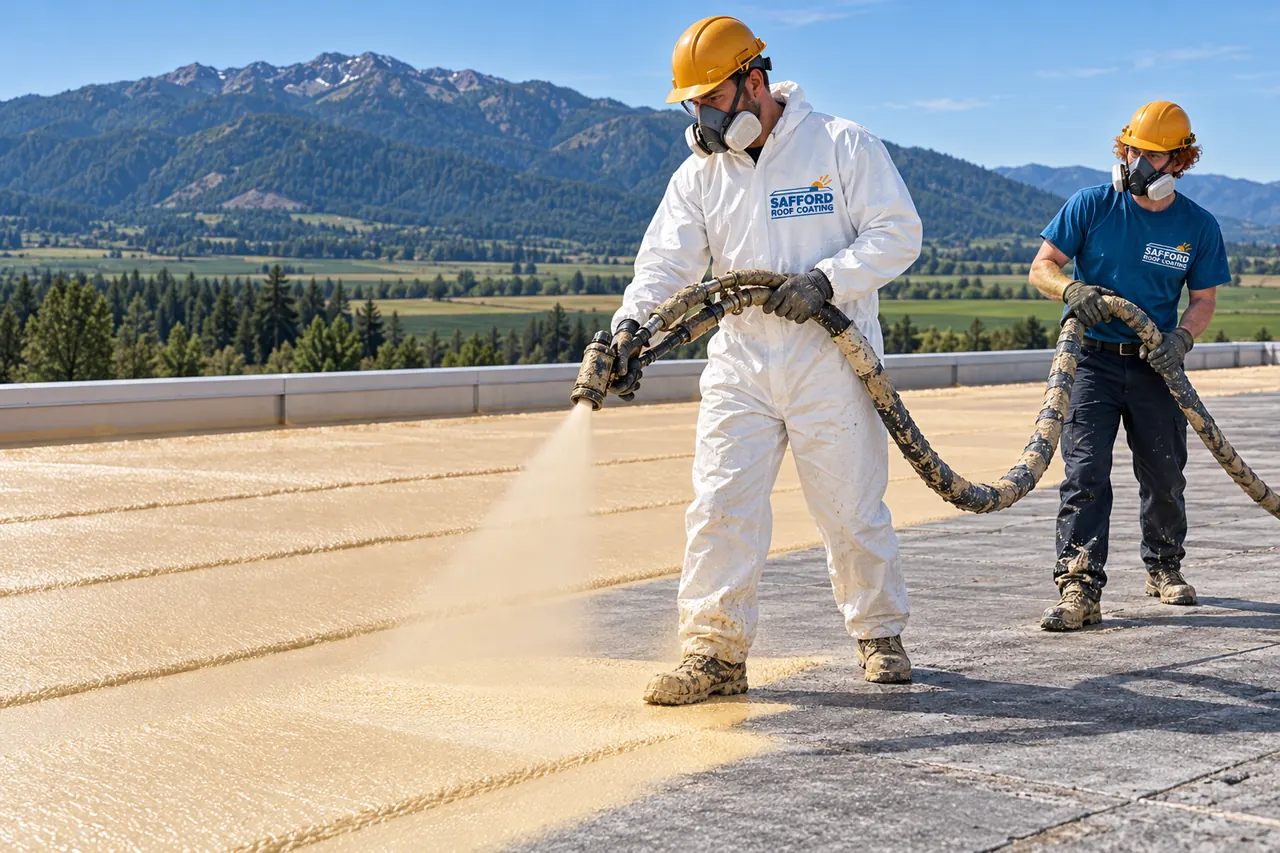
Spray polyurethane foam adds insulation and fills low spots on flat decks, then takes a silicone or acrylic topcoat to keep the sun off the foam.
Order of work
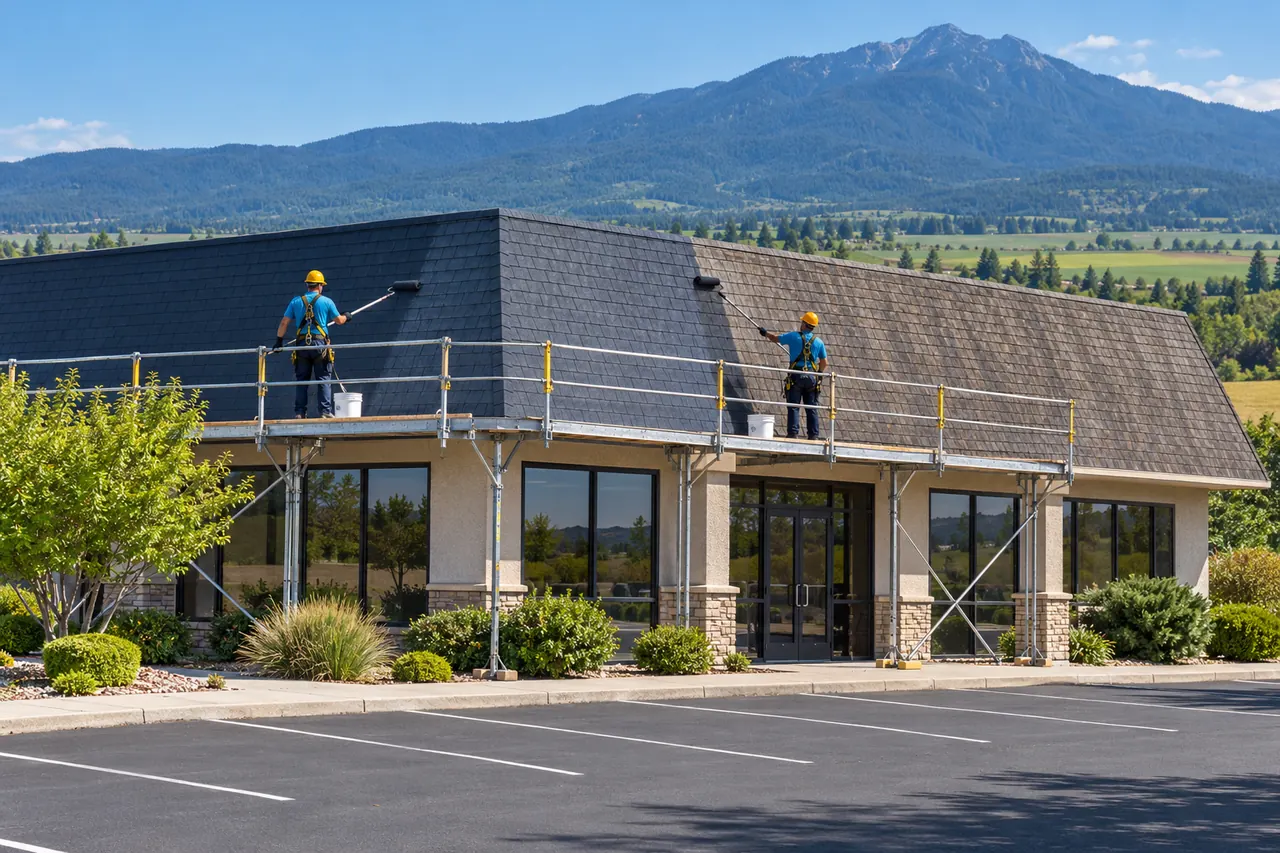
Covers aged commercial shingles that still lie flat with most granules in place, on buildings such as offices, clinics, and churches.
Order of work
Coating keeps the existing roof in place and adds a new surface over it. Here is what that changes for the building.
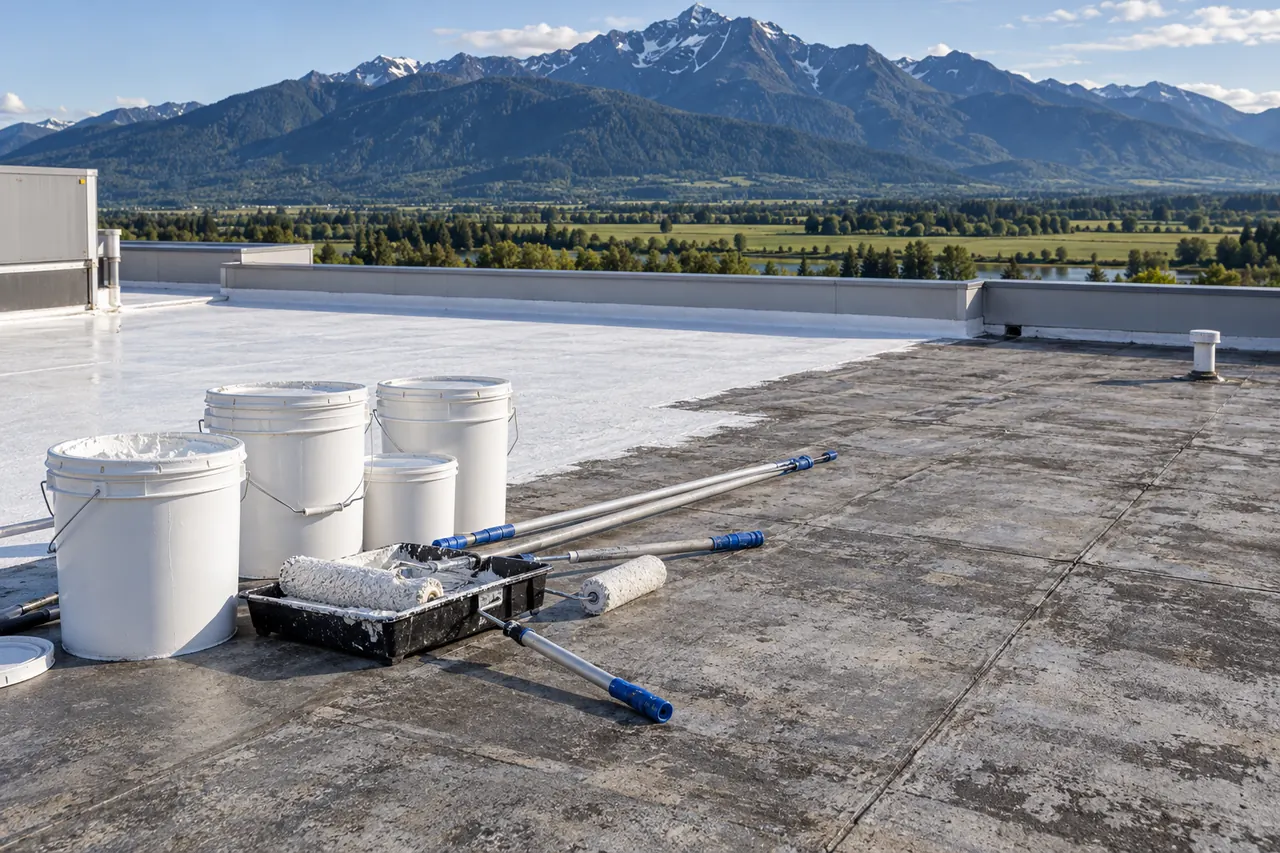
Most of the budget goes to repairs and coating, and tear-off is left out where the deck and insulation are dry. The moisture survey decides how much of the old roof stays.
Crews work on the roof above occupied space and stage pails and hoses away from entrances, so the shop floor or storefront keeps running below.
Old membrane and panels stay on the building, so far fewer loads of roofing debris leave the property.
When the top layer wears thin, the surface gets cleaned, the seams get checked, and a fresh coat goes over the same base.
Ponding rings after a monsoon storm are the clearest sign a low-slope roof needs attention. Call and describe where the water sits and how long it stays.
Most roofs need some repair before coating. These lists show where a roof usually lands after the roof walk.
Five steps, from the first roof walk to the final thickness check.
 Step 1
 Step 4
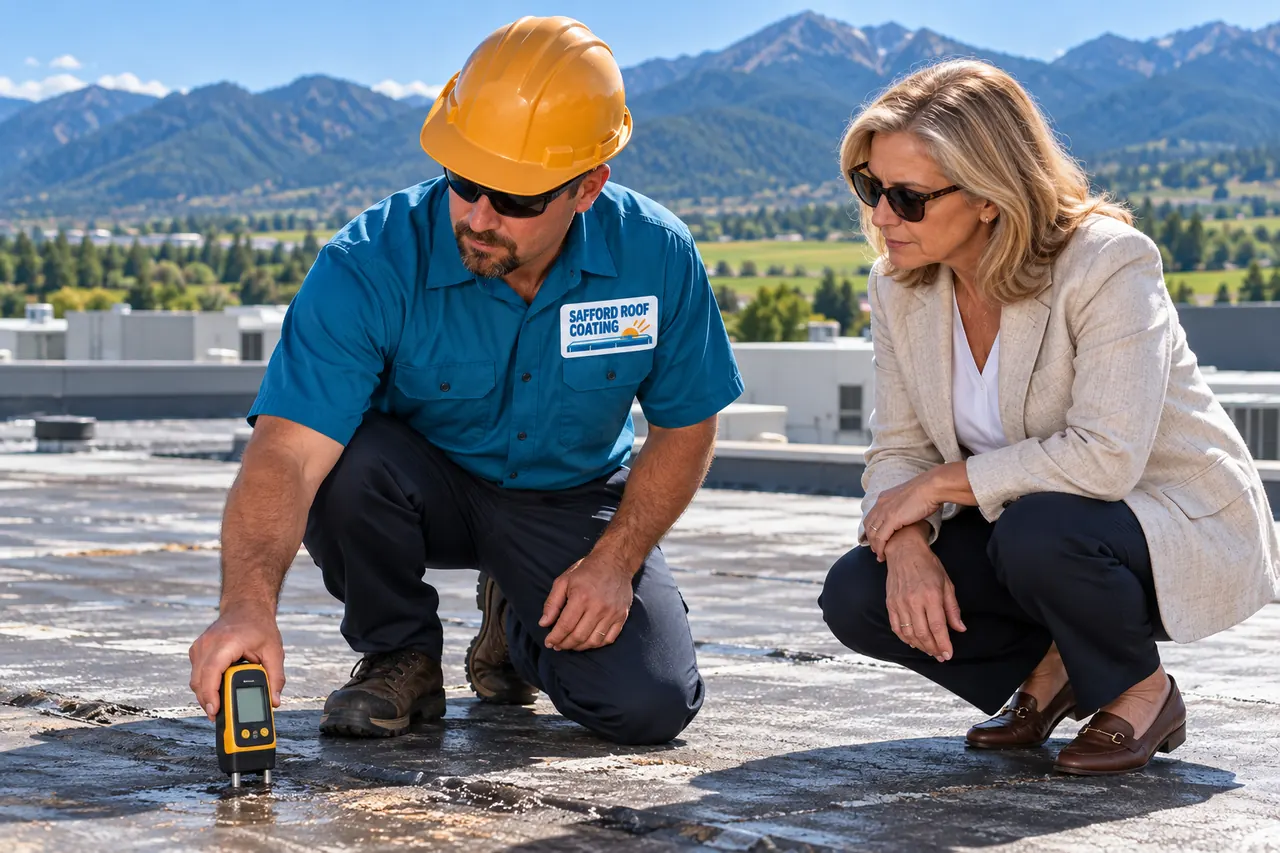
We walk the field, edges, drains, and curbs, take moisture readings, and note every split seam, blister, and rusted fastener row.
Pressure washing removes dust, chalked coating, and bird debris. Blowing dust settles fast in the valley, so coating follows as soon as the surface dries.
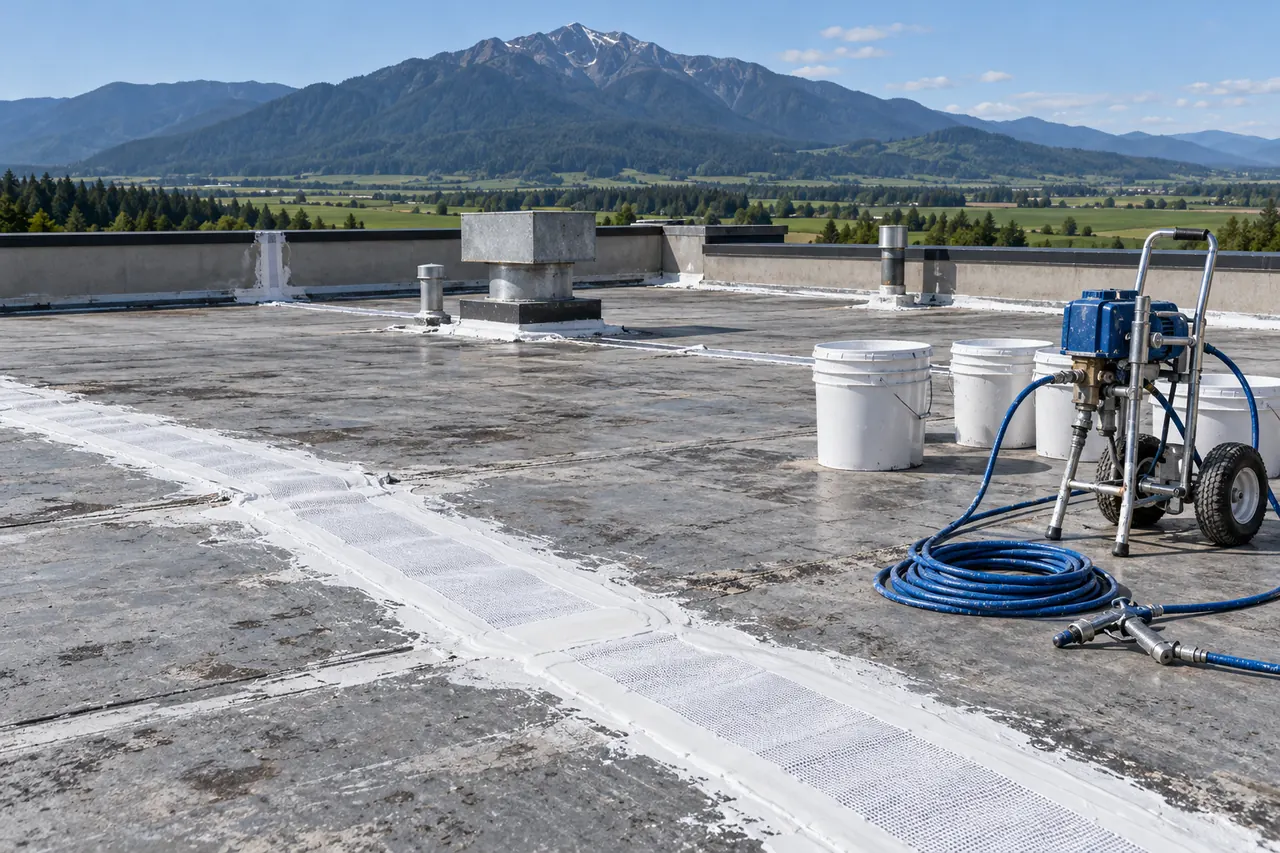
Blisters are cut out, seams and flashing are repaired, and fabric or seam tape goes on at drains, curbs, and panel laps.
Primer goes where the surface calls for it, such as rusted metal or aged single-ply. Coating is rolled or sprayed in passes to the specified thickness.
Wet-film gauges during application and small cut samples afterward confirm the dry mil count, with extra attention at laps, drains, and edges.
Safford sits at the center, with Thatcher, Pima, Solomon, and Swift Trail Junction along US-70 and US-191. Petal length shows rough distance.
West · US-70 · about 3 miles
Campus, church, and office roofs coated around class and service hours.
Northwest · US-70 · about 8 miles
Metal farm shops and barns that need lap sealing and rust priming first.
East · US-70 · about 5 miles
Flat storage roofs where scuppers and drains get cleared before coating.
South · US-191 · about 7 miles
Spread-out lots where the lift that reaches the roof is placed around highway frontage.
Answers about preparation, weather, and what a coating can and can't fix.
Asked Most Often
Prep work decides how well the coating holds. On a typical Safford roof it runs in order: wash off dust and chalked coating, cut out blisters, repair split seams and loose flashing, prime rusted metal or aged single-ply, then tape or fabric the seams, drains, and curbs.
Coating starts as soon as the surface dries, before blowing dust settles back on it.
Sun, daily temperature swings, and fast storms all work on it. UV chalks acrylic on south-facing slopes, expansion and contraction tug at laps and fastener seals, hail and grit scuff parapet caps, and freezing nights split water trapped in cracks near drains. A roof walk each spring and fall catches that wear early.
Yes, once the leak source is found and repaired. Coating over an active leak hides the entry point and can trap water in the insulation. The roof walk traces the stain inside to the seam, curb, or drain above it, and that detail gets fixed first.
It holds up to ponding better than a bare roof, and silicone is made for it. It won't change where water collects, though. Low spots stay low unless foam or tapered insulation adds slope, so drains and scuppers are cleared and checked as part of the job.
Roof size, repair work, and weather set the schedule. Washing and repairs often take longer than the coating passes. Summer work starts at dawn and stops when storm clouds build, and acrylic needs mild, dry hours to cure.
Yes. Curbs, skylights, vents, and pipe boots get the most detail work: sealant or fabric at each base, then coating carried up the flashing. HVAC technicians get walkway paths so their foot traffic stays off the new surface.
Roof access, a note on where leaks or stains show up inside, and any records from past repairs or coatings. Knowing what is already on the roof, such as an old silicone or acrylic layer, decides which coatings can go over it.
Start with a ballpark range online, or call and talk through what you see on the roof.
Want A Call About Your Roof?
Leave a name and number, or call (623) 310-0164 now.