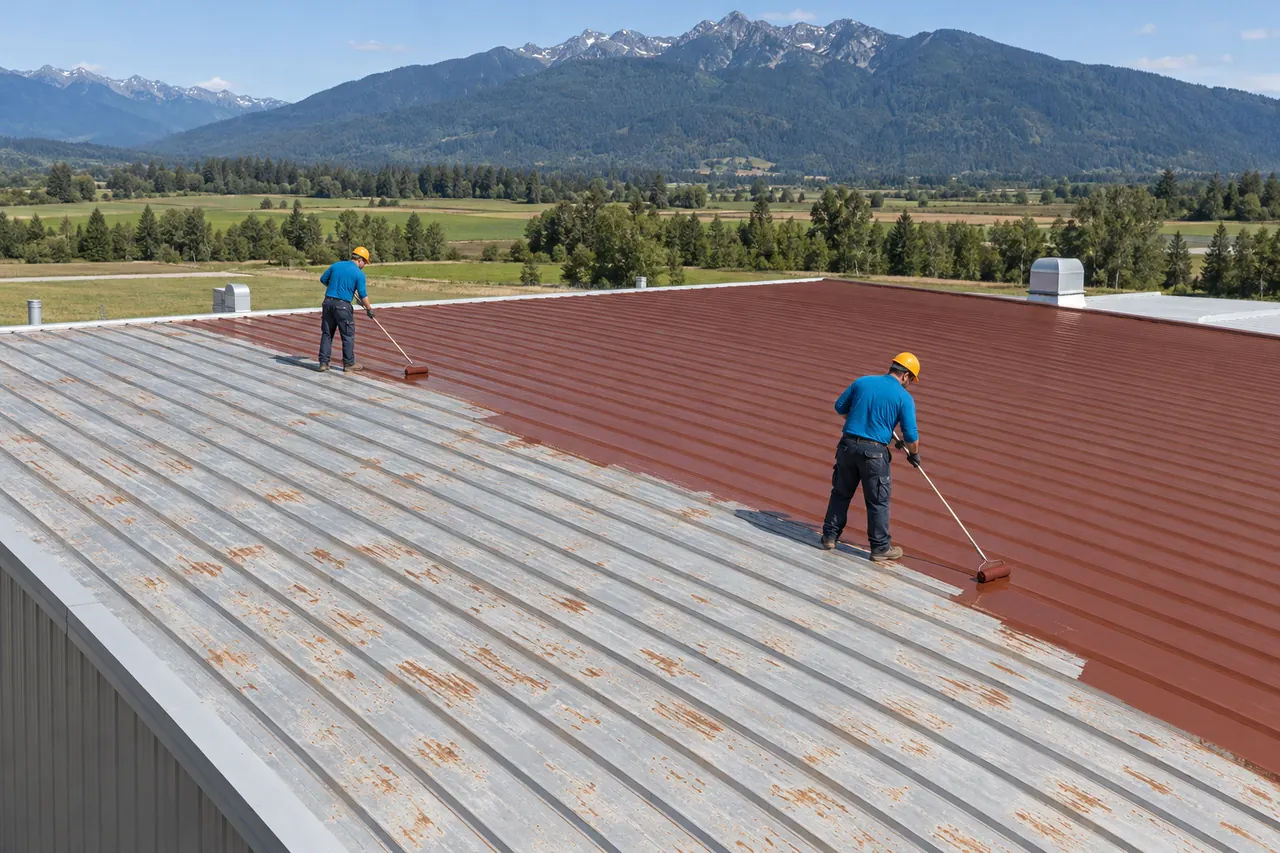
Metal Roof Coating
Exposed-fastener and standing-seam panels on shops, barns, and warehouses.
Best For
- Surface rust at laps and screws
- Sloped panels that drain fast
Fix First
- Rusted-through panels
- Loose screws and worn washers

Five Coating Systems
We offer five commercial roof coating services in Safford. The roof surface you have now, and how fast it drains, decides which one fits.
Each card starts from the existing roof surface and what has to be fixed before coating.
Exposed-fastener and standing-seam panels on shops, barns, and warehouses.
Best For
Fix First
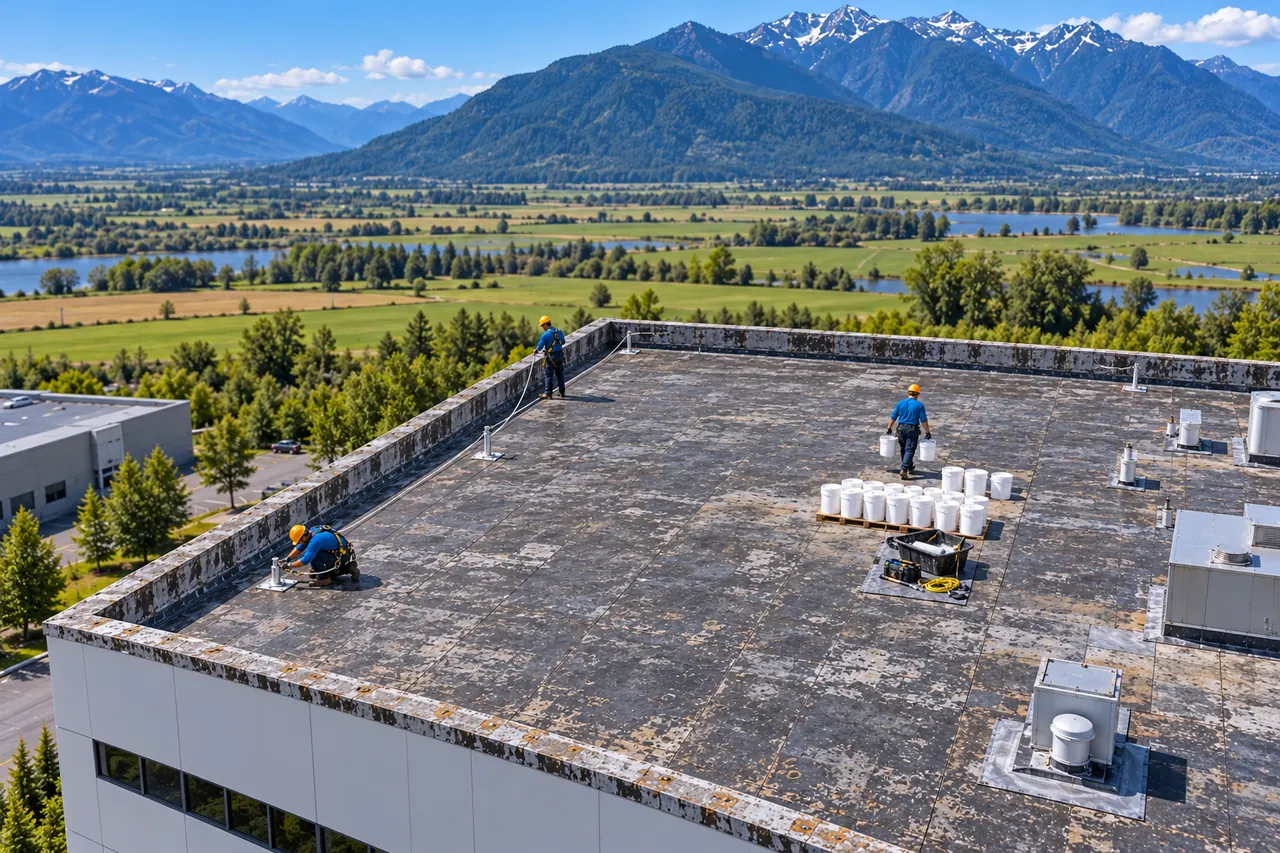
Low-slope single-ply, built-up, and modified bitumen roofs that hold water after storms.
Best For
Fix First
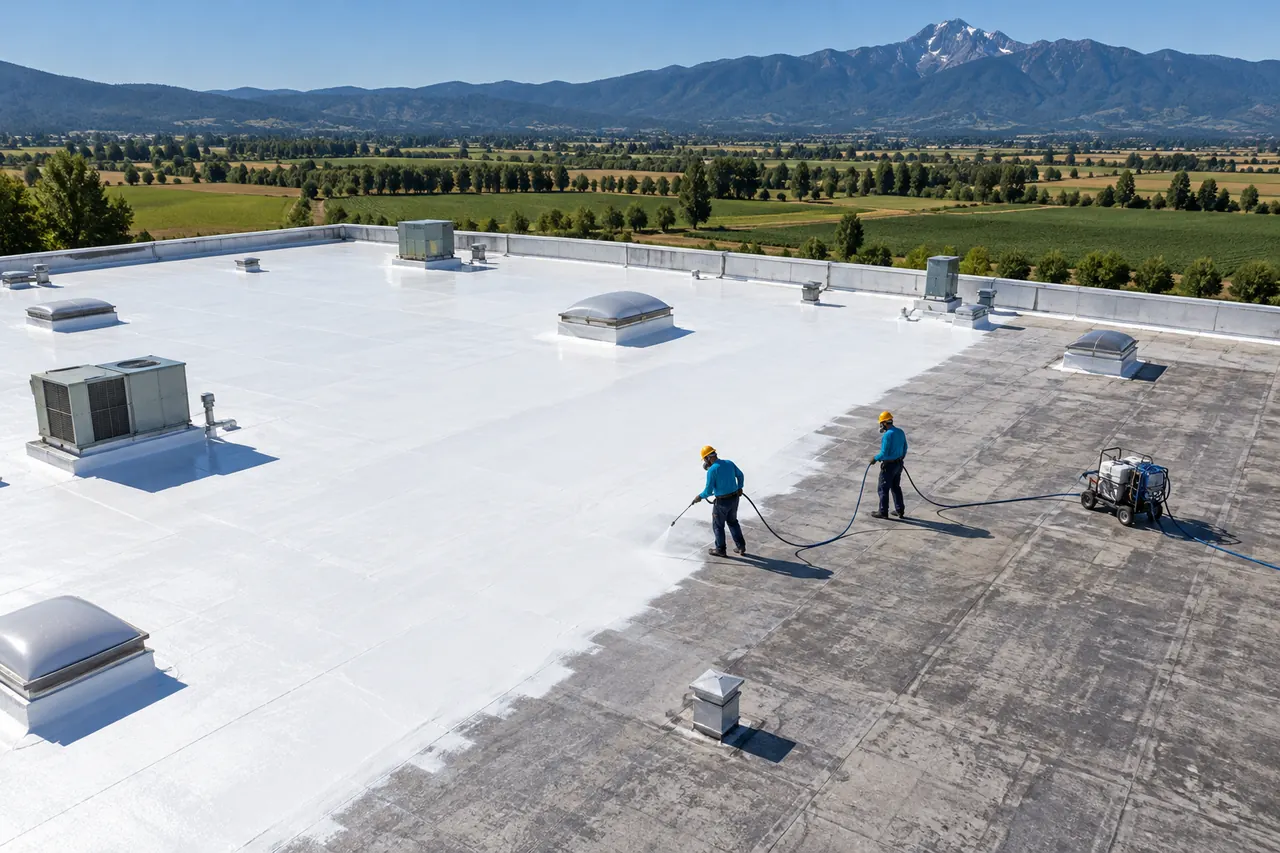
Roofs that shed water within hours, where a bright white surface matters.
Best For
Fix First
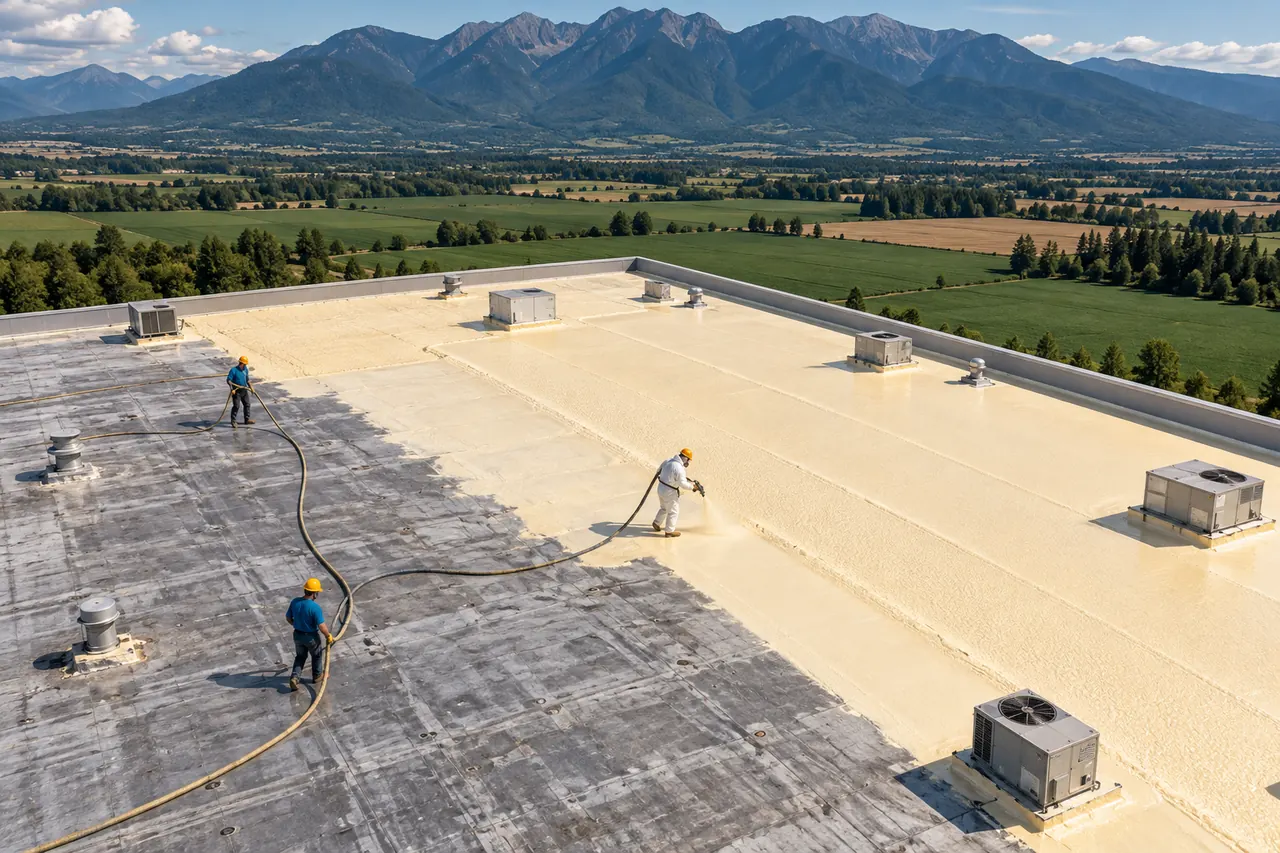
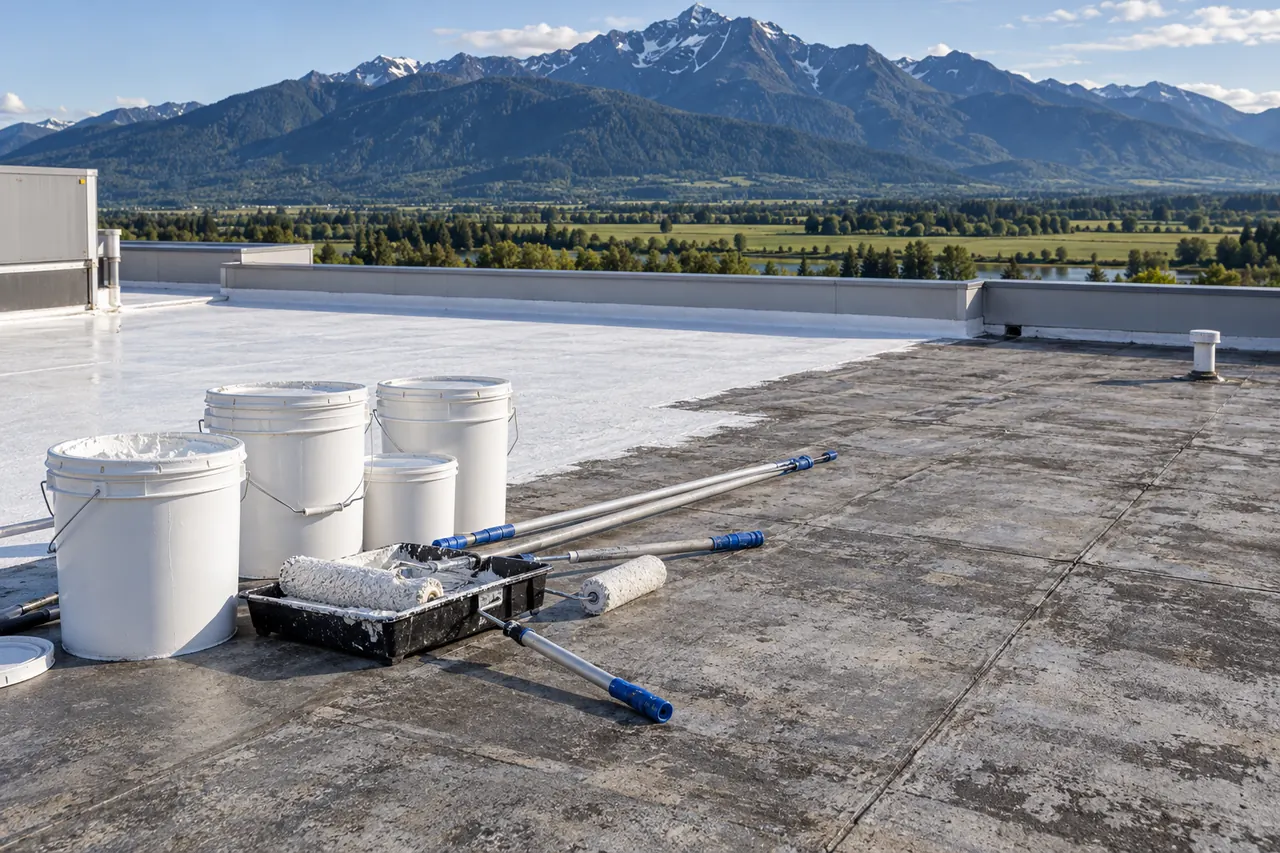
Flat decks that need insulation and slope, plus existing foam roofs due for a recoat.
Best For
Fix First
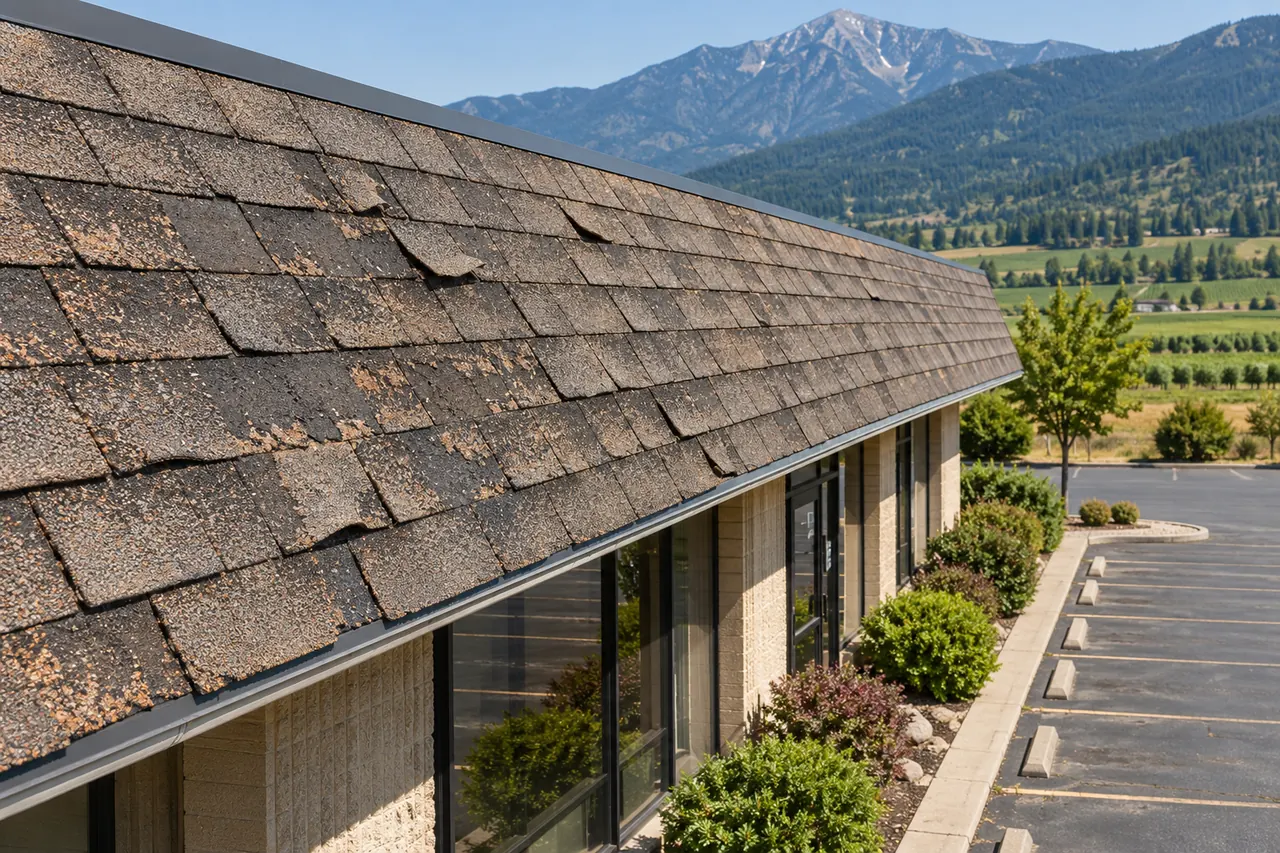
Aged commercial shingles that still lie flat with most granules in place.
Best For
Fix First
A side-by-side look at surface, slope, standing water, and recoat rules for each system.
| System | Goes Over | Slope | Standing Water | Recoat With |
|---|---|---|---|---|
| Metal Roof Coating | Exposed-fastener and standing-seam metal | Low to steep | Acrylic needs fast drainage; silicone takes some ponding | The same coating family |
| Silicone Roof Coating | Single-ply, built-up, mod-bit, foam, old silicone | Flat to low | Handles ponding | Silicone only |
| Acrylic Roof Coating | Metal, foam, old acrylic | Low to steep, fast draining | Softens under standing water | Acrylic |
| Spray Foam Roofing | Dry, firm decks and existing roofs | Flat, with slope built into the foam | Set by the topcoat chosen | The topcoat family used |
| Shingle Roof Coating | Flat-lying asphalt shingles | Steep | Sheds water by slope | Per the coating maker |
Call and tell us what the roof is made of and where water sits. That narrows the choice before anyone climbs a ladder.
The system changes from roof to roof, and the order of work stays close to this.
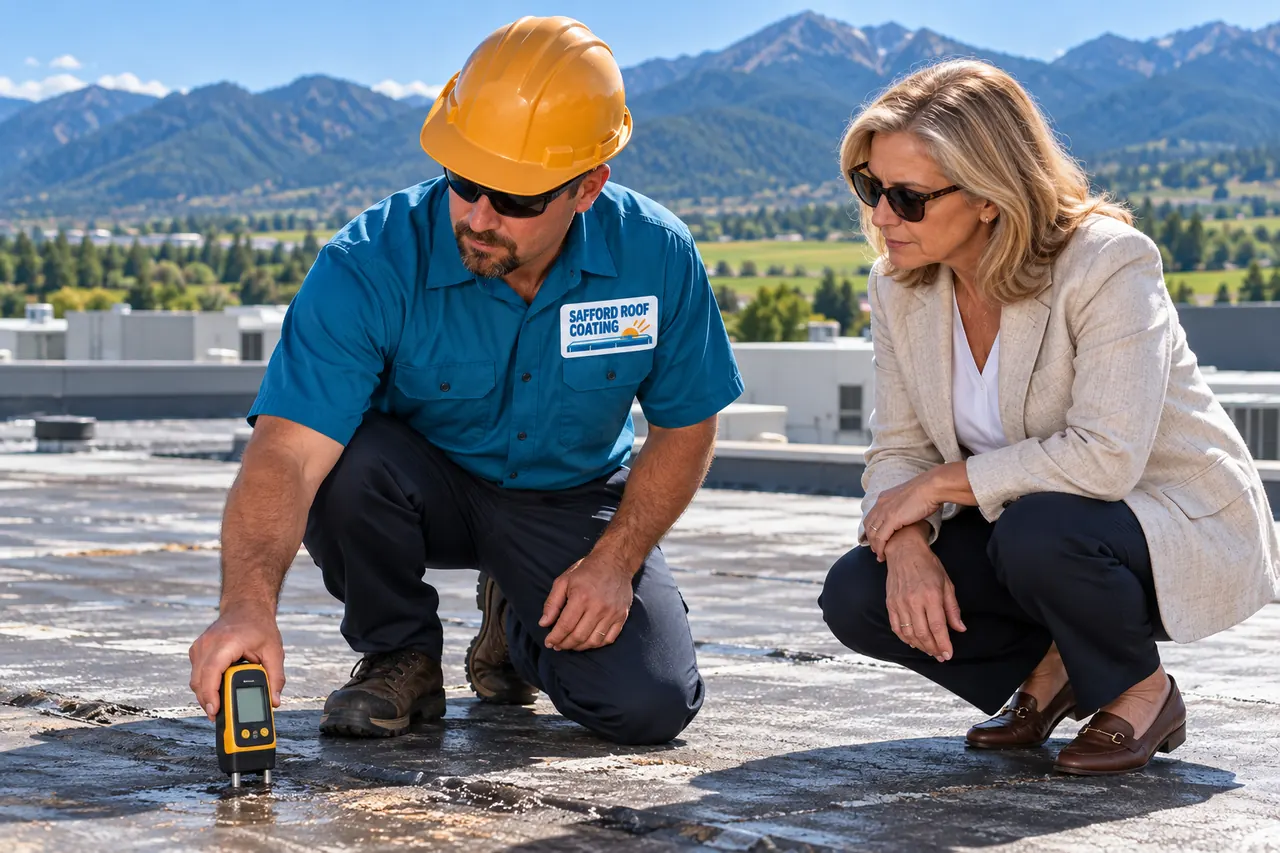 Step 1
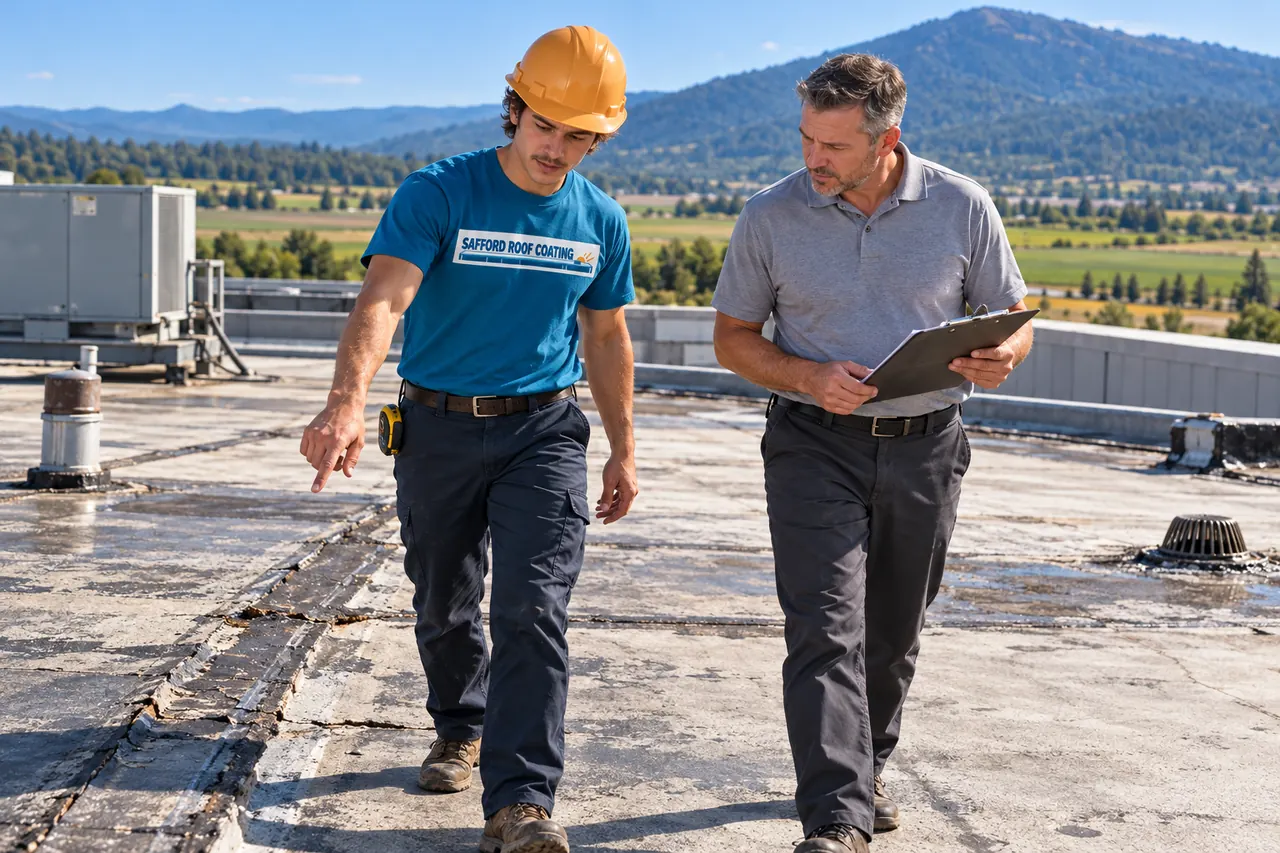 Step 2
We identify the roof surface, take moisture readings, and note seams, drains, curbs, and any old coating already on it.
The surface, slope, and ponding point to one or two systems, and an adhesion patch confirms the choice where needed.
Washing, wet-area cutouts, seam and fastener repairs, and primer get the roof ready for its system.
Coating goes on in passes timed around heat, storms, and cold nights, with reinforcement at every detail.
Mil readings and dated photos of drains, seams, and curbs go into a short record the owner keeps for future recoats.
How the five systems compare and how the choice gets made.
Asked Most Often
A commercial roof coating is a fluid-applied layer, rolled or sprayed over the existing roof, that cures into one continuous surface across seams, fasteners, and flashing.
Good candidates include metal panels on shops and warehouses, spray foam over low-slope decks, single-ply and built-up roofs in fair shape, and some steep-slope shingle roofs. Roofs with soaked insulation, rotted decking, or widespread blisters need repair or tear-off first.
Yes. A building with a flat main roof and a sloped metal addition can get silicone on the flat section and acrylic on the metal, as long as each one goes over a compatible surface.
Thickness matters more than the label. A heavier coat of any system outlasts a thin one, so the mil count is part of every comparison.
Acrylic does not stick to cured silicone. That is why the first coating choice sets the recoat path for years.
Both, in a way. The foam is the roofing layer that adds insulation and slope, and the coating on top protects it from the sun.
No. Roofs with widespread wet insulation, rotted decking, or curled shingles need repair or replacement first, and some need a full reroof.
Get a ballpark range for coating versus replacement, or call to talk through the five systems.
Want A Call About Your Roof?
Leave a name and number, or call (623) 310-0164 now.