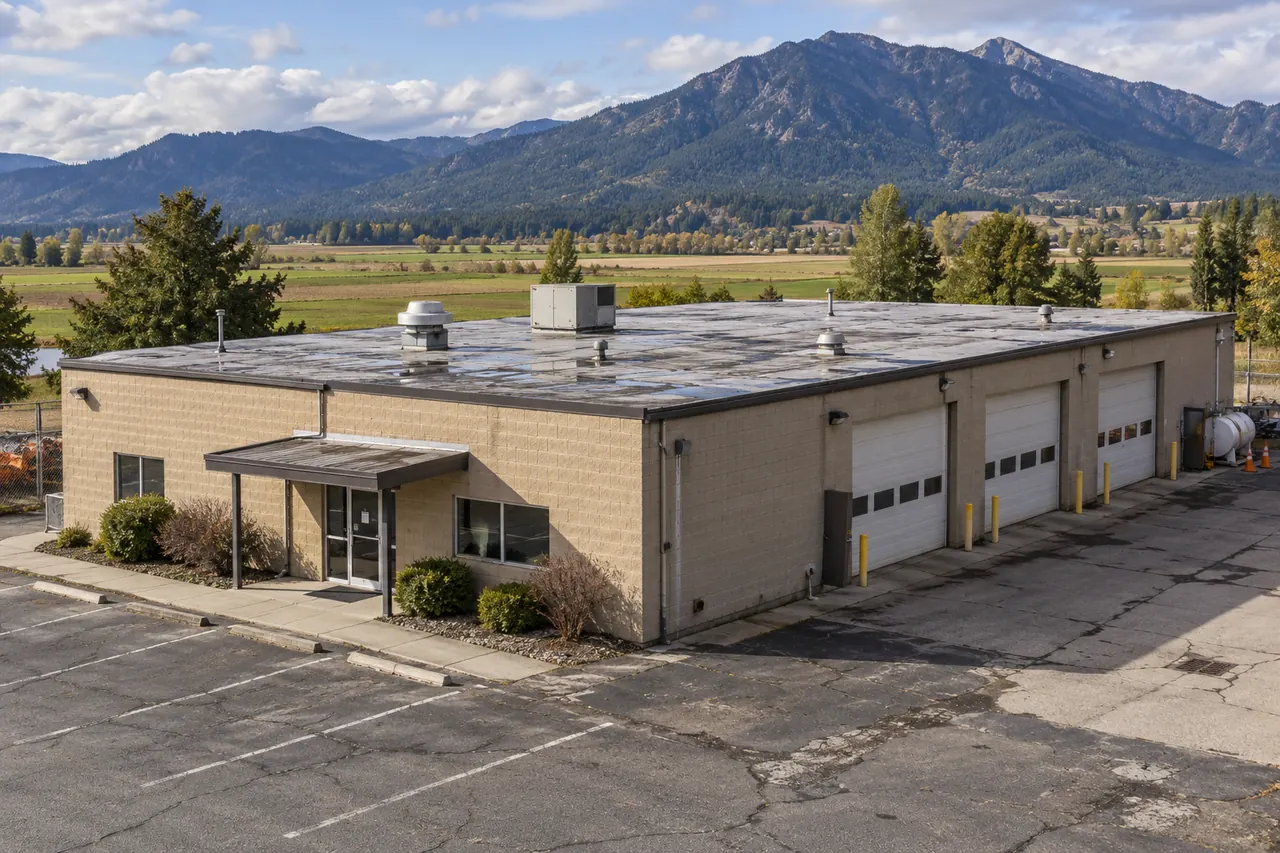
Foam Kept Out Of The Sun
Sunlight breaks down bare polyurethane foam, so every foam roof needs a coating. Recoating before the foam shows keeps the insulation and slope you already paid for.

SPF Roof Systems
We install spray foam roofing in Safford and recoat existing foam roofs. Foam adds insulation and slope, and a topcoat keeps the sun from breaking it down.
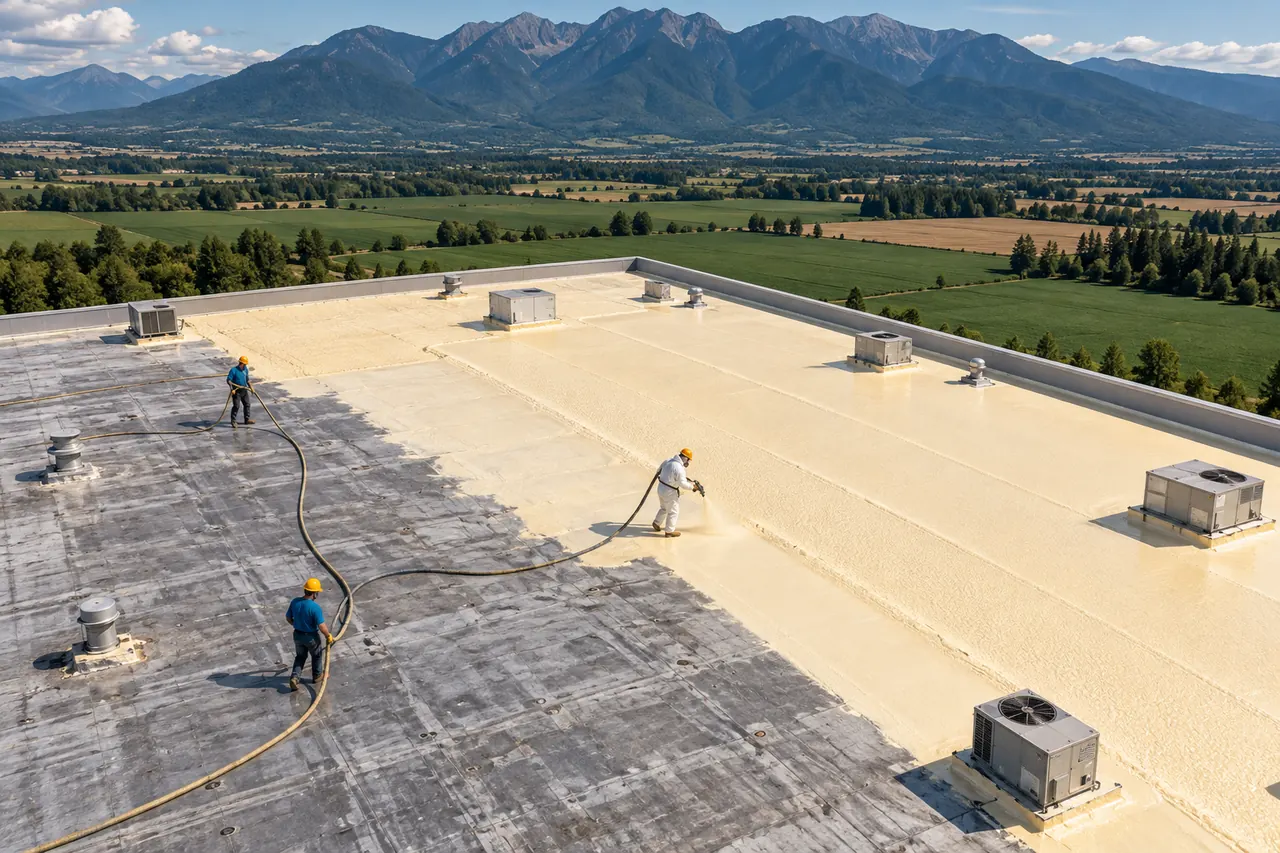
Foam needs a dry, clean deck to stick to. Existing foam roofs need firm foam under the worn coating.
Foam fails slowly from the top down once its coating wears thin.
Water showing up near a pipe or vent inside often comes from a crack where the foam meets the penetration above.
Foam shrinks and cracks around pipes and vents with age. Those spots get cut out, refoamed, and coated.
Rooms under a foam roof that used to stay cooler can warm up as the topcoat thins and the foam starts to erode.
Bare foam turns brown and powdery in the sun, then erodes. The damaged layer is removed back to firm foam before recoating.
New drips after a hailstorm point to dents and punctures that opened the coating over the foam.
Birds peck at soft spots, and hail dents the coating. Each one gets sealed before it lets water into the foam.
Leaks that appear after winter often come from water that froze in small cracks and widened them.
Mil readings below the coating maker's minimum mean the foam is close to exposure, even where it still looks white.
Damp tiles with no clear drip point can mean water is moving through wet foam or insulation.
Wet foam feels soft underfoot and reads high on a moisture meter. It gets cut out and replaced before any new topcoat.
Foam work is either a new foam roof or a recoat of the one already there.
| Option | What Goes On | Best Match | Watch For |
|---|---|---|---|
| Foam With Silicone Topcoat | Dry deck, foam sprayed to slope, silicone topcoat | Flat roofs with low spots that still hold some water | Recoats stay silicone |
| Foam With Acrylic Topcoat | Dry deck, foam sprayed to slope, acrylic base and topcoat | Foam roofs with enough pitch to drain fast | Water standing at scuppers |
| Recoat Existing Foam | Wash, cut out wet or damaged foam, patch, new topcoat | Foam roofs with worn coating over firm foam | Mil readings decide how much coating goes on |
| Remove And Re-Foam | Wet foam removed, deck dried and checked, new foam and topcoat | Roofs with widespread wet foam | Deck condition under the old foam |
On a foam roof, the coating is what keeps the foam working.
Sunlight breaks down bare polyurethane foam, so every foam roof needs a coating. Recoating before the foam shows keeps the insulation and slope you already paid for.
A worn topcoat over firm foam gets washed, patched, and recoated, which avoids the cost of removing the foam.
Spraying happens on the roof with air intakes covered, so offices and warehouses below keep working.
New foam can be sprayed thicker at low spots so water moves toward drains instead of sitting.
Call before it erodes further. Foam that still feels firm can usually be recoated, which keeps the roof you already have.
Foam work needs dry conditions and careful control of overspray.
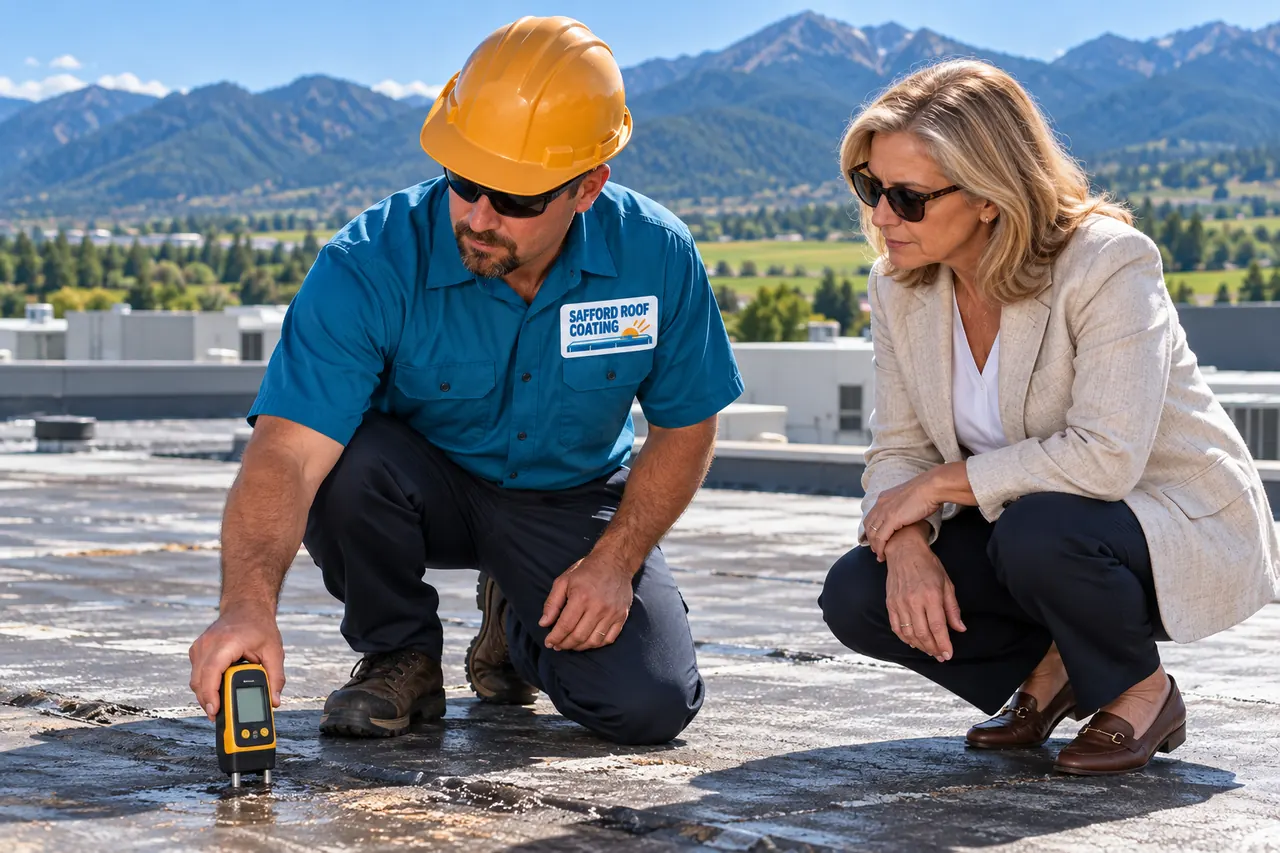 Step 1
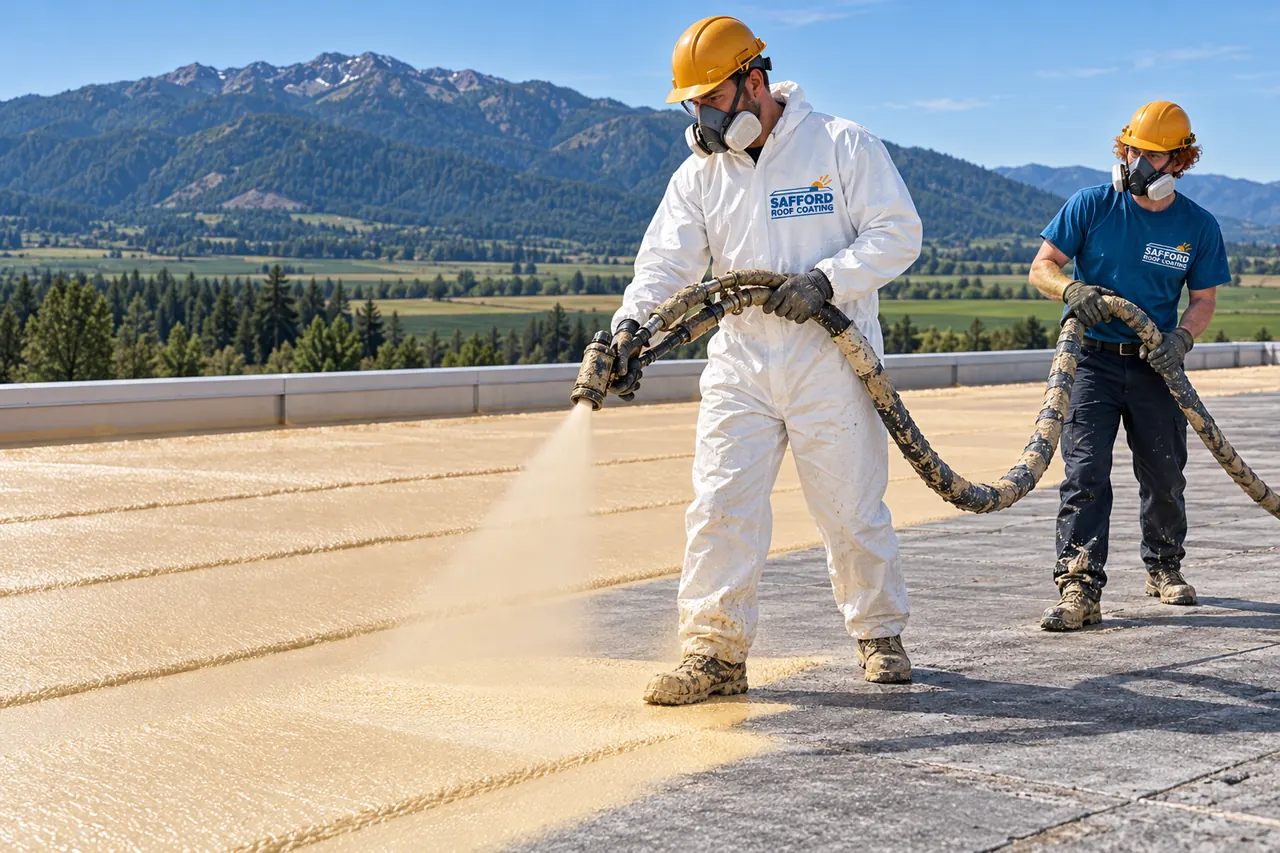 Step 4
We take moisture readings, probe soft spots, and measure the existing coating thickness to decide between a recoat and new foam.
HVAC intakes, vents, and nearby vehicles get covered or moved, and wind is checked before any spraying starts.
Loose material comes off, wet areas are cut out, and the surface is cleaned and dried so the foam grips it.
Foam goes on in passes, thicker at low spots to build slope toward drains, with thickness checked as each pass cures.
A silicone or acrylic base and finish coat cover the foam to the maker's mil count, often with granules in walk areas.
Every foam roof ends with one of these two topcoats.
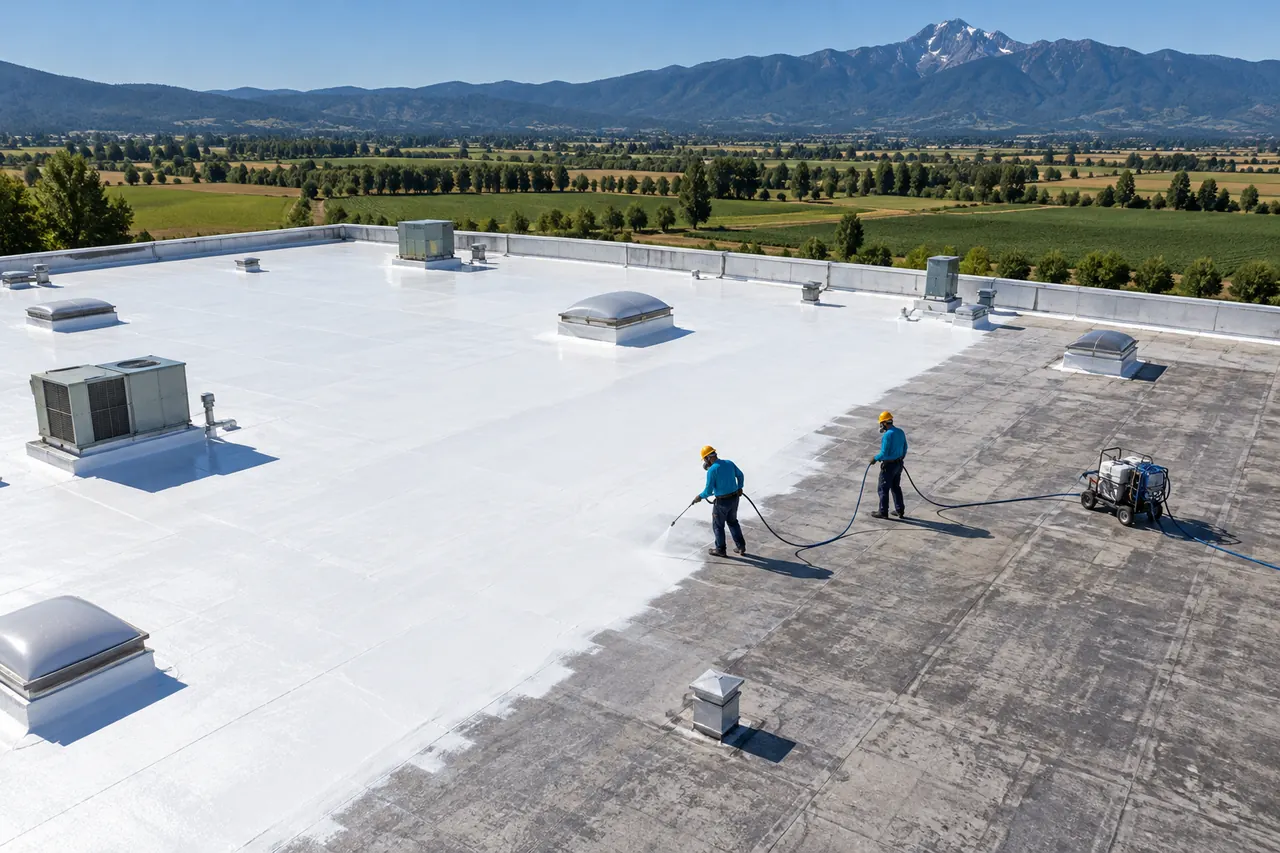
Silicone is the common topcoat on flat foam roofs where some water still sits after storms.
Silicone Roof Coating Details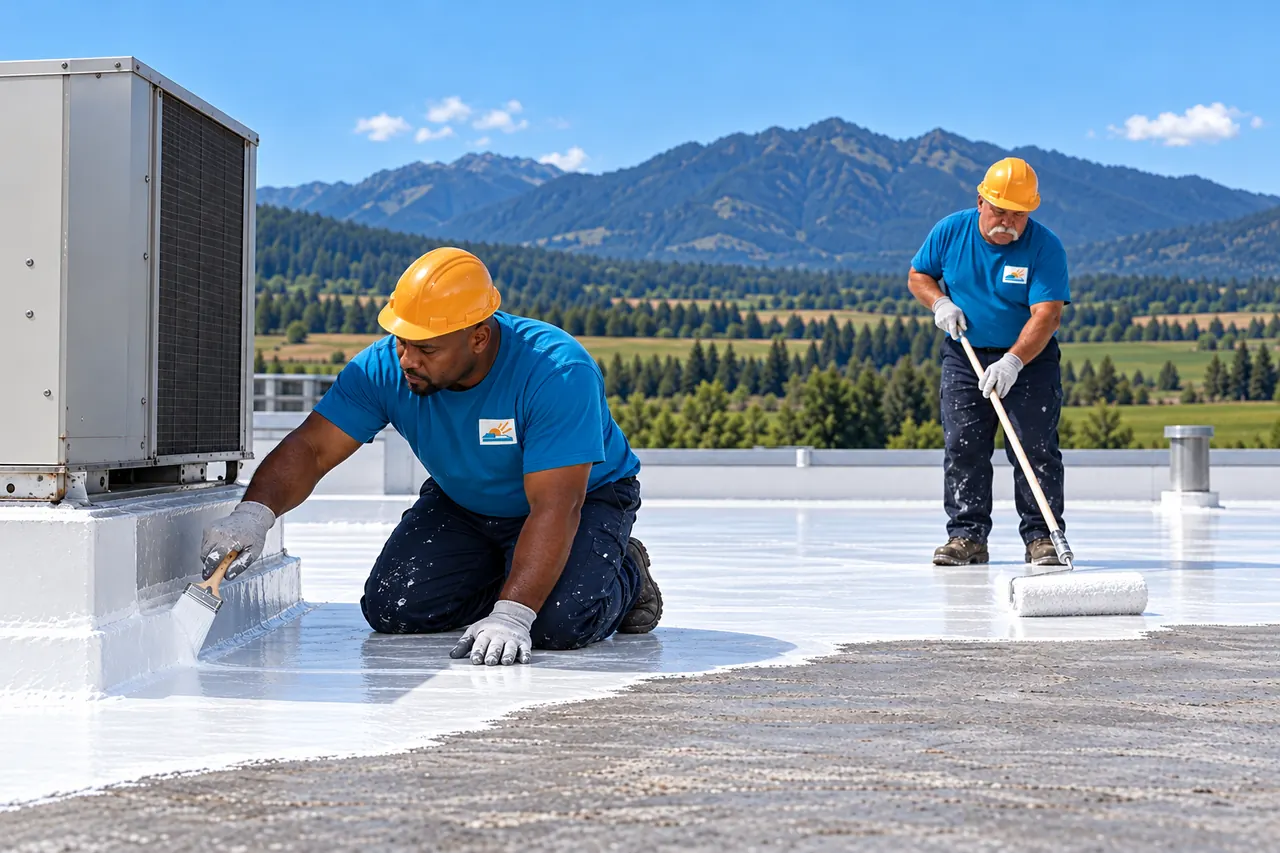
Acrylic tops foam roofs that drain well, and its white surface stays cleaner in dusty air.
Acrylic Roof Coating DetailsCommon questions about foam, topcoats, and recoat timing.
Asked Most Often
Sunlight breaks down bare polyurethane foam. Without a coating, exposed foam turns brown and powdery, then erodes.
Under Graham County sun, foam roofs get checked for thin spots, bird pecks, and hail dents in the coating. A recoat is due once the coating shows foam or mil readings fall below the coating maker's minimum.
Service life follows the thickness applied and the care the roof gets afterward, so a heavier topcoat lasts longer than a thin one. When the top layer wears thin, the roof gets cleaned, damaged spots get repaired, and a fresh coat goes on without tear-off.
Often, yes, if the existing roof and insulation are dry and the deck is firm. Wet layers come out first, since foam sealed over moisture traps it.
Spraying produces fumes on the roof during application, so air intakes get covered and the work is scheduled with the building. Tenants hear in advance which units will be off.
Thickness varies across the roof because foam is built up at low spots to create slope. The topcoat thickness is set by the coating maker and checked in mils.
Sun on thin coating, hail dents, and bird pecks. Each opens a path for UV and water into the foam, which is why yearly checks matter.
Yes, with care. Walk paths to HVAC units often get extra coating with granules so service traffic stays off the thinner field coating.
Get a ballpark range, or call to ask whether your foam can be recoated.
Want A Call About Your Roof?
Leave a name and number, or call (623) 310-0164 now.